Malaysia's banking sector faces a critical inflection point as artificial intelligence deployment accelerates across the financial system. The Asian Institute of Chartered Bankers has sounded a clear warning: simply adopting AI technology is insufficient. Instead, the industry must establish trusted frameworks grounded in sound governance, operational resilience, and a workforce equipped to manage these powerful tools responsibly.
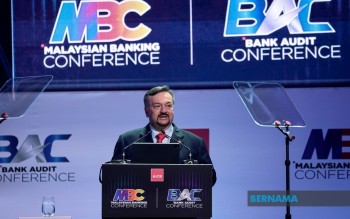
This message emerged from two major industry conferences held in Kuala Lumpur on July 7-8, 2026, which brought together more than 1,000 banking, audit, and regulatory professionals to grapple with the transformation reshaping Malaysian finance. The 4th Malaysian Banking Conference and the 2nd Bank Audit Conference operated under a unified platform, reflecting how interconnected technology adoption, risk management, and oversight have become across the sector. Minister of Finance II Datuk Seri Amir Hamzah Azizan and Bank Negara Malaysia governor Datuk Seri Abdul Rasheed Ghaffour jointly inaugurated the events, underscoring their importance to national financial policy.
The timing of these conferences reflects an industry in flux. Malaysia's financial sector is advancing its transformation under the ambitious Financial Sector Blueprint, which envisions a modernised, competitive banking system. Yet this modernisation occurs amid multiple headwinds: regulators worldwide are scrambling to establish AI governance standards, cybersecurity threats are evolving at pace with technology itself, and banks must simultaneously navigate climate transition risks and geopolitical turbulence. Against this complex backdrop, the temptation to rush AI implementation for competitive advantage must be resisted in favour of thoughtful, trustworthy deployment.
A landmark study released at the conferences provides sobering insight into the current gap between AI adoption and industry confidence. The AICB-Ecosystm AI in Practice report, developed jointly by AICB, Ecosystm, and AICB's Chief Risk Officers' Forum, surveyed nearly 90 senior leaders spanning commercial banks, digital banks, and development financial institutions. It paints a picture of an industry actively deploying artificial intelligence across multiple functions—Know Your Customer onboarding, fraud detection, Anti-Money Laundering and Counter Financing of Terrorism compliance, and employee productivity tools all now incorporate AI in meaningful ways. Yet a striking disconnect emerges: only 25 per cent of respondents reported sufficient confidence in AI-generated outputs to act upon them in significant business decisions. This finding suggests that even as banks integrate AI into operational processes, a deep reservoir of caution persists among decision-makers.
This trust deficit matters profoundly for Malaysia's financial stability and competitiveness. Banks are increasingly expected by regulators and customers alike to deploy technology responsibly, with clear accountability chains and human oversight intact. The gap between adoption and trust indicates that many institutions are still in experimental mode, deploying AI systems without fully embedding them into governance structures or ensuring that risk management capabilities keep pace with technological capability. The report frames this as a pivotal moment: the industry must transition from testing isolated AI applications toward responsible scaling that maintains public confidence.
Addressing this challenge, AICB and its Chief Risk Officers' Forum have developed an AI Governance Framework designed specifically for Malaysian banks. What distinguishes this approach is its origin: rather than emerging as a regulatory mandate imposed from above, it represents industry-led standard-setting. Minister Amir Hamzah explicitly praised this model, noting that genuine trust derives from institutions setting their own standards and holding themselves accountable, rather than simply complying with external directives. This bottom-up approach reflects recognition that bankers themselves understand the operational complexities and risks inherent in their institutions better than any regulator could, even as Bank Negara Malaysia and the Association of Banks in Malaysia have endorsed the framework.
Bank Negara Malaysia governor Abdul Rasheed Ghaffour articulated a complementary perspective: innovation extends far beyond technology adoption. Genuine innovation requires leadership rigour and governance structures that ensure the financial system remains trustworthy and serves societal needs. This framing positions AI governance not as a compliance burden but as essential infrastructure for responsible innovation. Without such governance, banks risk deploying powerful tools in ways that generate unintended consequences—discriminatory lending practices embedded in opaque algorithms, customer data vulnerabilities, or operational fragility when AI systems malfunction. Conversely, well-governed AI can amplify banks' capacity to serve customers effectively, detect fraud more rapidly, and operate more efficiently.
A critical dimension to this challenge involves workforce readiness. AICB chairman Tan Sri Azman Hashim emphasised that as banks embrace AI and emerging technologies, sustained investment in professional development becomes non-negotiable. The banking sector must attract, develop, and retain talent capable of bridging technical and business domains—professionals who understand both machine learning and finance, who can translate regulatory requirements into system design, and who can identify when AI outputs warrant human scrutiny. This talent imperative extends beyond data scientists and engineers to encompass risk managers, internal auditors, and senior leaders responsible for governance decisions.
To address this capability gap systematically, AICB has developed the Future Skills Framework and its advanced iteration, FSF Xcel. Created collaboratively with industry stakeholders, these frameworks identify the critical competencies required to sustain banking resilience and competitiveness as the sector evolves. They provide roadmaps for professional development that connect technical skills with strategic awareness, ensuring that banking professionals across all levels understand how emerging technologies intersect with risk, compliance, customer service, and societal expectations. By institutionalising professional excellence standards, AICB seeks to create a talent pipeline aligned with the sector's actual needs.
The regional significance of Malaysia's approach should not be underestimated. Banks across Southeast Asia confront identical questions regarding AI governance, cybersecurity resilience, climate risk management, and workforce development. Malaysia, through AICB's initiatives and the industry dialogue fostered by the conferences, is positioning itself as a thought leader in responsible AI adoption within the region. The exchange of perspectives and practical approaches emerging from forums like these can inform how peers across ASEAN countries structure their own governance frameworks and professional standards. This positions Malaysia's financial sector not merely as a adopter of external best practices but as a contributor to evolving regional standards.
Looking forward, the stakes for Malaysian banks are substantial. The relationship between AI adoption and public trust will shape the sector's long-term trajectory. If banks can successfully scale AI deployment while maintaining transparent, accountable governance and demonstrating genuine commitment to professional excellence, they will strengthen both their operational resilience and their license to operate. If the trust deficit persists—if AI outputs remain largely experimental, governance remains fragmented, and talent gaps widen—the sector risks a future in which regulators must intervene more forcefully to ensure stability and public protection. By establishing industry-led standards now, supported by appropriate regulation, Malaysian banking is attempting to chart a course toward responsible innovation that enhances competitiveness without sacrificing the trust that underpins any financial system.
As Malaysia's financial sector continues its transformation under the Financial Sector Blueprint, the priority is clear: moving beyond the question of whether to adopt AI toward the harder question of how to implement it in ways that strengthen rather than undermine institutional trustworthiness. The conferences held in July 2026 represented a significant step in this direction, bringing senior leaders together to confront the governance, skills, and assurance challenges that responsible AI adoption demands. Whether the industry can translate these insights into sustained institutional change will determine whether Malaysia emerges as a regional model for trusted financial innovation or falls behind peers in harnessing AI's potential.

