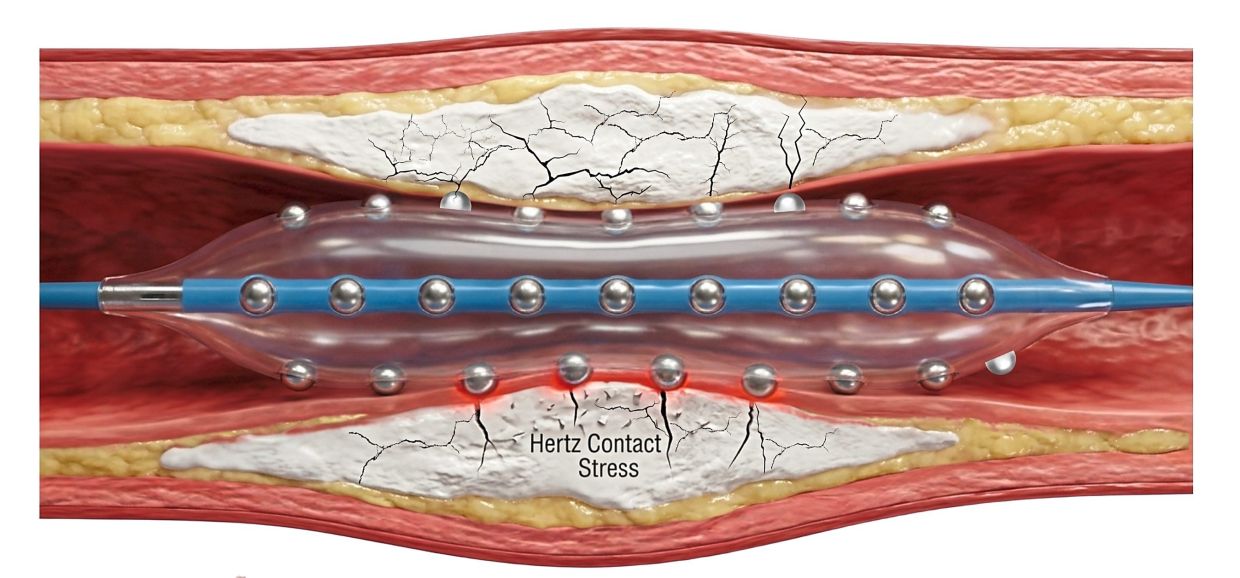
A team of Malaysian cardiologists has begun exploring a cutting-edge technological approach to treat one of the most challenging forms of heart disease: heavily calcified plaque buildup in coronary arteries. Led by consultant cardiologist Datuk Dr Tamil Selvan Muthusamy, the research initiative represents a significant step forward in managing atherosclerosis cases where conventional interventions struggle to succeed. The work centres on the Hertz Contact-IVL System, an innovative device designed to crack and dislodge stubborn calcium deposits that obstruct blood flow to the heart muscle.
Understanding the mechanics of coronary plaque formation provides essential context for appreciating why this research matters. Over time, a composite material comprising fat, cholesterol, calcium deposits, cellular debris and fibrin accumulates along arterial walls. As these deposits thicken and harden, the diameter of blood vessels shrinks, progressively restricting circulation. When blood flow becomes severely compromised, tissue downstream from the blockage becomes starved of oxygen-rich blood, triggering potentially catastrophic consequences including myocardial infarction, cardiac dysfunction and cerebrovascular incidents. For Malaysian patients, coronary artery disease remains a leading cause of mortality, making innovations in treatment accessibility and effectiveness particularly relevant to public health outcomes.
Standard treatment protocols for coronary calcification involve a graduated approach. Physicians initially recommend lifestyle modifications and pharmacological interventions. When these prove insufficient, catheter-based procedures such as percutaneous coronary intervention and balloon angioplasty become necessary. In less severe cases, a cardiologist positions an inflatable balloon within the narrowed artery and expands it, compressing the softer plaque material and creating adequate space for blood flow. A metal stent is then deployed to maintain this newly expanded passage and prevent re-narrowing. However, this conventional strategy encounters fundamental obstacles when confronted with heavily mineralised, rock-hard calcifications that resist mechanical crushing.
More advanced techniques exist for tackling calcified obstructions, yet each carries distinct limitations. Rotational atherectomy employs a spinning burr to grind away calcium, whilst high-pressure balloon angioplasty applies extreme force to crack deposits. Intravascular lithotripsy represents a more elegant solution, harnessing ultrasonic shock waves to fracture calcified material without damaging surrounding tissues. Despite these options, severe calcification presents persistent challenges during percutaneous coronary intervention procedures. Equipment navigation becomes problematic when working through extremely narrow lumens, whilst reliably achieving complete stent expansion proves difficult. These technical hurdles translate into suboptimal outcomes, both immediately following the procedure and across long-term patient trajectories.
Conventional intravascular lithotripsy systems operate using externally generated ultrasound pulses transmitted through a specialised catheter positioned at the calcification site. The acoustic waves propagate through tissue and generate pressure waves that fracture the hardened deposits. Datuk Dr Tamil Selvan explains that this energy-based approach carries inherent constraints. Most devices accommodate only a limited number of ultrasonic pulses—sometimes just eight—requiring operators to accomplish complete calcium fragmentation within this fixed pulse budget. Newer iterations offer twelve pulses, representing marginal improvement. Beyond pulse limitations, the catheter design itself creates difficulties. The relatively bulky profile of existing IVL devices complicates insertion into severely stenosed coronary vessels, often necessitating supplementary techniques before the primary intervention can proceed.
Another significant constraint affecting conventional lithotripsy pertains to anatomical variability. Coronary arteries are not uniform in diameter along their length, yet current balloon catheters must be selected in fixed sizes—a three-millimetre balloon for a three-millimetre vessel, for instance. In clinical reality, arterial diameter typically varies from proximal to distal segments, potentially narrowing from four millimetres to two millimetres across the course of a single lesion. This dimensional mismatch means operators cannot deploy a single device across variable anatomy, instead requiring multiple balloon replacements and repeated interventions. For patients undergoing complex procedures with multiple stenosed segments, this translates into prolonged operative times and increased procedural trauma.
The Hertz Contact-IVL System represents a fundamental departure from energy-dependent lithotripsy architectures. Rather than relying on external ultrasonic generators, this mechanical innovation incorporates minute metallic hemispheres embedded within the balloon itself. When the balloon makes contact with calcified plaque and receives applied pressure, the hemispheres amplify and concentrate this force, transmitting magnified pressure that cracks the calcium without requiring an external energy source. This design philosophy yields multiple practical advantages. The calcium fragmentation remains highly effective, yet the surrounding arterial wall and tissue layers experience less collateral trauma. Crucially, the device demonstrates superior navigability through tortuous and severely stenosed vessels, permitting a single balloon to traverse extended lesions or multiple diseased segments sequentially without requiring replacement.
The technical superiority of the contact-based system carries particular significance for Malaysian and Southeast Asian clinical contexts. Many regional centres operate with constrained equipment inventories and financial resources, making device versatility and efficiency important considerations. A system capable of treating longer lesions or multiple stenoses with minimal device changes reduces procedural complexity, operative duration and overall costs. Furthermore, improved outcomes reduce the burden on already-stretched healthcare systems managing high volumes of coronary disease patients. The mechanical approach also eliminates dependence on external generator equipment, potentially simplifying deployment across diverse institutional settings with varying technological infrastructure.
The Malaysian research initiative becomes especially noteworthy because international development of this technology has thus far remained limited in scope. The device manufacturer had conducted relatively modest studies across multiple United States medical centres, generating preliminary safety and efficacy data but leaving significant knowledge gaps. Datuk Dr Tamil Selvan and his colleagues recognised an opportunity to conduct more rigorous, large-scale investigation within a local patient population. This decision reflects both scientific prudence and institutional confidence. Before widely adopting any novel interventional technology, comprehensive safety profiling and efficacy validation across diverse patient demographics and anatomical presentations remain essential. Conducting this evaluation locally ensures data relevance to Malaysian patient populations and builds evidence supporting potential adoption within regional healthcare systems.
The implications of this research extend beyond immediate therapeutic advances. Successful validation of the Hertz Contact-IVL System could substantially expand treatment options for patients with severe coronary calcification currently considered poor candidates for percutaneous coronary intervention. Individuals previously facing mandatory bypass surgery might become eligible for catheter-based approaches, avoiding the significant morbidity associated with open surgical intervention. For the Malaysian and broader Southeast Asian cardiac community, homegrown research contributing to global medical innovation demonstrates regional capability in advanced interventional cardiology. Such endeavours strengthen institutional expertise, attract research talent and establish local centres as contributors to international knowledge rather than merely recipients of external medical developments.
The broader context of atherosclerosis treatment underscores why addressing calcified plaque specifically matters. As populations age and lifestyle factors associated with cardiovascular disease persist across Southeast Asia, the prevalence of advanced coronary calcification will inevitably increase. Current treatment modalities struggle with this subset of patients, particularly those with extensive calcification affecting multiple arteries. An effective, reproducible solution for calcified stenoses represents a genuine unmet clinical need. The Hertz Contact-IVL System addresses this gap through mechanical innovation rather than incremental improvements to existing energy-based approaches, potentially offering patients a safer, more efficient pathway toward restored coronary blood flow and improved clinical outcomes.

