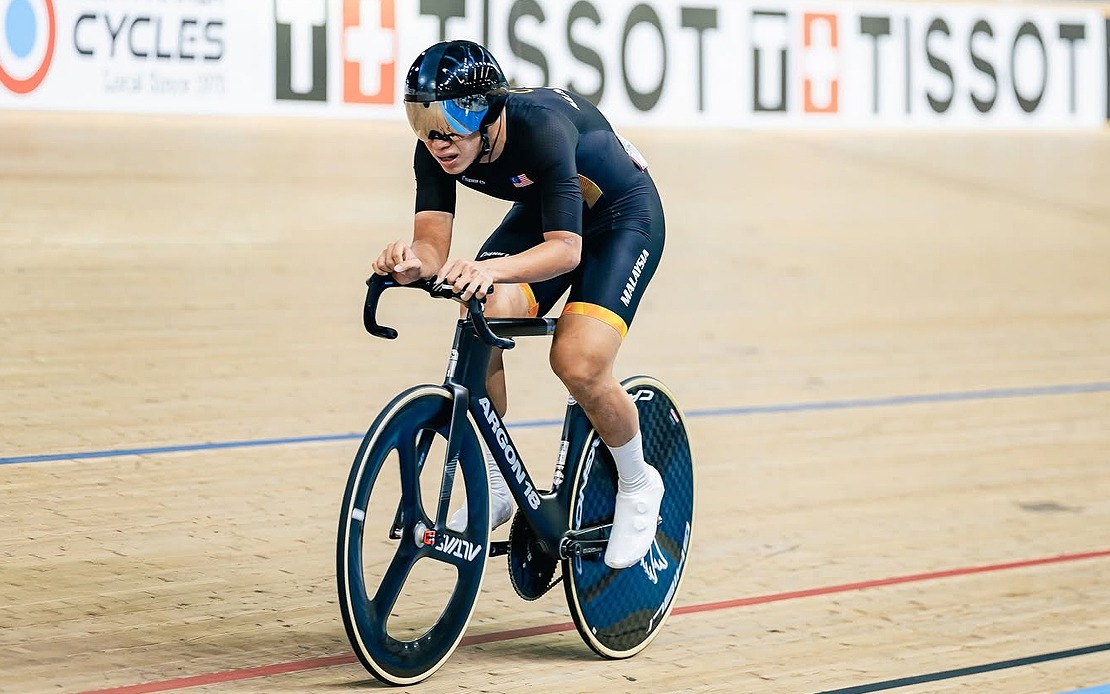
Malaysian track cyclist Lau New Joe has been declared medically fit to fly home after sustaining injuries in a dramatic multi-rider collision during the men's 10-kilometre scratch race final at the 2026 Glasgow Commonwealth Games on Saturday. The incident, which unfolded at the Sir Chris Hoy Velodrome as competitors entered the final lap, involved nine riders and resulted in New Joe being carried from the track on a stretcher. Despite the severity of the incident and initial concerns about the extent of his injuries, medical evaluations have provided optimistic findings that will allow him to continue recovery in Malaysia.
Dr Kamarul Hashimy Hussein, the medical chief for the Malaysian Commonwealth Games contingent, outlined the athlete's treatment journey at a briefing in Glasgow. Upon arrival at the Queen Elizabeth University Hospital's emergency department, New Joe underwent comprehensive diagnostic imaging including computed tomography scanning and full-body radiography to assess for serious injuries. The medical team's primary concern centred on potential internal brain trauma given the force of the collision, but the scans delivered encouraging news that has significantly improved the outlook for his recovery and rehabilitation.
The CT imaging revealed no evidence of intracranial bleeding or other serious neurological damage, marking a crucial milestone in New Joe's recovery prospects. However, the scans did identify several hairline fractures affecting the facial skeletal structure, indicating that while the impact had been forceful, the damage remained localised to facial bones rather than deeper cranial structures. Following the initial assessment, maxillofacial surgeons were brought in to evaluate and treat his injuries, with two dental and maxillofacial specialists providing hands-on treatment through the evening and early morning hours, beginning around 9 pm and continuing until 1 am.
Beyond the skeletal injuries, New Joe sustained significant dental damage that will require ongoing specialist care once he arrives back in Malaysia. Fractured teeth will necessitate multiple treatment sessions and extended follow-up care with maxillofacial professionals, adding another dimension to his recovery timeline. The combination of facial bone fractures and dental injuries underscores the considerable impact of the crash, yet the compartmentalised nature of these injuries—avoiding catastrophic head trauma or spinal damage—has allowed medical professionals to project a pathway toward full recovery and eventual return to competitive cycling.
New Joe was discharged from hospital and returned to the Malaysian team's accommodation shortly after receiving treatment, a decision that reflected confidence in his stabilised condition. The National Sports Institute will assume responsibility for managing his ongoing medical care following his return to Malaysia, ensuring continuity of treatment and specialised rehabilitation. This institutional handover demonstrates how major sporting nations coordinate medical oversight during international competitions and provides athletes like New Joe with established protocols for post-competition injury management and recovery supervision.
The psychological dimension of his recovery has not been overlooked by the medical team, who recognise that trauma following serious competition injuries extends beyond the physical realm. Dr Kamarul emphasised that New Joe possesses strong mental resilience and maintains an undiminished competitive drive despite the traumatic circumstances of his injury. The medical team intends to provide psychological support services as part of his comprehensive recovery programme, acknowledging that an athlete's mindset and emotional wellbeing significantly influence rehabilitation outcomes and the speed of return to competition readiness.
The timeline for New Joe's eventual return to elite competition remains fluid but potentially ambitious. The National Sports Institute will meticulously monitor his physical conditioning during the recovery period, tracking factors including cardiovascular stamina, muscular endurance, and overall fitness levels to ensure he returns to peak performance standards before being cleared to resume racing. The medical team has expressed hope for a potential return to competition at the Asian Games scheduled to commence on September 19, a timeframe that would provide roughly seven weeks for rehabilitation—a challenging but not impossible target given that his injuries, while serious, have been contained to specific anatomical regions without affecting his overall systemic health.
This incident marks New Joe's debut appearance at the Commonwealth Games, a significant milestone in his athletic career that has unfortunately been overshadowed by injury rather than athletic achievement. The 10-kilometre scratch race represents a gruelling discipline within track cycling, demanding sustained explosive power and tactical positioning within the peloton—factors that make multi-rider collisions particularly hazardous. The crash that claimed New Joe and eight other competitors highlights the inherent risks within track cycling at elite levels, where tiny positional errors or mechanical failures can cascade into serious accidents affecting multiple athletes simultaneously.
For Malaysian readers following their nation's sporting representatives abroad, New Joe's situation exemplifies both the dangers of elite international competition and the sophisticated medical infrastructure now available to commonwealth athletes. The response from Queen Elizabeth University Hospital and the coordination between Malaysian medical staff and British specialists demonstrates the institutional maturity of Commonwealth Games medical protocols. The decision to clear New Joe for flight and discharge from hospital reflects international medical standards and confidence in his current condition, though the injury's implications for his season and career progression remain significant considerations for Malaysian cycling administrators and his coaching team.
New Joe was scheduled to depart Glasgow and return to Malaysia with the broader national contingent on August 3, completing what will be remembered as a bittersweet debut Games experience. His absence from the official race results—recorded as "Did Not Finish"—represents the immediate competitive consequence, yet the broader narrative may ultimately focus on his medical recovery and potential return to international competition. The coming weeks will reveal whether the optimistic medical projections prove accurate and whether the athlete's strong mentality and competitive hunger can translate into a robust physical recovery, potentially enabling him to compete at the Asian Games or sustain his career trajectory into future major international championships.

