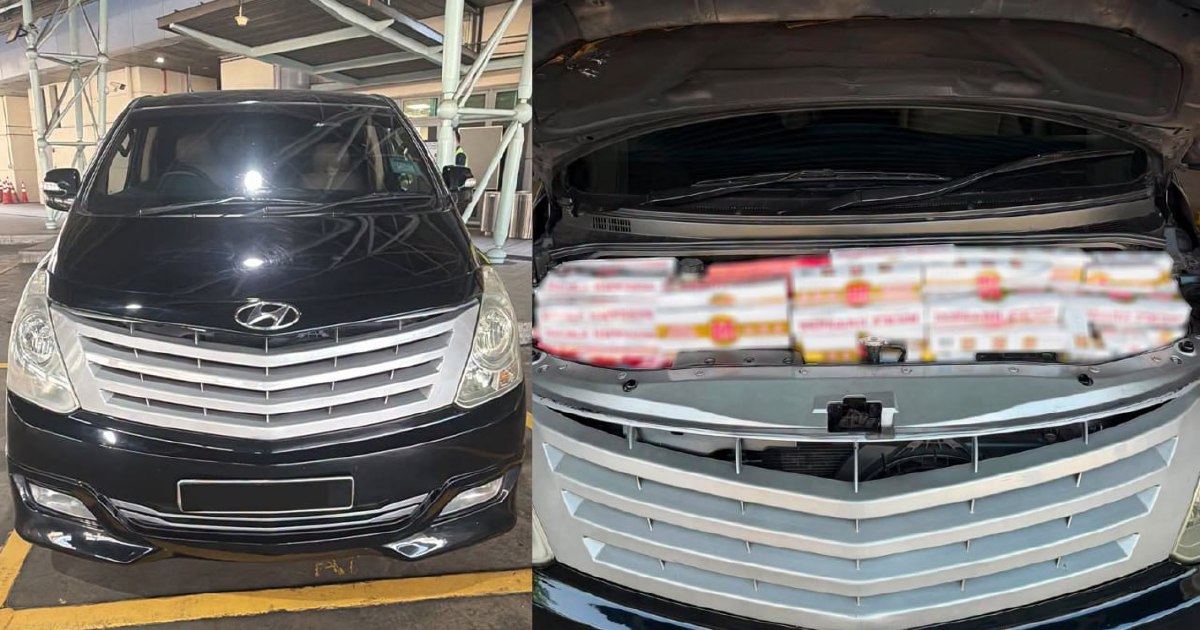
A 26-year-old Malaysian citizen has been apprehended by Singapore Immigration and Checkpoints Authority (ICA) officers following the discovery of more than 600 cartons and 900 individual packets of duty-unpaid cigarettes hidden within a concealed compartment beneath his multipurpose vehicle's floorboard. The motorist's vehicle has been seized as part of ongoing enforcement operations targeting the movement of illicit tobacco products across Singapore's borders.
The arrest underscores the persistent challenge posed by cigarette smuggling in the Straits region, where significant price differentials between Malaysia and Singapore create powerful economic incentives for illegal trafficking. Malaysia's considerably lower tobacco excise duties make locally-manufactured cigarettes substantially cheaper than their Singapore-taxed equivalents, establishing a lucrative arbitrage opportunity that continues to attract smugglers despite escalating penalties and enforcement efforts.
Singapore's authorities have intensified their vigilance at border checkpoints as part of a broader strategy to combat contraband cigarette imports, which undermine government tax revenues and circumvent strict tobacco control regulations. The city-state maintains among Asia's highest cigarette excise taxes, with duties designed not only to generate revenue but also to discourage smoking consumption through price mechanisms. Smuggled cigarettes directly threaten these public health and fiscal objectives by flooding the market with untaxed products sold at substantial discounts.
The concealment method employed in this case—utilising a specially modified hidden compartment beneath the vehicle's floorboard—reflects the sophistication increasingly adopted by smuggling networks operating across Malaysia-Singapore border crossings. Such modifications represent deliberate attempts to evade detection at inspection points, suggesting the involvement of organised distribution networks rather than casual individual smugglers. The effectiveness of this particular technique highlights vulnerabilities that enforcement agencies must continually address through enhanced screening protocols and technological improvements.
For Malaysian travellers and businesses, this arrest carries important implications regarding the legal risks and serious consequences attached to tobacco smuggling operations. Singapore's legal framework imposes substantial penalties on individuals convicted of importing duty-unpaid cigarettes, including imprisonment, substantial fines, and vehicle forfeiture. The seizure of the multipurpose vehicle represents a significant financial consequence for the detained individual beyond potential criminal penalties, serving as a deterrent to would-be smugglers.
The cigarette smuggling problem extends beyond individual arrests, reflecting broader regional illicit trade dynamics that affect Malaysia, Singapore, and other Southeast Asian nations. Criminal organisations orchestrating these operations often operate across borders, coordinating supply networks and distribution channels that span multiple jurisdictions. This transnational dimension complicates enforcement efforts, requiring enhanced bilateral cooperation and intelligence-sharing between Malaysian and Singaporean authorities to dismantle trafficking organisations rather than merely intercept individual consignments.
Malaysia's role as a primary source of contraband cigarettes destined for Singapore and other regional markets has prompted increased scrutiny of manufacturing practices and export controls. While major tobacco manufacturers operate legitimately and maintain proper regulatory compliance, illicit or diverted production channels continue supplying smuggling networks. The substantial volume involved in this particular seizure—exceeding 600 cartons—suggests movement through established smuggling routes rather than sporadic personal trafficking, indicating coordinated operational activity.
Singapore's ICA has progressively enhanced checkpoint inspection capabilities, deploying advanced detection equipment and intelligence-driven targeting to intercept smuggled goods. The successful discovery of this particular shipment reflects these improvements, though the continuing prevalence of smuggling attempts demonstrates that enforcement remains locked in an ongoing operational contest against adaptive criminal networks. Each successful interception provides valuable intelligence regarding smuggling methodologies and preferred transit routes, informing future enforcement strategies.
For cross-border commuters and commercial operators, these enforcement activities introduce additional delays and procedural complexity at checkpoints. The presence of sophisticated contraband detection operations, while essential for regulatory compliance, necessarily impacts legitimate border traffic throughput. Travellers should prepare for potentially extended inspection times, particularly for commercial vehicles that present higher risk profiles under current enforcement prioritisation.
The economic disparity driving cigarette smuggling reflects broader tax policy challenges throughout Southeast Asia, where significant excise tax variations between neighbouring jurisdictions create arbitrage opportunities exploited by smuggling networks. Addressing this phenomenon requires comprehensive approaches encompassing enforcement, international cooperation, regulatory alignment discussions, and strategic pricing policy coordination—measures extending well beyond individual apprehensions at border crossings.
Regional authorities face mounting pressure to intensify collaboration in combating tobacco smuggling, as successful transnational criminal operations depend upon exploiting jurisdictional boundaries and enforcement gaps. Information-sharing protocols, joint investigation teams, and coordinated operational planning increasingly feature in bilateral and multilateral agreements addressing organised contraband movement. The arrested Malaysian's case will likely contribute intelligence supporting these broader cooperative frameworks.

