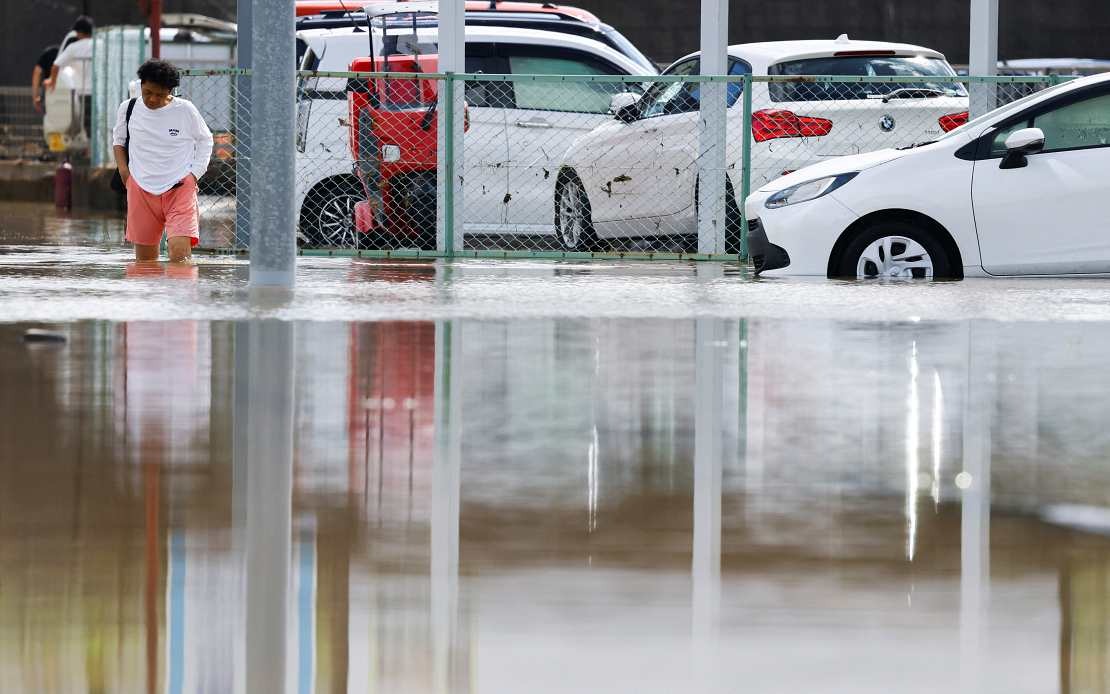
The Malaysian Embassy in Tokyo has issued a travel advisory cautioning its nationals to refrain from unnecessary journeys as catastrophic flooding continues to ravage the Kanto region, with Chiba Prefecture bearing the brunt of the deluge. The directive came after torrential downpours triggered what Japanese authorities have described as unprecedented weather patterns, causing widespread transport paralysis and forcing mass evacuations across multiple prefectures.
The scale of disruption has been severe. Major road and rail corridors throughout Chiba and neighbouring areas have sustained considerable damage, with service suspensions leaving tens of thousands of people unable to move freely. Most notably, approximately 7,000 travellers found themselves stranded at Narita International Airport, one of Japan's busiest aviation hubs, as flooding severed the ground links that normally connect the facility to central Tokyo and beyond. The incident underscores how quickly natural disasters can incapacitate even the most developed transportation infrastructure.
Death tolls continue climbing in the aftermath of the deluge. According to Kyodo News, the rainfall has claimed at least eight lives so far, with rescue operations still underway in affected communities. The Japan Meteorological Agency escalated its alert system to the maximum Level 5 classification, signalling extraordinary danger for more than one-third of Chiba's municipalities surrounding the Tokyo metropolitan area. Such designations are rare and indicate conditions so severe that they warrant the most urgent public response measures.
The authorities' response demonstrates the scale of the emergency. Evacuation orders were issued for over 400,000 residents at the crisis's peak, forcing families to abandon homes and seek shelter in designated centres. This mass displacement reflects not merely inconvenience but genuine peril, as flooding in densely populated regions can overwhelm emergency services and complicate rescue efforts. For Malaysian expatriates unfamiliar with Japanese disaster protocols, navigating such chaos poses considerable challenges.
The Malaysian Embassy's guidance specifically targets the practical risks facing nationals in affected zones. Citizens are instructed to remain away from inundated or topographically depressed areas prone to water accumulation, to heighten their situational awareness, and to remain connected to information streams from local authorities. The emphasis on vigilance recognises that flood situations evolve unpredictably; areas deemed temporarily safe may suddenly face fresh hazards as upstream water reserves overwhelm downstream defences.
Information access becomes critical during such crises. The embassy directed Malaysians to monitor updates from the Japan Meteorological Agency via its English-language portal, enabling citizens to receive real-time warnings and meteorological analysis directly from Japan's official weather authority. This approach reduces reliance on potentially garbled secondary sources and ensures access to authoritative guidance. Simultaneously, the embassy provided multiple contact channels through which distressed nationals could seek assistance, acknowledging that emergencies frequently occur outside standard business hours when regular diplomatic staff may be unavailable.
For Malaysian workers, students, and visitors currently in Japan, this advisory carries serious practical implications. Those in unaffected regions must weigh the necessity of any planned movement against potential hazards; postponement or cancellation emerge as rational options given the unpredictability of severe weather systems. Those already in Chiba or surrounding prefectures face more immediate imperatives to secure safe locations and monitor official communications continuously.
The incident highlights vulnerabilities in Japan's transport networks that parallel concerns across Southeast Asia. While Japan possesses some of the world's most sophisticated disaster management systems, unprecedented rainfall patterns—increasingly attributed to climate change—can exceed design tolerances built into infrastructure decades ago. Malaysia and other tropical nations should study Japan's response mechanisms as a model while recognising that escalating weather extremes may outpace even well-funded mitigation efforts.
The specific mention of 7,000 stranded passengers at Narita carries symbolic weight. Narita serves as Japan's primary international gateway; its paralysis signals that even critical national infrastructure remains vulnerable to extreme weather. For Malaysian businesses with supply chains dependent on Japan, and for those planning travel to or through Tokyo, the event demonstrates why weather contingency planning deserves serious attention. The blocking of ground transport simultaneously disrupted cargo operations, affecting regional trade flows.
Matriculants and workers should note that such events, while dramatic, remain statistically uncommon in modern Japan. However, the trend toward increasingly severe weather systems necessitates updated risk assessments. The Malaysian government's proactive advisory stance reflects appropriate caution without alarmism—the embassy continues operating and providing services, but with realistic acknowledgement that present conditions demand heightened precautions.
Looking ahead, affected Japanese communities will require extensive recovery periods. Roads and rail lines must be inspected, repaired, and tested before resuming normal operations. Agricultural zones in Chiba may experience significant losses. For Malaysian nationals with long-term residency or professional commitments in the region, patience and flexibility will prove essential as normalcy gradually returns. The embassy's provision of emergency contact numbers ensures that those facing genuine hardship can access consular support throughout the restoration process.

