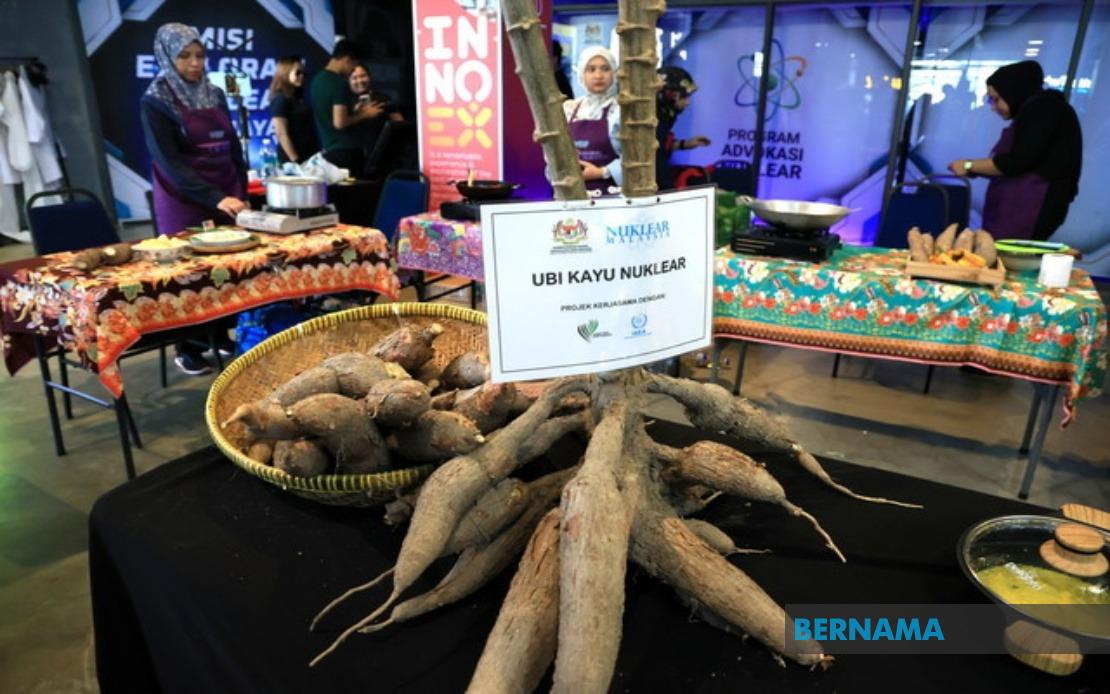
Malaysia's drive to enhance agricultural productivity has yielded a significant breakthrough as the Malaysian Nuclear Agency unveils cassava varieties engineered through nuclear technology that dramatically compress harvesting timelines. Developed over five to six years of intensive research beginning in 2021, these new varieties represent a substantial leap forward in crop efficiency, potentially transforming the economics of cassava cultivation across the nation and the wider Southeast Asian region where cassava remains an important staple and industrial crop.
The acceleration of the cassava lifecycle addresses a fundamental constraint that has long plagued local farming operations. Traditional Malaysian cassava varieties require 11 to 12 months before reaching harvest maturity, a lengthy production window that limits farmers' ability to generate multiple yields annually and constrains their income potential. The newly developed varieties slash this period by nearly half, achieving market-ready maturity within just six months while maintaining or even exceeding the yield levels of conventional strains. This efficiency gain opens significant possibilities for intensified cultivation and improved farm profitability without requiring expansion of agricultural land or substantial capital investment in new infrastructure.
Research officer Norazlina Noordin from the agency's Agrotechnology and Biosciences Division explained the methodology underlying this development. The process begins with cassava stem cuttings exposed to gamma radiation, which induces genetic mutations at the cellular level. Unlike chemical treatments or genetically modified approaches that introduce foreign genetic material, gamma radiation simply passes through the plant tissue without leaving radioactive residue, much like diagnostic X-rays in medical settings. Following irradiation, these cuttings are systematically planted and evaluated across multiple generations to identify and isolate specimens exhibiting the desired traits of accelerated maturity and robust productivity.
The screening phase represents perhaps the most labour-intensive and time-consuming aspect of the research endeavour. Scientists must evaluate approximately 1,000 individual plants across successive growing cycles to identify which specimens maintain their enhanced characteristics consistently. Genetic mutations occur randomly throughout exposed populations, and many promising variations revert to original characteristics in subsequent generations. This instability means researchers must observe plants over extended periods to ensure that improvements in maturity and yield remain permanent traits rather than temporary anomalies. Such rigorous validation typically demands six to seven years of continuous observation before researchers can confidently release new varieties to commercial growers.
The collaboration spanning government agencies and international expertise underscores the significance of this achievement. The Malaysian Department of Agriculture provided essential field-testing infrastructure, allocating planting areas where researchers could conduct the screening process under controlled agricultural conditions. The International Atomic Energy Agency extended crucial technical and financial support, contributing approximately RM100,000 in research grants over the five-year development cycle. This partnership model demonstrates how Southeast Asian nations can leverage both domestic agricultural knowledge and international scientific cooperation to accelerate agricultural innovation.
Commercialisation timelines suggest these varieties could reach farmers' fields within the next two years, contingent upon completing final regulatory assessments and establishing production protocols. The potential economic implications extend considerably beyond simple time savings. The capacity to harvest cassava twice yearly instead of once dramatically improves land productivity and farmer income potential. For smallholder cultivators operating on limited acreage, this efficiency translates directly into doubled annual revenue streams without proportional increases in labour, fertiliser, or water inputs. At the national level, accelerated cassava production strengthens Malaysia's agricultural resilience and reduces vulnerability to supply chain disruptions in cassava-dependent industries.
The applications of nuclear technology in crop development extend well beyond cassava. The Malaysian Nuclear Agency is conducting parallel research on bananas, sweet potatoes, taro, kenaf, and Napier grass, targeting similar objectives of enhanced yield and improved stress tolerance. Researchers are particularly focused on developing varieties resistant to emerging diseases, pest pressures, and increasingly variable weather patterns linked to climate change. These multi-crop initiatives reflect a comprehensive strategy to diversify agricultural resilience across several commodity groups simultaneously, rather than depending on single breakthrough innovations.
For industrial applications, the agency's kenaf research programme aims to develop varieties optimised for biomass-based fibreboard production, potentially supporting Malaysia's expanding biocomposite materials sector. Similarly, improved Napier grass varieties promise higher nutritional content and yield for livestock feed production, supporting the nation's animal agriculture and dairy industries. These extensions demonstrate that nuclear technology applications in Malaysian agriculture transcend mere food crop optimisation, encompassing broader economic sectors dependent on agricultural raw materials.
The food security implications of accelerated cassava cultivation carry particular weight for Southeast Asia, where cassava represents an essential protein and carbohydrate source, particularly among lower-income populations. Faster production cycles combined with maintained or improved yields create mechanisms for increasing food availability at lower cost points, directly supporting nutrition security objectives. Additionally, domestic cassava production reduces Malaysia's import dependency for this commodity, protecting against international price volatility and supply disruptions that could destabilise vulnerable consumer segments.
Public perception of nuclear technology in agriculture requires careful management, and the agency's emphasis on radiation safety reflects this awareness. Unlike genetic modification approaches that often encounter consumer resistance in some markets, radiation-induced mutation breeding benefits from historical acceptance and scientific validation across international agricultural communities. The gamma radiation process produces zero radioactive contamination in final plant products, a distinction the agency actively communicates to address potential consumer anxieties. This transparency proves essential for market acceptance, particularly as new varieties transition from research facilities to commercial farms to consumer markets.
The broader policy context suggests Malaysian agricultural innovation may increasingly depend on leveraging nuclear and other advanced technologies to overcome productivity constraints without expanding land use. With rapid urbanisation consuming agricultural acreage and environmental considerations limiting expansion opportunities, intensification through improved varieties becomes strategically essential. The cassava project exemplifies this transition toward technology-driven agricultural development, positioning Malaysia as a regional leader in applying nuclear science to practical farming solutions.
As these cassava varieties move toward commercialisation within the next two years, success will depend on establishing effective knowledge-transfer mechanisms reaching smallholder farmers, many of whom may lack familiarity with new cultivation protocols. Government extension services, agricultural cooperatives, and farmer associations will require training resources to ensure rapid and effective adoption across diverse growing regions. The economic benefits of faster maturation cycles will only materialise if farmers receive adequate support transitioning from traditional practices to optimised management of the new varieties.

