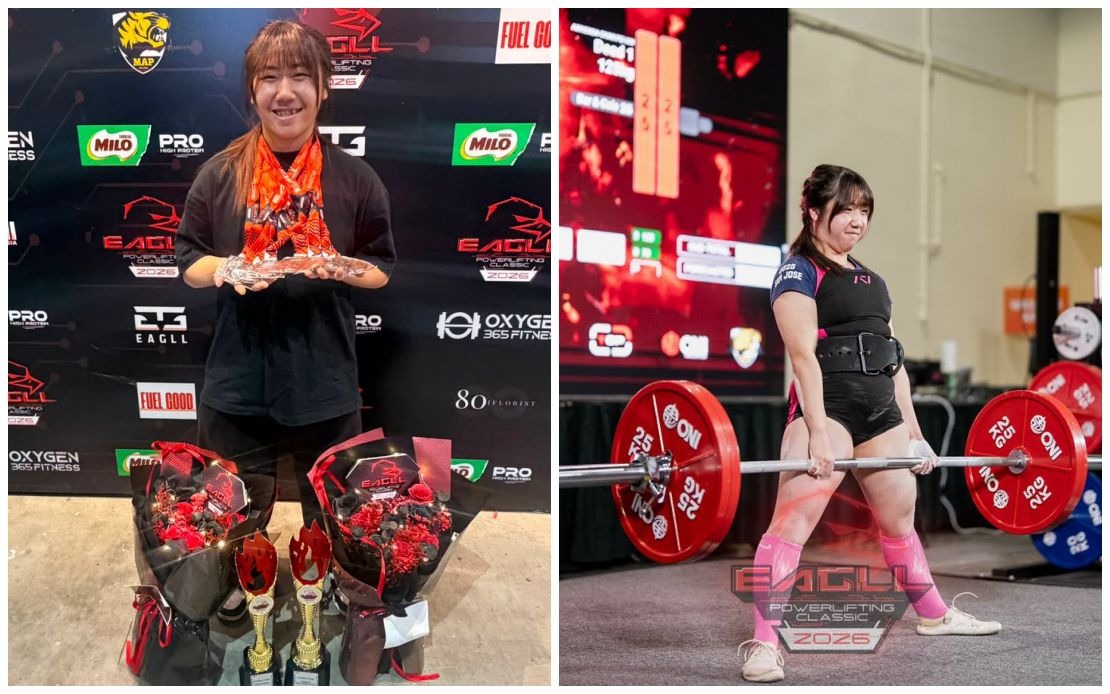
At just 151 centimetres tall and twenty years old, Abrienda Chan has emerged as a potent force in Malaysian powerlifting, turning years of disciplined preparation into a breakthrough performance that rewrote the national record books. The Sarawak-born athlete achieved the milestone at the Eagle Powerlifting Classic 2026 in Kuala Lumpur, shattering five records across multiple disciplines and age categories in the Under-57 kilogramme division, signalling her readiness to compete at the world's highest levels.
The magnitude of Chan's achievement becomes clearer when examining the specific records she obliterated during the competition. Her open squat record now stands at 128 kilograms, while she set new benchmarks in the bench press across both junior and open divisions at 70 kilograms. Most impressively, her combined total record of 343 kilograms in both age categories places her firmly among the sport's elite performers at her weight class and experience level. These weren't incremental gains but substantial jumps that demonstrate the physical and technical proficiency she has developed under coaching.
The competitive haul extended beyond the raw numbers of broken records. Chan accumulated seven gold medals and a single silver across her entries in both junior and open age categories, reflecting the breadth of her dominance during a single event. Her performance attracted particular attention because she competed across multiple divisions, a demanding approach that requires athletes to manage fatigue, strategy, and psychological focus across an extended competition schedule. The decision to enter both categories underscored confidence in her preparation and conditioning.
When discussing her approach to the competition, Chan revealed a pragmatism often lacking in younger athletes pursuing personal bests. She acknowledged that technical difficulties during her final squat attempt prevented her from chasing a junior squat record, while her team made deliberate choices to adopt conservative strategies in the deadlift to secure overall titles rather than chase additional milestone records. This measured approach yielded results: she captured the Junior and Sub-Junior Overall Championship while surprisingly finishing as runner-up in the Open Overall standings, a placement that astonished observers given her relative youth in that category.
Chan's trajectory within Malaysian powerlifting offers useful context for understanding the scale of her current achievements. She previously dominated the Under-52 kilogramme sub-junior category and continues to hold the complete set of national records across squat, bench press, and deadlift in that division. Rather than stalling at that level, her progression to the heavier weight class demonstrates a deliberate developmental pathway designed to build capacity while maintaining competitive dominance. This systematic advancement suggests both athlete and coaching staff are thinking strategically about long-term competitive potential rather than merely chasing short-term victories.
The distinction between her junior success and her unexpected performance in the open category deserves examination for what it reveals about Malaysia's powerlifting depth. That a junior athlete could finish second in an open competition comprising significantly heavier and more experienced lifters indicates either exceptional individual talent or, more likely, a combination of superior technique, intelligent programming, and mental resilience. Chan herself expressed surprise at this result, describing it as the competition's most unexpected outcome. This humility, paired with genuine shock at her own capabilities, suggests she has room for continued growth and improvement—a prospect that should alarm competing nations eyeing the upcoming world championships.
Chan's preparation for international competition has benefited from meaningful institutional support that extends beyond traditional coaching relationships. She highlighted contributions from Turbo Fitness, which provided training facilities and assistance with travel expenses for competition, allowing her to concentrate entirely on athletic development rather than juggling financial constraints. Family backing and dedicated coaching completed the support structure. In Malaysia's sporting context, where many aspiring athletes lack such comprehensive backing, Chan's access to this ecosystem positions her advantageously for the gruelling preparation cycles that international powerlifting demands.
Her credentials at regional level have already been established. Chan earned gold at the 2024 Asian Classic Powerlifting Championships, a significant credential that validated her technical proficiency and competitive temperament against Asia's strongest lifters. The Eagle Powerlifting Classic victory and records have only reinforced that status. These achievements collectively suggest that Malaysian powerlifting possesses a young talent capable of genuinely competing at world level rather than merely participating.
Chan's explicit targets for the coming year provide a clear measure for assessing whether her current momentum translates into sustained international success. She has identified the 2027 World Classic and Equipped Bench Press Championships in Istanbul, Turkey and the 2027 World Classic Sub-Junior and Junior Powerlifting Championships in Haining, China as her major objectives. Her stated aspiration involves breaking into the world's top three rankings in the U57 junior category—an ambitious but not unrealistic target given her current national dominance and the rate at which she continues to improve baseline metrics. These are championships where genuine competitors from around the world gather, not regional showcases, meaning any top-three finish would represent significant achievement for Malaysian powerlifting on the global stage.
For Malaysia's sports community, Chan's emergence holds broader implications. Powerlifting remains a relatively underdeveloped competitive discipline in the nation compared to traditional sports, yet Chan demonstrates that world-class performances are achievable with proper development pathways, quality coaching, and institutional support. Her success at such a young age, combined with multiple years of competitive development ahead, suggests Malaysian powerlifting could build deeper international credibility. Her journey also illustrates how body diversity—her relatively diminutive stature—need not constrain athletic achievement in sports often perceived as dominated by larger physiques, potentially broadening the appeal and accessibility of the discipline domestically.

