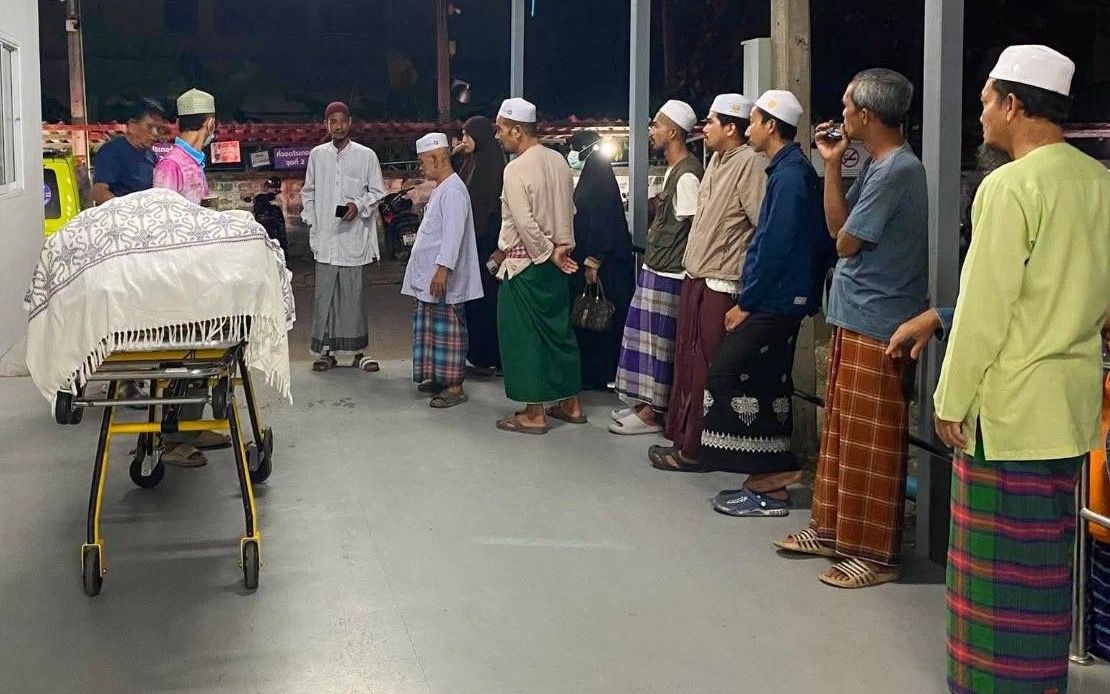
A Malaysian religious student lost his life in a road tragedy in southern Thailand after the motorcycle he was riding as a passenger collided with an electricity pole in Yala's Mueang district. The incident occurred on Saturday afternoon in the Bannang Sareng area, claiming the life of the 20-year-old pillion rider from Perlis and leaving his 22-year-old companion, the motorcycle operator from Kuala Kedah in Kedah, with grave injuries.
According to Mueang Yala Police Chief Col Chatchai Sakdee, preliminary findings suggest the driver lost command of the two-wheeler before striking the utility pole. The pillion passenger died at the scene from extensive head trauma, while the rider sustained serious injuries requiring immediate medical intervention. The investigation indicates a loss of control rather than involvement with other vehicles, pointing to either mechanical failure, road conditions, or driver error as possible contributing factors.
The critically injured rider has been transported to Yala Central Hospital, where he currently remains in the Intensive Care Unit fighting for his recovery. Medical staff report he has not regained consciousness since the crash, leaving his family and friends in a state of deep anxiety about his prognosis. His condition underscores the severity of the impact and the precarious nature of motorcycle travel on Thai roads, where such accidents frequently result in devastating outcomes.
The Malaysian Consulate in Songkhla has confirmed both victims held Malaysian citizenship and stated it is coordinating with families to finalise the necessary administrative procedures. Consular officials noted they are awaiting contact from the next of kin to process documentation and arrange repatriation of the deceased. This bureaucratic necessity, while routine, adds another layer of challenge for grieving relatives during an already traumatic period.
Investigations reveal both young men were tahfiz students—Quranic memorisation scholars—enrolled at Pondok Padang Pusu, a religious boarding institution located in Yarang District, Pattani province. They were en route to the pesantren when the accident claimed the Perlis student's life. The boarding school, part of Thailand's Islamic education network, serves Malaysian and local Muslim students pursuing religious studies in a region historically significant to Islam in Southeast Asia.
This tragedy raises renewed concerns about road safety among Malaysian students studying abroad in Thailand's southern provinces. The region, home to numerous Islamic educational institutions attracting Malaysian families seeking traditional Islamic learning, has seen periodic accidents involving students commuting between facilities. The rural and semi-urban roads connecting pesantren facilities to towns often lack adequate safety infrastructure, and motorcycle travel remains the primary transport mode for economically disadvantaged students.
Thailand's road safety record remains problematic compared to developed nations, with high fatality rates particularly among motorcycle users. Motorcycles account for the overwhelming majority of road deaths in the kingdom, a pattern reflecting the vehicle's ubiquity among lower-income populations and inadequate enforcement of safety regulations. Young riders, often inexperienced, face additional risk when navigating unfamiliar roads in different provinces.
The incident highlights the vulnerability of Malaysian students engaged in religious studies abroad, many of whom come from rural or lower-income backgrounds. While pesantren education remains highly valued within Malaysian Muslim communities for its comprehensive Islamic curriculum, the associated risks of living and studying in neighbouring countries demand greater attention from both Malaysian and Thai authorities. Enhanced safety measures, improved road infrastructure, and vehicle maintenance standards could significantly reduce such preventable tragedies.
For the Malaysian community in Thailand, this accident represents a sobering reminder of the human cost of transnational education. The loss of a young life dedicated to Islamic scholarship impacts not only his family and institution but ripples through the broader network of Malaysian students pursuing religious education in the region. The incident may prompt renewed discussions about duty-of-care obligations toward Malaysian citizens abroad and the adequacy of consular support systems during crises.

