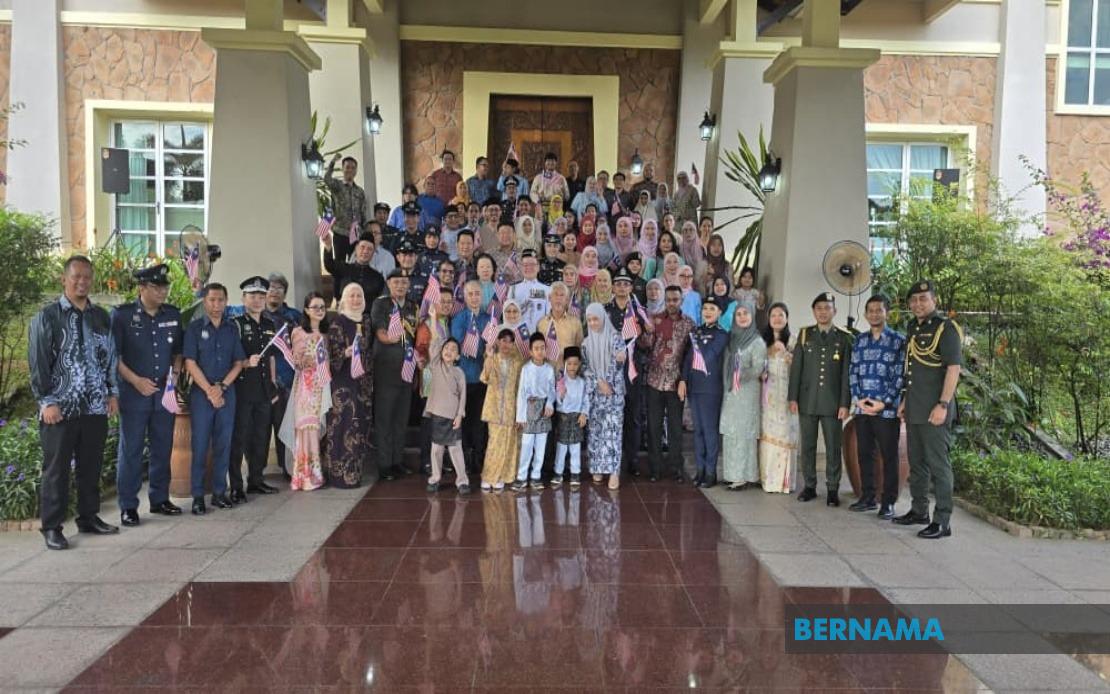
The Malaysian High Commissioner to Singapore, Datin Paduka Anizan Siti Hajjar Adnin, has underscored the pivotal diplomatic role that Malaysians living in the republic play in nurturing and strengthening the relationship between Kuala Lumpur and Singapore. Speaking during the Malaysian High Commission's 2026 National Day parade celebrations held at Rumah Malaysia, she described the Malaysian community in Singapore—encompassing both resident professionals and the thousands of cross-border commuters—as essential conduits for fostering goodwill and understanding between the two nations.
The High Commissioner's remarks carry particular weight given the intricate nature of Malaysia-Singapore relations, which transcend conventional diplomatic channels and extend deep into the fabric of everyday life. The relationship encompasses historical connections dating back centuries, geographical proximity that shapes economic interdependence, cultural intersections, and family networks that span both sides of the Causeway. Within this complex tapestry, individual Malaysians functioning in various capacities across Singapore represent tangible embodiments of their nation's values and aspirations, making their conduct and professional comportment matters of considerable national significance.
Anizan articulated a vision wherein Malaysians abroad become what she termed "unofficial ambassadors," individuals whose daily interactions and professional achievements communicate far more effectively than formal diplomatic statements ever could. This concept recognises a fundamental reality: the personal relationships and professional networks developed by Malaysian expatriates often shape perceptions of Malaysia in ways that institutional messaging cannot replicate. Whether in corporate boardrooms, educational institutions, healthcare facilities, or small business operations across Singapore, these Malaysians demonstrate through action the qualities their nation aspires to project internationally.
The High Commissioner emphasised that Malaysians in Singapore occupy a distinctly privileged position, one that carries corresponding responsibilities. She called upon the community to consciously embody Malaysia's finest attributes—encompassing integrity in professional dealings, excellence in execution, courteous conduct in social interactions, mutual respect in diverse settings, and a genuine commitment to community welfare. These virtues, when consistently demonstrated, create a positive aggregate impression that subtly but meaningfully influences how Singapore's population perceives and relates to Malaysia as a nation.
Particularly significant was Anizan's appeal to younger Malaysians in Singapore to maintain conscious connection with their cultural heritage and linguistic identity. The Malay language, as the constitutional national language of Malaysia, represents more than mere linguistic convention; it embodies national identity and serves as a unifying force across Malaysia's diverse population. Her exhortation that younger Malaysians in Singapore continue appreciating and practising their heritage addresses the genuine challenge that expatriate communities face regarding generational transmission of cultural values, particularly when residing in a cosmopolitan, English-dominant environment like Singapore.
The vision articulated by the High Commissioner reflects a nuanced understanding of Malaysia's international positioning. She emphasised that Malaysia aspires to be a nation that radiates confidence in its own identity while remaining open to global influences and opportunities. This balance—between rootedness and openness—requires that Malaysians abroad actively maintain their connection to home values while engaging authentically with their host society. The apparent contradiction between these impulses dissolves when understood as complementary rather than conflicting objectives.
The specific institutional framework within which these remarks were made—the Malaysian High Commission's National Day parade at Rumah Malaysia—itself symbolises the formal and informal infrastructure through which Malaysia's diaspora communities maintain connection to their homeland. With over seventy High Commission staff members and their family members participating in the event, the gathering represented not only a ceremonial observance but also a working affirmation of institutional commitment to nurturing the Malaysian community in Singapore and facilitating their role as cultural and diplomatic bridges.
For Malaysia-Singapore relations specifically, the mobilisation of ordinary Malaysians as relationship-builders addresses practical strategic concerns. The bilateral relationship, while broadly positive and institutionally sound, requires constant tending to remain resilient against periodic frictions over resource allocation, security matters, or other interstate complications. When thousands of Malaysian professionals and workers maintain positive relationships with Singaporean colleagues and neighbours, they create baseline goodwill that provides cushioning during moments of official tension or disagreement.
The High Commissioner's message also carries implications for how Malaysia conceptualises its soft power and international influence. Rather than relying exclusively on governmental institutions and formal diplomacy, Malaysia increasingly recognises that its citizens themselves constitute valuable diplomatic assets. This represents a democratisation of sorts within diplomatic practice, one that acknowledges that international relations in an interconnected world operate simultaneously at multiple levels—from formal state-to-state interactions down to individual professional and social networks that cumulatively shape bilateral atmospheres.
For Malaysian professionals considering opportunities in Singapore or already based there, the High Commissioner's remarks provide both validation and implicit guidance. The validation comes in recognition that their presence and contributions matter at a national level. The guidance emerges through her articulation of standards and values that should animate their conduct, suggesting that being Malaysian abroad represents not merely an individual career choice but participation in a larger national project of relationship-building and value projection.
As Malaysia navigates an increasingly complex regional and global environment, the role of its diaspora communities in countries like Singapore—a neighbour with whom Malaysia shares dense economic, social, and institutional ties—becomes ever more consequential. The High Commissioner's recognition of Malaysians in Singapore as unofficial ambassadors and essential bridges represents more than ceremonial rhetoric; it reflects genuine strategic understanding that the relationships individuals build, the standards they maintain, and the values they demonstrate collectively shape the quality of bilateral relations in ways that formal agreements and diplomatic protocols cannot wholly determine.

