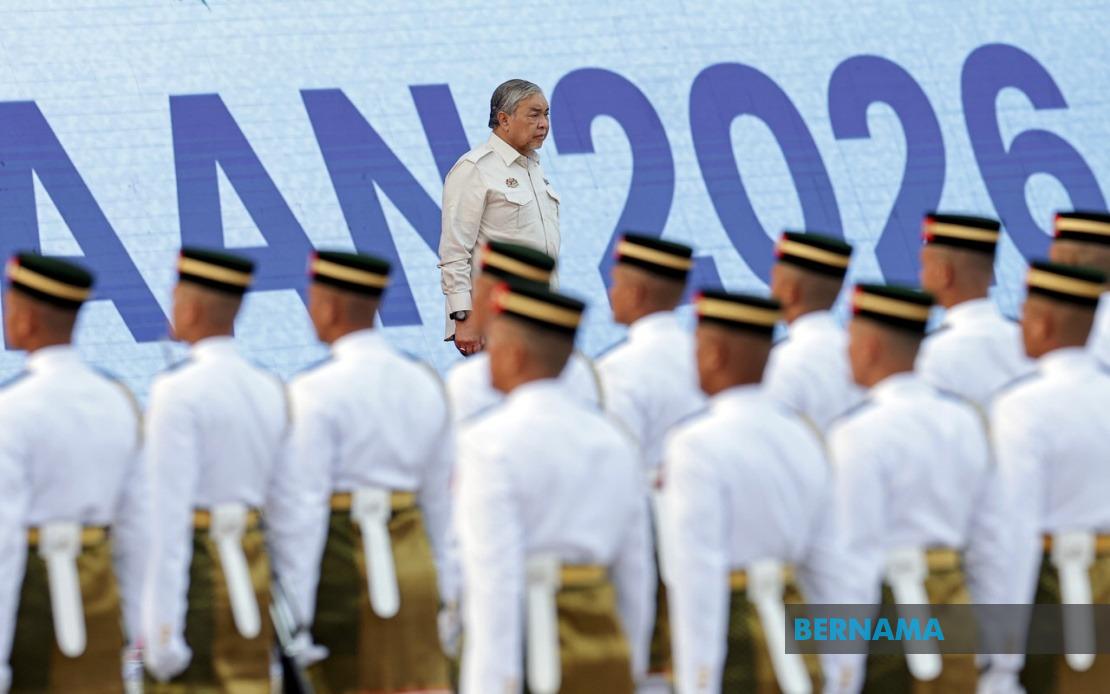
Malaysia's National Day celebration this year has emerged as a watershed moment in reflecting the nation's strengthening sense of collective identity and patriotic fervour, according to Deputy Prime Minister Datuk Seri Dr Ahmad Zahid Hamidi. Speaking at Dataran Putrajaya following the 31 August festivities, he characterised the event as surpassing all previous commemorations in both scale and spirit, signalling a discernible deepening of patriotic sentiment across Malaysian society.
The assertion comes at a particularly significant juncture for national cohesion in Malaysia. With the nation navigating complex political and social dynamics, official acknowledgement of heightened patriotism may be interpreted as an indicator of successful government messaging around national unity and shared purpose. The Deputy Prime Minister's remarks suggest that organisers perceive measurable momentum in public engagement with national symbols and collective celebration—a metric often considered barometric for social stability and citizen buy-in to state narratives.
Dataran Putrajaya transformed into a sea of humanity as over 100,000 people converged on the capital's ceremonial heart to participate in the festivities. The sheer volume of attendance itself underscores the scale of public participation, though it remains to be established whether this represents organic enthusiasm or reflects improved organisational capacity and promotional efforts by authorities. The influx began early in the morning, suggesting genuine anticipation rather than casual involvement, with families and community groups staking out vantage points along parade routes.
The centrepiece parade itself demonstrated considerable logistical coordination, with 10,819 participants mobilised across 76 distinct contingents and 22 marching bands. This composition suggests representation spanning military, paramilitary, civilian, cultural, and educational organisations—the customary breadth intended to showcase national diversity through structured pageantry. The parade's scale reflects substantial investment of state resources and planning infrastructure, indicating the government's prioritisation of National Day as a major political and cultural event.
Under the thematic banner "Malaysia MADANI: Kesejahteraan Dinikmati"—emphasising societal wellbeing and the blessings of prosperity—the celebration functioned as a platform for articulating the government's vision of inclusive development. This theme carries deliberate political weight, linking national identity to tangible quality-of-life improvements and the broader Malaysia MADANI policy framework championed by the administration. By anchoring patriotic sentiment to material welfare narratives, officials attempt to ground abstract notions of national pride in bread-and-butter governance outcomes.
The presence of His Majesty Sultan Ibrahim and Her Majesty Raja Zarith Sofiah conferred constitutional gravitas on the proceedings, positioning the monarchy as central validators of national celebration. The dual attendance of Prime Minister Datuk Seri Anwar Ibrahim alongside senior Cabinet ministers reinforced the unified nature of state participation, presenting governance structures as cohesively aligned around national commemoration. Such symbolic synchronisation serves important functions in projecting governmental stability and institutional consensus.
Ahmad Zahid's personal engagement with attendees—spending time circulating among crowds throughout Dataran Putrajaya—represented a deliberate exercise in visible leadership and accessibility. This form of political theatre, wherein senior officials intermingle with ordinary citizens during national events, functions to humanise political authority and create impressions of approachability. For media consumption and public perception, such moments generate politically valuable imagery associating leadership with popular celebration.
The comparative framing of this year's celebration as materially improved versus preceding iterations warrants careful consideration. While organisational enhancements and enhanced promotional efforts undoubtedly played roles, the assertion that patriotism itself is objectively "growing" operates on less tangible terrain. Public attendance at officially-sanctioned celebrations does not necessarily reflect deeper shifts in patriotic consciousness; it may instead indicate improved accessibility, more effective marketing, favourable weather conditions, or heightened public holidays promotion.
For Malaysia's broader Southeast Asian context, the emphasis on National Day celebratory scale reflects regional patterns whereby governments instrumentalise patriotic commemoration as mechanisms for social cohesion and legitimacy-building. Nations across the region similarly marshal state resources around independence day observances, employing them as platforms for articulating national narratives and projecting governmental efficacy. Malaysia's iteration, with its emphasis on inclusivity and material prosperity, positions patriotism as inextricably linked to development outcomes and social contract fulfilment.
The implications for Malaysian governance extend to questions of how political authority sustains itself through ceremonial practice and collective participation rituals. When senior officials frame large-scale participation in national celebrations as evidence of rising patriotism, they construct a feedback loop wherein state-orchestrated events become indices of national sentiment. This interpretive framework empowers governments to claim popular legitimacy through public turnout, even as it leaves unexamined whether attendance reflects genuine patriotic conviction or merely compliance with social expectations and holiday traditions.
Looking forward, the 2026 National Day benchmark may establish elevated expectations for future commemorations. If the celebration's reported exceptionality becomes institutionalised as a new baseline, subsequent observances face pressure to match or exceed this year's scale and spectacle. This dynamic can drive progressive investment in celebratory infrastructure and organisation, yet simultaneously risks creating a perpetual arms race in ceremonial expenditure that becomes increasingly disconnected from grassroots patriotic sentiment or civic engagement outside formal state-sponsored contexts.

