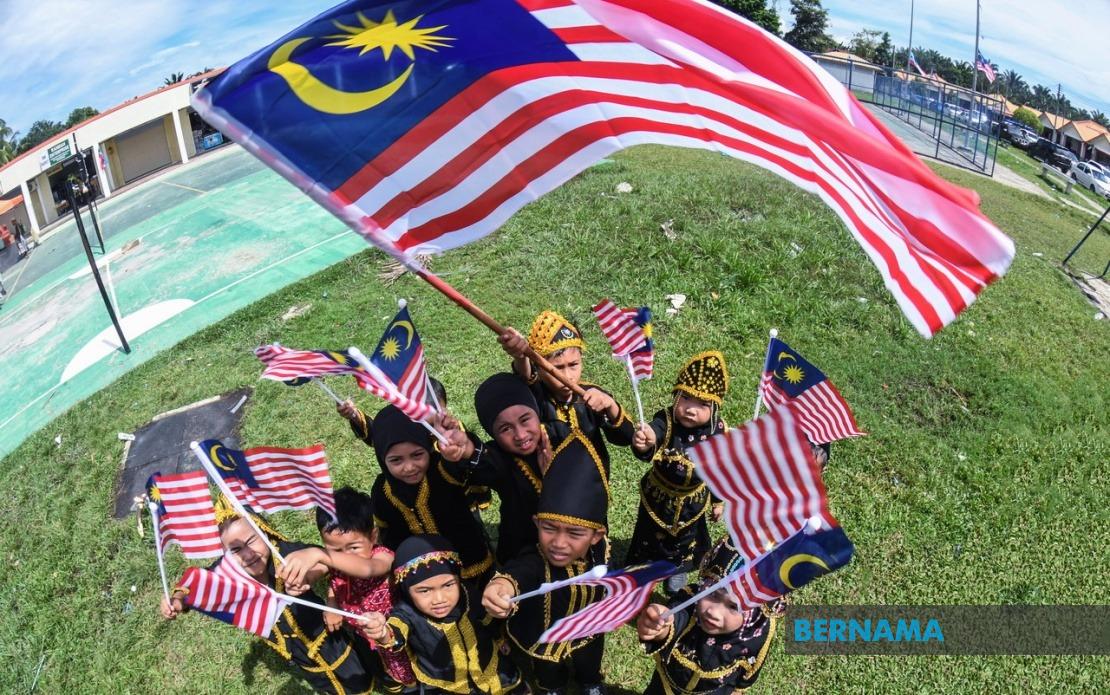
Malaysia's approach to celebrating National Month and Malaysia Day in 2026 is undergoing a significant shift in scale and format. The official launch of National Month and the Fly the Jalur Gemilang 2026 campaign will take place at the Ministry of Health Training Institute Sultan Azlan Shah in Tanjung Rambutan, Perak, on July 19, marking a departure from the expansive public gatherings that characterised previous years' festivities. According to Muhammad Najmi Mustapha, director of the Information Department's Communications and Community Development Division, this recalibration reflects both pragmatic concerns and a desire to maintain the essence of national celebration in an increasingly complex geopolitical environment.
The decision to scale back the main launch event demonstrates how Malaysia's federal government is recalibrating its celebratory approach in light of contemporary challenges. Previous iterations, including the 2025 launch in Muar, Johor, and the 2024 event in Cyberjaya, featured large-scale open-air events designed to attract maximum public participation. This year's transition to an indoor venue signals acknowledgment of pressing global issues that officials believe warrant a more measured public response. Muhammad Najmi specifically cited the global energy supply crisis and the escalating conflict in West Asia as factors informing the decision, suggesting that Malaysian policymakers are attempting to balance nationalist observance with broader international awareness and economic prudence.
Despite the reduced scale of the formal launch ceremony, government officials are keen to emphasise that the patriotic dimensions of the celebration will not be compromised. Prime Minister Datuk Seri Anwar Ibrahim is expected to officiate the proceedings beginning at 10 am, lending the event high-level political endorsement. The programme will receive comprehensive media coverage through Radio Televisyen Malaysia, the Malaysian National News Agency, and digital streaming platforms including the Facebook Live pages of Merdeka360, the Ministry of Communications, and the Information Department. This multi-platform distribution strategy ensures that citizens unable to attend the physical venue can nonetheless participate in the ceremonial aspects, effectively democratising access to a key national occasion.
The launch ceremony itself functions as a catalyst for broader national celebrations rather than as the centrepiece of festivities. Muhammad Najmi characterised the event as opening the pathway for programmes and activities throughout Malaysia during the extended National Month period. By delegating the responsibility for celebratory events to various communities, states, and organisations, the federal government is effectively distributing the labour and resources required to sustain patriotic observance across the country. This decentralised approach may prove particularly valuable for ensuring that National Month celebrations permeate Malaysian society comprehensively, reaching populations beyond those concentrated in major urban centres.
Central to the 2026 patriotic campaign is the continuation and expansion of the '1 Rumah 1 Jalur Gemilang' initiative, which encourages Malaysian households to display the national flag. This programme, introduced several years ago, has grown substantially and now encompasses nine distinct clusters rather than the original seven. The newly incorporated clusters focus on houses of worship and sports venues, broadening the campaign's reach into Malaysia's religious and athletic communities. The existing clusters spanning education, higher education, health, security, community development, industry, and government agencies ensure that patriotic expression permeates institutional structures throughout society, from schools and hospitals to corporate offices and military installations.
The campaign's emphasis on household flag-flying represents a deliberate strategy to cultivate patriotism at the grassroots level, fostering national consciousness through visible, tangible symbols. When multiplied across millions of Malaysian homes, the accumulated display of Jalur Gemilang creates a powerful visual assertion of national identity and collective belonging. This approach acknowledges that patriotism functions most effectively when it becomes embedded in everyday practice rather than confined to formal state occasions. For Malaysian residents in rural and semi-urban areas, the flag-flying campaign may represent their primary direct participation in national celebration, making the initiative particularly significant for ensuring inclusive representation of national sentiment across geographical boundaries.
Digital engagement strategies form another crucial dimension of the 2026 celebration framework. Officials are explicitly encouraging Malaysians to express patriotism through social media platforms, utilising the national flag as profile pictures and sharing celebration-related content. The specified hashtags—#HKHM2026, #MalaysiaMADANI, #KesejahteraanDinikmati, and #Merdeka360—create digital congregation points where Malaysians can articulate and visualise collective patriotic sentiment. This approach recognises that contemporary expressions of nationalism operate simultaneously across physical and virtual spaces, with social media functioning as a crucial venue for modern civic engagement. The hashtag-driven campaign may generate viral momentum, amplifying the reach of patriotic messages far beyond what traditional media channels can achieve.
The overarching theme selected for 2026 celebrations—'Malaysia MADANI: Kesejahteraan Dinikmati'—signals the government's intent to link patriotic observance with broader developmental objectives. Communications Minister Datuk Seri Fahmi Fadzil previously announced this thematic framework, which ties national celebration to the Malaysia MADANI concept emphasising prosperity and wellbeing. By framing patriotism in terms of shared prosperity, government messaging positions national loyalty as inseparable from tangible improvements in citizens' lives. This thematic integration suggests official recognition that contemporary nationalism must be grounded in material improvements and substantive governance outcomes rather than merely symbolic expressions of national pride.
The actual National Day ceremony, scheduled for August 31 at Dataran Putrajaya, will likewise adopt a modest yet vibrant approach rather than the grand productions occasionally characterised previous celebrations. This consistency in scaling ensures coherence across the multiple ceremonial moments constituting the 2026 National Month observance. The Putrajaya venue, Malaysia's administrative capital, carries particular symbolic weight as the location where federal governmental authority is physically seated. Holding the principal National Day ceremony there reinforces the connection between governmental responsibility and patriotic obligation, implicitly suggesting that national celebration is ultimately grounded in effective governance and institutional performance.
Malaysia's 2026 approach to national celebration reflects evolving understandings of how modern states cultivate patriotic sentiment among increasingly diverse and digitally connected populations. Rather than relying predominantly on the spectacular accumulation of resources and large public gatherings, the recalibrated strategy emphasises distributed participation across households, institutions, and digital platforms. This democratisation of celebration responsibility may ultimately prove more effective at sustaining patriotic consciousness throughout the year than occasional moments of concentrated governmental spectacle. For Malaysian policymakers navigating complex geopolitical challenges while maintaining domestic cohesion, the pivot toward modest yet inclusive celebration represents a pragmatic recalibration that acknowledges both contemporary constraints and enduring nationalist aspirations.

