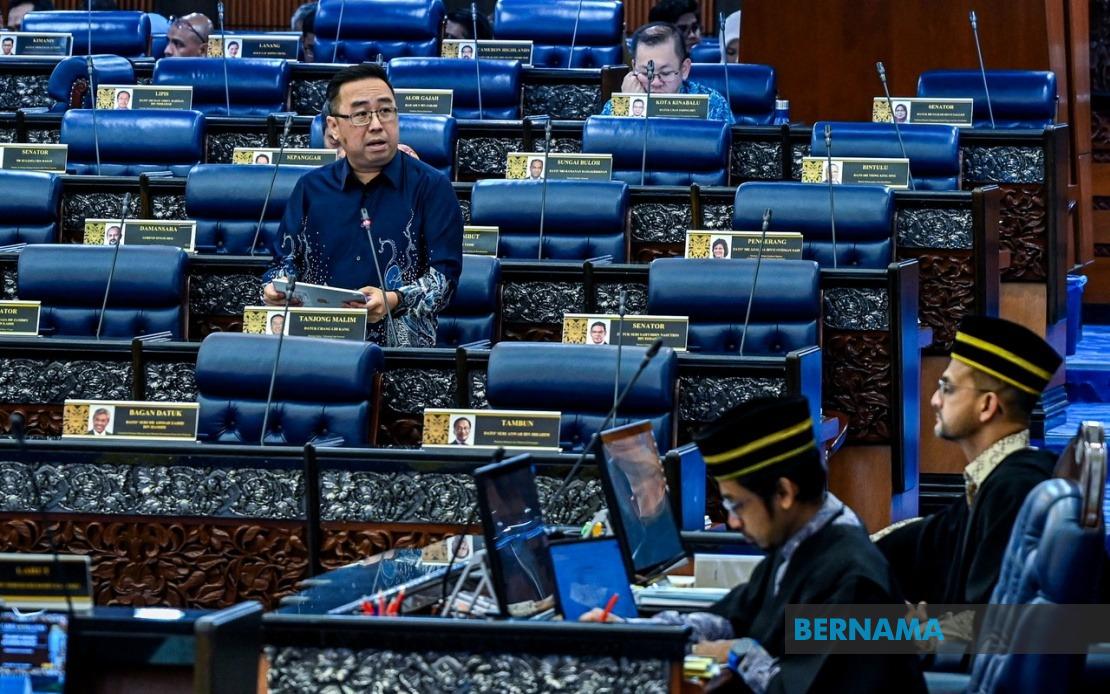
The Malaysian government has set an ambitious timeline to bring its advanced semiconductor packaging technology to market within the next two years, marking a significant step in the nation's push to establish itself as a player in the next-generation semiconductor ecosystem. Science, Technology and Innovation Minister Datuk Chang Lih Kang announced during parliamentary questioning that the technology developed under the Malaysia Science Endowment programme would undergo a rigorous capacity-building phase before full commercialisation. The RM185 million pilot project represents a substantial government commitment to bridging the gap between laboratory research and industrial-scale production of cutting-edge packaging solutions.
The initiative hinges on a consortium model that unites five domestic companies alongside government research institutions, a collaborative framework designed to accelerate the development of indigenous technological expertise. Rather than competing in isolation, these entities pool resources and knowledge to tackle the complex challenge of advancing Malaysia's position in semiconductor manufacturing. This approach reflects a growing recognition that sustainable industrial development in high-tech sectors requires coordinated effort across private and public players, particularly when developing proprietary technologies that demand considerable investment and technical risk-taking.
At the heart of the programme lies the concept of Technology Readiness Level progression, which serves as a standardised measure of technological maturity. The consortium's immediate objective is to elevate the packaging technology from TRL 5, which represents technology validation in a laboratory environment, to TRL 9, the stage where the innovation is deemed production-ready and commercially deployable. This progression is not merely bureaucratic categorisation but reflects tangible improvements in reliability, manufacturability, and cost-effectiveness that must be achieved before private companies can confidently invest in full-scale operations.
The two-year capacity-building phase carries implications beyond mere technical advancement. During this period, local manufacturing firms will receive structured training and support to develop the operational capabilities necessary for advanced packaging work. Advanced packaging represents a higher-value segment of semiconductor manufacturing compared to basic assembly and testing, commanding premium prices and requiring sophisticated infrastructure and expertise. By building local capacity now, Malaysia aims to create a skilled workforce and operational ecosystem capable of competing internationally once government support concludes.
Minister Chang emphasised a crucial distinction in the government's role: the state intends to catalyse the transition from research to commercialisation but will not serve as a perpetual financial crutch. Once the technology reaches TRL 9, full operational and commercial responsibility transfers entirely to the participating companies. They must independently secure customer contracts, arrange private financing for scaling operations, and sustain profitability through market competition. This deliberate handoff reflects policy recognition that long-term industrial viability depends on companies developing genuine competitive advantages rather than relying indefinitely on government subsidies.
The initiative carries substantial strategic importance for Malaysia's broader semiconductor ambitions. The global semiconductor industry increasingly gravitates toward advanced packaging technologies as competition in commodity chips intensifies. Applications spanning artificial intelligence, cloud computing, high-performance processors, intelligent automotive systems, fifth-generation wireless networks, and quantum computing all depend on sophisticated packaging solutions that protect and optimise chip performance. By developing local capabilities in this domain, Malaysia positions itself to capture value-added work currently dominated by foreign technology leaders.
The consortium approach also addresses a persistent challenge in developing economies: the difficulty of generating proprietary intellectual property and technological independence. Many developing nations remain locked in lower-value manufacturing tiers, assembling components designed elsewhere. This project explicitly aims to reverse that pattern by fostering local innovation that generates Malaysian intellectual property. Successful commercialisation would demonstrate that the nation can produce world-class semiconductor technology, not merely manufacture designs conceived abroad.
For Southeast Asia more broadly, the initiative signals Malaysia's determination to anchor itself in the semiconductor supply chain amid geopolitical uncertainties affecting technology flows globally. With major powers competing for semiconductor dominance and supply chain vulnerabilities exposed by recent shortages, diversifying production bases has become a strategic priority. Malaysia's investments in advanced packaging technology align with regional efforts to build semiconductor self-sufficiency and reduce dependence on any single production hub.
The five-company consortium structure introduces competitive and collaborative elements that could generate spillover benefits throughout Malaysia's industrial ecosystem. Participating firms develop expertise that may eventually diffuse to supplier companies and related industries. The demonstration that domestic organisations can master advanced semiconductor technologies potentially attracts investment from international semiconductor firms seeking production partners, creating opportunities for technology transfer and joint ventures.
However, the two-year timeline carries inherent risks. Advanced packaging technology represents genuinely difficult engineering requiring sustained problem-solving, equipment procurement, and workforce development. Delays or technical setbacks could jeopardise the commercialisation deadline, potentially denting confidence in government-backed initiatives. Additionally, the abrupt transition to complete private sector responsibility after two years assumes participating companies can rapidly secure sufficient customer demand and financing—assumptions that depend on broader market conditions beyond government control.
The initiative also reflects deeper questions about Malaysia's technological trajectory. Competing with established packaging technology leaders demands not merely replicating existing solutions but potentially innovating ahead of incumbents. The consortium's success ultimately depends on whether participating companies can transform government-funded research into sustainable, profitable business operations that generate returns sufficient to fund ongoing innovation and improvement.
Looking forward, this project functions as a test case for Malaysian industrial policy. If the consortium successfully commercialises the packaging technology while establishing self-sufficient operations, it would validate the capacity-building then exit strategy, encouraging similar approaches in other advanced technology sectors. Conversely, difficulties during transition could prompt reconsideration of how government support for commercialisation should be structured. Either outcome will inform Malaysia's efforts to upgrade its manufacturing capabilities and capture higher-value positions within global technology supply chains.

