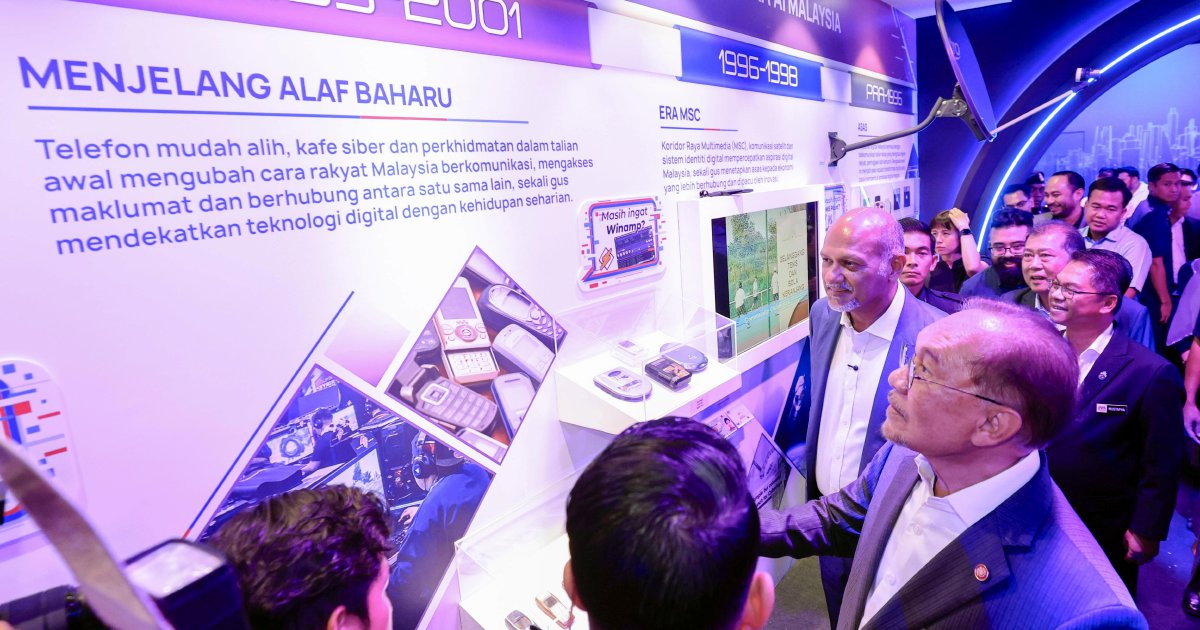
Prime Minister Datuk Seri Anwar Ibrahim has sounded a cautious note about Malaysia's ambitions to position itself as a leading artificial intelligence nation, arguing that such technological advancement could perpetuate and even amplify existing economic disparities if access remains unequally distributed across society.
Spoken in Cyberjaya, the heart of Malaysia's digital economy hub, Anwar's remarks reflect a growing recognition among policymakers that rapid technological transformation requires careful management to ensure inclusive growth. The warning carries particular resonance in a Southeast Asian context where digital adoption rates vary significantly between urban and rural areas, and where many small and medium enterprises still operate with legacy systems.
The Prime Minister's concern touches on a fundamental challenge facing developing economies attempting to leapfrog into advanced technologies. While AI promises substantial productivity gains and competitive advantages, the benefits tend to concentrate among organisations and individuals with sufficient capital, technical expertise, and existing digital infrastructure. Without deliberate intervention, this dynamic risks creating a two-tiered society where technology haves enjoy exponential prosperity while have-nots fall further behind.
Malaysia's situation presents both opportunity and risk in this regard. The country has invested heavily in building digital infrastructure and attracting technology talent, positioning itself as a regional hub for innovation. However, the distribution of these benefits remains uneven, with Kuala Lumpur and Selangor accounting for a disproportionate share of the tech sector's economic activity. Rural and semi-rural areas, particularly in East Malaysia, often lack the connectivity and institutional capacity to participate meaningfully in the digital economy.
Anwar's caution suggests the government is contemplating how AI policy should address these structural inequalities. Effective inclusion strategies might include subsidised digital literacy programmes targeting underserved populations, investment in broadband infrastructure to reach remote communities, and support mechanisms for smaller businesses seeking to integrate AI tools into their operations. The challenge lies in implementing such programmes at scale while maintaining fiscal discipline.
The warning also implies a shift in how Malaysia frames its AI ambitions—moving beyond purely technical and economic metrics toward social impact measures. This reorientation aligns with international discourse on responsible AI development, where concerns about algorithmic bias, labour displacement, and unequal access have become increasingly prominent among policymakers worldwide.
For Malaysian businesses and investors, Anwar's message carries strategic implications. Companies that can demonstrate inclusive AI practices—whether through skills development initiatives, partnerships with smaller enterprises, or community engagement programmes—may enjoy reputational advantages and potential policy support. Conversely, those perceived as hoarding technological advantages could face public scrutiny and regulatory pressure.
The statement also reflects broader regional dynamics. Other Southeast Asian nations are pursuing parallel AI strategies, creating competition for talent, investment, and market share. Malaysia's ability to develop an inclusive AI ecosystem might differentiate it competitively, particularly if multinational tech companies increasingly value responsible innovation and local community integration in their decision-making about where to establish operations.
Implementing inclusive AI strategies requires coordinated action across multiple fronts. Educational institutions must update curricula to prepare students for AI-augmented workforces. Financial regulators need to ensure that fintech innovations driven by AI reach underbanked populations rather than concentrating wealth further. Government procurement policies could favour suppliers demonstrating commitment to accessibility. Labour policies must address potential displacement and retraining needs.
Anwar's warning also acknowledges that technological disruption, while inevitable, need not follow predetermined paths of inequality. The choices made now about AI investment prioritisation, infrastructure development, and skills transfer will shape Malaysia's technological landscape for decades. A deliberate commitment to broad-based participation could yield not only improved equity outcomes but also stronger aggregate growth by mobilising previously underutilised human capital and market potential.
The Prime Minister's remarks come amid global discussions about AI governance, where concerns about unequal impact have moved from fringe concerns to mainstream policy considerations. As Malaysia develops its AI regulatory framework and investment strategy, the integration of equity considerations from the outset—rather than treating them as an afterthought—could establish a more sustainable and socially beneficial development trajectory.
Looking forward, the test of Anwar's warning will lie in implementation. Rhetoric about inclusive AI development, while important for signalling intent, must translate into concrete resource allocation, institutional changes, and measurable progress in democratising access to artificial intelligence capabilities across Malaysian society.

