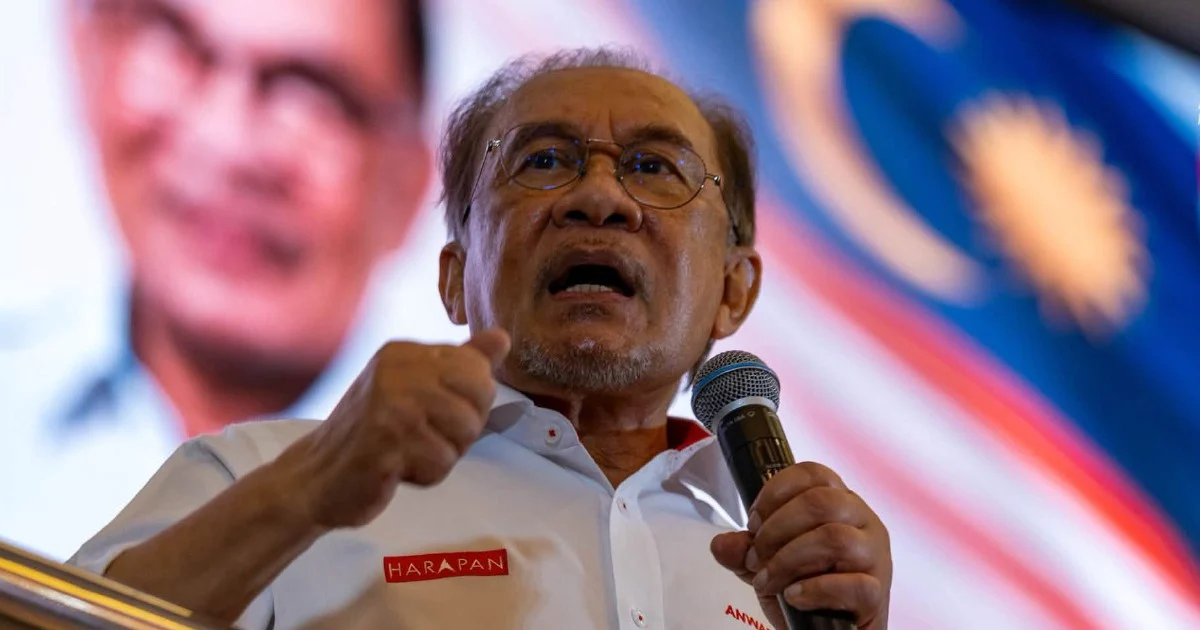
Prime Minister Datuk Seri Anwar Ibrahim has made clear that the Malaysian government does not intend to approach Singapore about arranging voting facilities for Malaysian citizens working across the Causeway ahead of the Johor state election on July 11. The statement addresses earlier speculation about whether cross-border workers would receive special electoral accommodations given the significant numbers who commute daily between Johor and Singapore.
The decision to proceed without seeking Singapore's cooperation reflects Malaysia's commitment to conducting elections within its own territorial jurisdiction and established procedures. Electoral matters in Malaysia remain the exclusive purview of the Election Commission, and seeking foreign arrangements would potentially complicate an already regulated process. Anwar's clarification suggests the government views the situation as manageable through existing frameworks without requiring bilateral coordination on election logistics.
Thousands of Malaysians, particularly from Johor, work in Singapore's financial and service sectors, and their ability to participate in their home state's elections has long been a logistical challenge. Workers face time constraints and distance difficulties when returning to vote, and previous elections have seen varied turnout from this demographic. The announcement that no special arrangements will be sought suggests these voters will need to make their own decisions about whether to return home for polling day.
The timing of this election matters significantly for Johor's political landscape. State elections can reshape local governance priorities, and voter participation from working-age adults influences outcomes. By maintaining standard voting procedures without special cross-border accommodations, the government essentially expects interested voters to arrange their own logistics, whether taking leave or planning journeys to polling stations.
Singapore-Malaysia relations, while generally cordial on major bilateral issues, involve careful demarcation of political sovereignty. Election administration represents a sensitive domain where each nation typically guards its independence. Anwar's statement implicitly acknowledges this boundary, signalling that Malaysia will handle the Johor election entirely through domestic mechanisms. Such positioning also avoids setting precedents that might invite complications in future electoral cycles across multiple states.
For Malaysian workers in Singapore, the pronouncement means they face the familiar choice that characterised previous state elections: whether to prioritise employment commitments or electoral participation. Some employers may offer flexibility during major elections, but this remains a voluntary matter rather than an institutionalised arrangement. The psychological impact of this decision should not be underestimated—workers may feel their participation is less facilitated than their counterparts in less mobile constituencies.
The Election Commission, Malaysia's regulatory body for electoral conduct, would have been consulted on this position given that election rules fall within its remit. The commission typically ensures that voting procedures remain standardised across states to maintain consistency and integrity. Permitting overseas voting arrangements through foreign territory would introduce administrative and legal complexities that the commission likely advised against. This internal coordination between the Prime Minister's office and the Election Commission underscores the institutional clarity around electoral governance in Malaysia.
From a broader Southeast Asian perspective, this stance illustrates how countries in the region approach cross-border worker populations during elections. Despite extensive labour mobility across ASEAN, voting mechanisms remain thoroughly national affairs. Workers retain the right to participate but must do so within their home countries' territorial boundaries, reinforcing the principle that electoral rights are exercised at home rather than exported to employment destinations.
The July 11 Johor election will test voter engagement in a state with particular sensitivity to both local and national political dynamics. Johor has historically been a crucial electoral battleground, and state elections there often reflect broader trends in Malaysian politics. The absence of special voting accommodations for cross-border workers means that turnout patterns may be analysed in part through the lens of worker participation rates, which could influence overall electoral outcomes and interpretations of voter sentiment.
Anwar's clarity on this matter removes ambiguity for Malaysian voters working in Singapore and for employers planning business continuity during the election period. Rather than hoping for special arrangements that might not materialise, workers can now make informed decisions well in advance. Some may take unpaid leave to return home for voting, others may decide that employment priorities supersede electoral participation, and many will likely coordinate with colleagues and employers to manage both commitments efficiently.
The straightforward nature of the Prime Minister's statement also suggests confidence that the election can proceed smoothly without requiring special accommodations. It projects an image of institutional competence, where Malaysia's electoral machinery can manage the exercise without needing external support. This reflects positively on the Election Commission's preparedness and the robustness of Malaysia's democratic institutions, even if it disadvantages a segment of eligible voters who work abroad.
Moving forward, this decision may prompt civil society discussions about whether Malaysia's electoral framework adequately serves its working population, particularly in cross-border regions. However, without bilateral cooperation from Singapore or significant domestic legislative changes, the status quo will likely persist for future state and national elections. Malaysian workers in Singapore will continue navigating the traditional balance between employment and electoral participation, while the government maintains its position that elections remain a fundamentally domestic matter.

