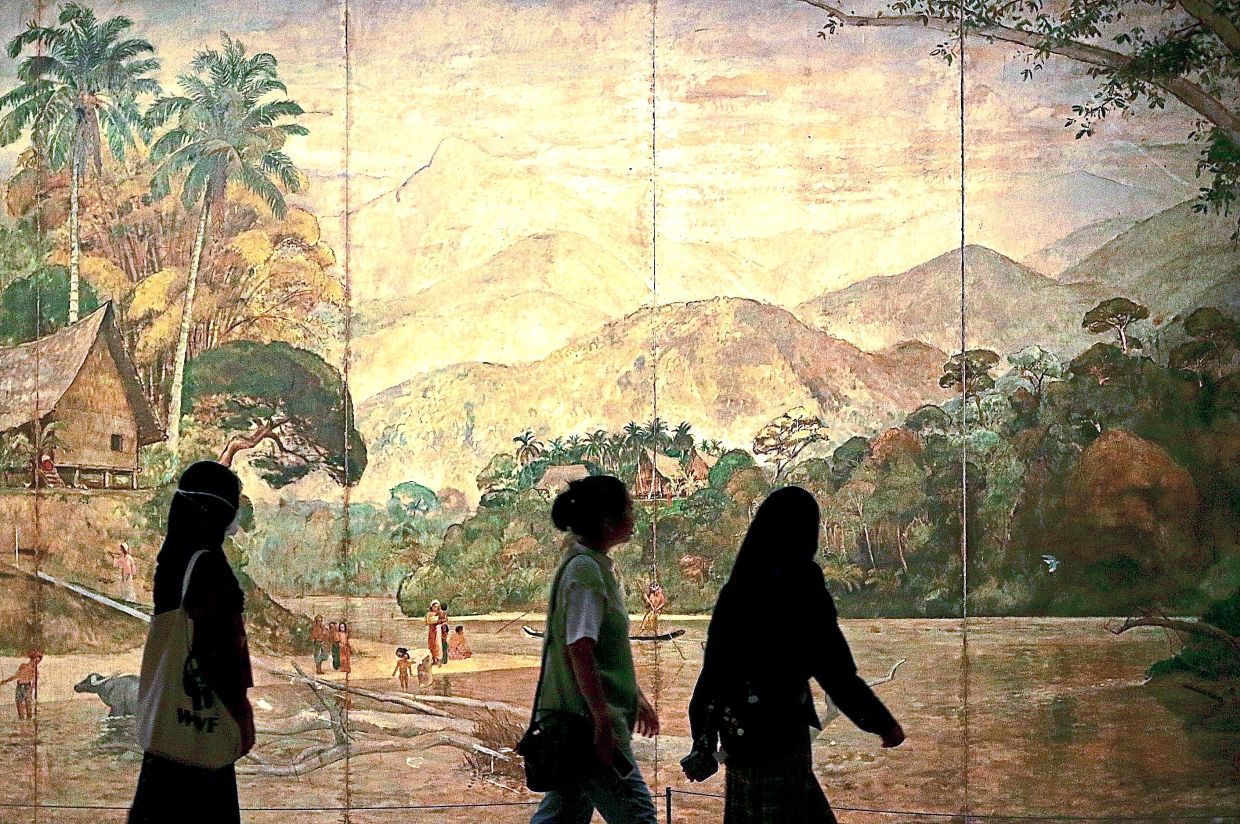
The preservation of Malaysia's artistic heritage faces a formidable adversary that many galleries and museums have only begun to fully comprehend: the country's own tropical environment. Unlike temperate climates where artworks can remain relatively stable for centuries, Malaysia's combination of high humidity, heat and relentless solar exposure creates conditions that gradually degrade even the most carefully maintained collections. This silent erosion of cultural assets has prompted the National Art Gallery to lead regional efforts in developing conservation approaches specifically tailored to Southeast Asian conditions.
Tan Hui Koon, senior chief curator of the Collection and Conservation section at the National Art Gallery, explains that the physical degradation of artworks in tropical climates operates on a molecular level. When textiles, canvas and wooden supports absorb moisture from the humid air, they swell. As humidity levels fluctuate with seasonal changes and daily temperature variations, these materials contract and expand repeatedly. Over months and years, this constant movement fractures paint layers, weakens adhesives and warps structural elements. What might take decades to damage in a climate-controlled European museum can occur far more rapidly in Malaysian conditions.
The challenge extends beyond humidity to encompass the intense ultraviolet radiation that penetrates Malaysia's equatorial latitudes. Organic dyes and pigments in artworks fade irreversibly under prolonged exposure to such radiation, diminishing the visual impact and historical authenticity of pieces. Yet simply closing galleries to darkness is not an option when the public needs access to these cultural treasures. Tan notes that the solution lies in employing museum-standard glazing with UV-reflective properties and tinted glass that filters harmful wavelengths while allowing visitors to view artworks in adequate light. This protective measure parallels how humans require sunscreen for tropical exposure, drawing a compelling parallel between biological and material preservation.
The philosophical approach to conservation has undergone significant evolution within Malaysian institutions. Rather than viewing conservation as a reactive discipline focused on repairing damage after it occurs, leading curators now champion preventive strategies that address root causes. Environmental controls, careful handling protocols and secure storage facilities represent the frontline of defence against deterioration. Tan emphasises a sobering reality: once an artwork has suffered material loss, whether through fading, structural failure or biological degradation, complete restoration to original condition becomes impossible. Instead, conservators aim to stabilise what remains and arrest further decline, allowing damaged pieces to continue serving educational and cultural functions.
These conservation imperatives take on heightened urgency given Malaysia's role as a custodian of diverse artistic traditions spanning indigenous, Islamic, colonial and contemporary periods. The nation's galleries house works on materials ranging from delicate batik textiles to oil paintings on canvas, each requiring specialised understanding of how tropical conditions affect specific substrates. A batik textile responds to humidity very differently from a European still life, yet both need protection within the same institutional framework. This diversity demands sophisticated environmental management systems and nuanced decision-making that cannot simply import solutions developed for Western museums in temperate zones.
Recognising these challenges, the National Art Gallery will host the seventh Asia-Pacific Tropical Climate Conservation Art Research Network conference from December 7-9, bringing together leading experts from Malaysia, Thailand, Singapore, Australia and the Philippines. This gathering represents a deliberate shift toward regional collaboration and the development of contextually appropriate conservation science. Rather than treating tropical conservation as a deviation from established Western practices, the conference positions it as a legitimate field requiring its own research agenda, methodologies and solutions. Participants will examine how Western paintings specifically respond to tropical conditions, addressing a knowledge gap that has persisted despite decades of art display in Southeast Asian institutions.
A significant innovation in this year's programme involves integrating local knowledge with contemporary scientific approaches. Tan emphasises that the conference will prioritise intergenerational exchange, creating space for established conservators to share experience with emerging practitioners while documenting traditional preservation methods that have protected Southeast Asian artworks for generations. The programme includes study missions to heritage sites in Lenggong, undertaken in collaboration with the Islamic Arts Museum Malaysia and the Department of National Heritage, grounding abstract conservation principles in actual fieldwork and site-specific challenges.
Disaster management has emerged as a critical component of tropical art conservation, given the region's vulnerability to floods, typhoons and other extreme weather events. As climate change intensifies these risks, institutions must develop rapid response protocols and recovery techniques specifically designed for the types of damage encountered in Southeast Asia. The conference will explore methodologies for protecting artworks before disasters strike and salvaging collections in their aftermath. Such preparedness reflects a maturation of conservation practice beyond routine maintenance toward comprehensive institutional resilience.
The intersection of conservation with emerging technologies represents another frontier explored at the conference. Artificial intelligence and advanced materials analysis offer powerful tools for understanding artwork degradation and predicting which pieces require intervention. However, Tan recognises that technological solutions must complement rather than replace the human expertise and ethical judgment central to conservation work. The field's interdisciplinary character—drawing together art historians, chemists, engineers and material scientists—ensures that multiple perspectives inform decision-making about irreplaceable cultural assets.
Beyond immediate preservation concerns, the conservation network serves a crucial function in developing Malaysia's professional capacity in this specialised field. By facilitating knowledge exchange and establishing regional standards, the network attracts young professionals to conservation careers and supports their training within an international community of practice. This human capital investment has long-term implications for Malaysian cultural institutions' ability to manage their collections independently and advance conservation science rather than remaining dependent on foreign expertise.
Tan reflects on the network's trajectory since its inaugural gathering in 2008, noting how substantially the understanding of tropical conservation has evolved. What began as a tentative recognition that Southeast Asian climate posed special challenges has matured into a sophisticated research programme addressing climate science, sustainable materials, ethical practices and institutional collaboration. The 2024 conference builds on this foundation while positioning Malaysian expertise and heritage within global conservation discourse, potentially attracting international recognition and resources to regional institutions previously overshadowed by major Western museums.

