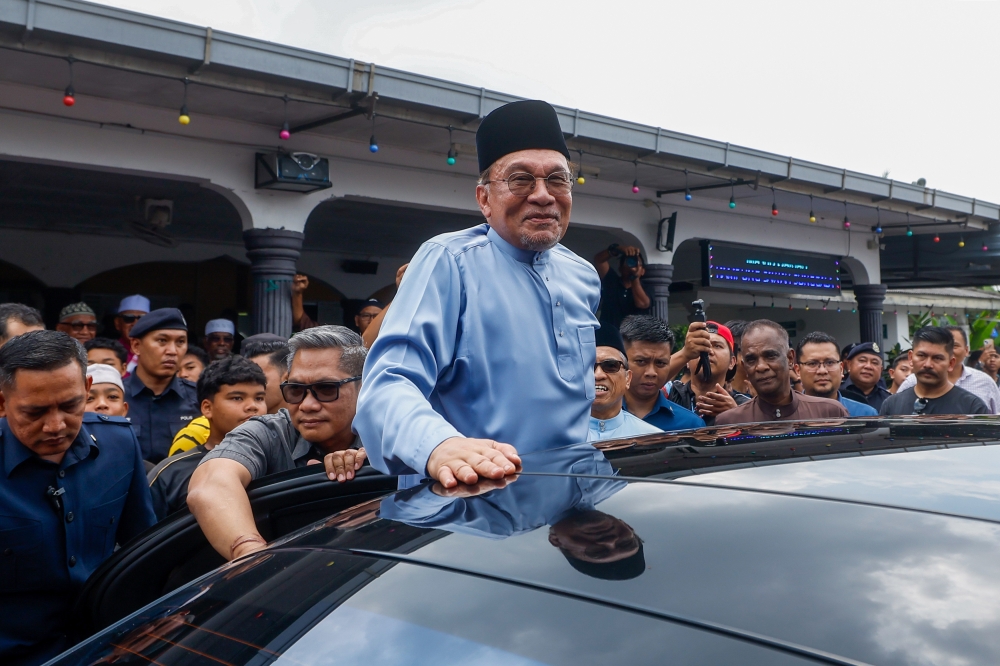
Prime Minister Datuk Seri Anwar Ibrahim moved to distinguish Malaysia's policy of denying entry to Israeli citizens from anti-Semitic sentiment during remarks made in Port Dickson on July 24, emphasising that the country's position reflects political opposition rather than religious intolerance. The clarification addresses longstanding international scrutiny over Malaysia's stance towards Israel, which has prompted questions about the underlying motivations behind the entry restrictions that remain in place.
Anwar's explanation underscores a nuance often lost in global discourse surrounding Malaysian policy towards Israel. The government, he argued, maintains objections to the political actions and territorial policies pursued by the Israeli state, not to Jewish people as an ethnic or religious group. This distinction carries particular weight in Malaysia's multicultural context, where religious sensitivities require careful navigation and where anti-Semitism—discrimination against Jewish populations—is distinct from criticism of Israeli government policies and military actions in occupied territories.
The Malaysian government's position reflects a broader Arab and Muslim-majority world perspective that views Israeli policies in the West Bank and Gaza Strip as constituting oppressive measures against Palestinian populations. By framing the entry restrictions as stemming from opposition to state-level oppression rather than religious discrimination, Anwar seeks to position Malaysia within an international human rights framework rather than characterising the policy as driven by prejudice. This rhetorical positioning matters significantly for Malaysia's diplomatic relationships and its standing within multilateral organisations that take anti-discrimination principles seriously.
The timing of Anwar's remarks comes at a moment of heightened global attention to Israel-Palestine tensions and international responses to them. Malaysia, as a Muslim-majority democracy with significant Jewish diaspora communities and international business ties, occupies a delicate diplomatic position. The prime minister's clarification attempts to maintain Malaysia's vocal support for Palestinian rights and opposition to Israeli occupation policies whilst simultaneously assuring international partners and minority communities within Malaysia that the government does not harbour blanket prejudice against Jewish people.
Historically, Malaysia has maintained its policy of not recognising Israel and preventing Israeli nationals from entering the country. This stance has been presented as a political position aligned with Malaysian support for Palestinian self-determination and opposition to what the government characterises as Israeli occupation and territorial expansion. The policy predates Anwar's current administration and reflects a consistent Malaysian government position across multiple electoral cycles and administrations, though implementation and rhetoric have occasionally varied.
The distinction Anwar draws between opposition to state oppression and anti-Semitic prejudice aligns with international legal frameworks that protect both freedom of expression regarding political criticism and the rights of religious minorities against discrimination. International human rights bodies have long maintained that criticism of a state's policies, even vigorous and sustained criticism, differs fundamentally from discrimination based on the religion or ethnicity of its citizens. This framework allows nations to maintain political positions against specific government actions whilst maintaining non-discriminatory treatment of individuals of that nation's religion or ethnicity within their borders.
For Malaysian and regional readers, Anwar's clarification addresses a persistent tension in how Malaysia positions itself globally. As an Organisation of Islamic Cooperation member and a vocal advocate for Palestinian causes, Malaysia articulates political solidarity with Arab nations and Muslim populations affected by Israeli military actions. Simultaneously, as a signatory to various international human rights conventions and as a country with significant multilateral business and diplomatic relationships, Malaysia must navigate expectations around non-discrimination and pluralism. Anwar's framing attempts to reconcile these sometimes-competing imperatives.
The practical implications of Malaysia's entry restrictions on Israelis remain unchanged by Anwar's clarifications. Israeli nationals continue to be unable to obtain visas or enter Malaysia through standard immigration channels, a policy that has occasionally created complications for international business transactions, academic exchanges, and cultural programmes. However, the rhetorical distinction carries weight for how Malaysia's position is understood and received internationally, particularly in Western capitals where anti-Semitism carries grave historical significance and contemporary sensitivity.
Anwar's emphasis on targeting oppressive state policies rather than religious groups also reflects evolving global discourse around Boycott, Divestment, and Sanctions movements and how criticism of Israeli policies should be distinguished from antisemitism. Various international bodies, including UNESCO and the UN General Assembly, have passed resolutions critical of Israeli actions whilst simultaneously condemning anti-Semitism, suggesting that these positions need not be mutually exclusive. Malaysia's official position, as articulated by its prime minister, appears intended to occupy this space of critical opposition to state policies whilst maintaining formal distinction from religious prejudice.
Looking forward, Malaysia's clarification may influence how the country's Israel policy is perceived and debated internationally, potentially affecting trade negotiations, investment discussions, and diplomatic engagement. Several Southeast Asian nations maintain different approaches to Israeli engagement and Palestinian solidarity, and Malaysia's explanation of its particular stance may inform regional discourse about how to balance political support for Palestinian rights with international human rights norms and commercial relationships.
For domestic Malaysian audiences, Anwar's remarks reassure minority communities and international observers that government policy operates within a principled framework distinguishing between legitimate political positions and discriminatory prejudice. This distinction matters for social cohesion in a plural society and for Malaysia's credibility in advocating for human rights and rule of law both domestically and internationally. The prime minister's framing suggests that Malaysia can maintain its historical political position on Israel-Palestine issues whilst simultaneously presenting itself as a country committed to non-discrimination and universal human rights principles, a balancing act that will continue requiring careful articulation.

