Malaysia's push towards a digitally enabled civil service is yielding tangible financial returns. The implementation of paperless systems across government departments has successfully eliminated the need for 116,405 reams of paper, translating into documented cost savings of RM1.99 million. This achievement represents more than just budgetary relief—it signals measurable progress in the government's commitment to modernise administrative processes and reduce operational waste.
Chief Secretary to the Government Tan Sri Shamsul Azri Abu Bakar disclosed these figures during the Digital Economy and Fourth Industrial Revolution Council (MED4IR) meeting held in Kuala Lumpur. The council, chaired by Prime Minister Datuk Seri Anwar Ibrahim, convened to assess the trajectory of Malaysia's digital infrastructure initiatives and set strategic priorities for the coming period. The paperless initiative emerged as a concrete example of how policy-driven digitalisation can deliver immediate, quantifiable benefits across the public sector.
The MED4IR gathering focused on several interconnected pillars of Malaysia's digital modernisation strategy. Chief among these were the advancement of MyDigital ID and MyGov platforms, which serve as foundational infrastructure for citizen-government interactions. The council also deliberated on mechanisms to broaden digital access within the nation's higher education ecosystem, recognising that universities will be critical nodes in developing a digitally literate population capable of competing in knowledge-intensive sectors.
Talent development emerged as another strategic concern during the meeting. Officials discussed the establishment and expansion of the MyMAHIR National AI Council for Industry, designed to cultivate a comprehensive pool of digital talent equipped with artificial intelligence competencies. This initiative reflects the government's recognition that technological adoption requires a correspondingly skilled workforce, and that gaps in AI expertise could undermine broader economic objectives.
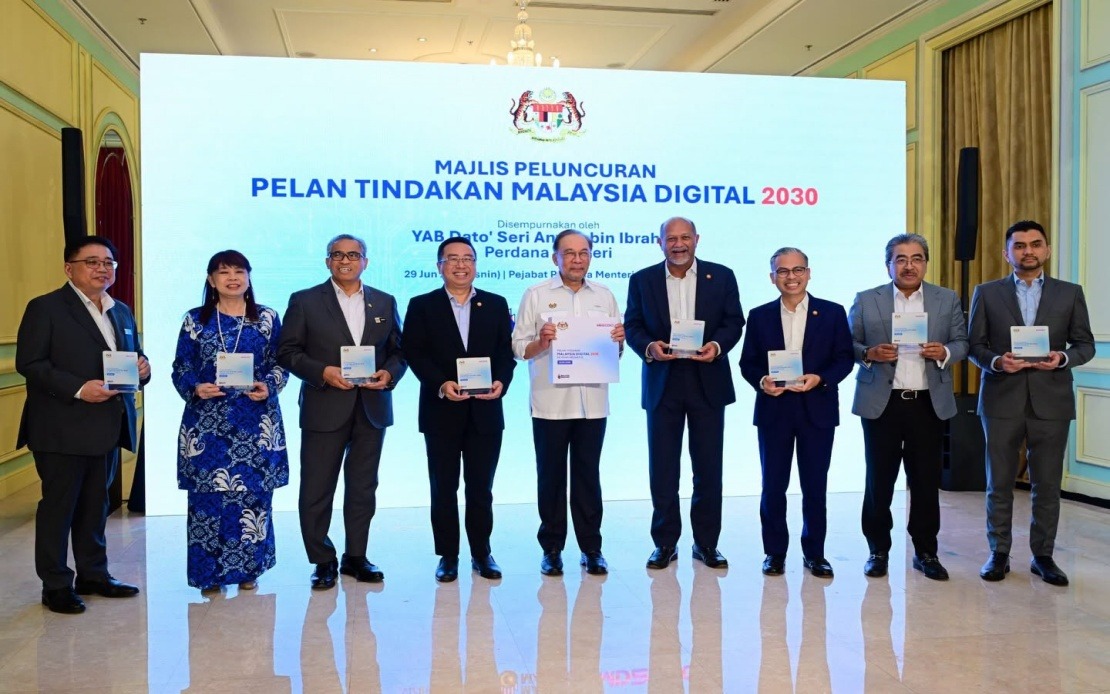
These initiatives coalesce around a unifying national vision articulated in Malaysia Digital 2030, a comprehensive roadmap launched by Prime Minister Datuk Seri Anwar Ibrahim. The framework positions Malaysia's emergence as an Artificial Intelligence Nation by the end of the decade as a defining strategic goal. This aspiration extends beyond technological deployment; it represents an ambition to fundamentally restructure how the nation approaches economic competitiveness, public service delivery, and workforce development in an increasingly AI-centric global economy.
The paperless initiative itself traces its origins to February 2024, when Tan Sri Shamsul Azri announced that the civil service would commence transitioning towards paperless operations for routine, uncomplicated transactions. The formal rollout commenced on February 9, marking the symbolic beginning of this transformation. Rather than an instantaneous shift across all government functions, the approach has been deliberately phased, beginning with straightforward administrative processes where digital systems could readily replace paper documentation without requiring extensive system redesign or staff retraining.
This incremental strategy reflects practical governance wisdom. Wholesale digitalisation across sprawling bureaucracies typically encounters friction—legacy systems that resist integration, staff requiring upskilling, and change management challenges that can derail ambitious programmes. By anchoring the initiative in routine transactions, the government has created proof-of-concept demonstrations that build institutional confidence and generate measurable victories that justify continued investment in broader digital transformation.
For Malaysia specifically, the fiscal implications deserve particular attention. A saving of RM1.99 million from a single initiative across the civil service suggests significant untapped efficiency gains throughout the public sector. Storage, printing infrastructure, disposal, and associated logistics represent substantial recurring costs in large bureaucratic organisations. Multiplied across Malaysia's extensive civil service—which employs hundreds of thousands across federal, state, and local government—the potential aggregate savings from comprehensive digitalisation could exceed several tens of millions of ringgit annually, with additional environmental dividends.
The strategic context matters as well. Malaysia faces intensifying competition from regional peers in Southeast Asia. Singapore, South Korea, and increasingly Vietnam have invested substantially in digital government infrastructure and AI capabilities. Malaysia's Digital 2030 roadmap can be understood partly as a competitive positioning strategy—an effort to ensure the nation does not fall behind in the technological race that increasingly determines economic opportunity and living standards. By 2030, AI will likely influence everything from manufacturing productivity to healthcare delivery to financial services competitiveness.
The civil service itself functions as both laboratory and exemplar. When government departments demonstrate successful digitalisation, citizen and business confidence in digital systems grows. Conversely, when citizens encounter friction or failure in digital government services, skepticism spreads throughout the broader economy. By achieving visible success with paperless administration, Malaysia's government is building the institutional credibility necessary to encourage private sector adoption and citizen participation in more ambitious digital initiatives.
Looking forward, the convergence of these initiatives—MyDigital ID as digital identity infrastructure, MyGov as service delivery platform, AI talent development through MyMAHIR, and operational efficiency gains from paperless administration—suggests an interconnected strategy rather than isolated projects. Each reinforces the others. Digital identity systems enable seamless service delivery; service delivery platforms justify investment in digital infrastructure; and available AI talent enables sophisticated, intelligent administration that outperforms legacy systems.
The RM1.99 million saving, while significant, ultimately represents the financial expression of a deeper transformation. It reflects the government's capacity to translate policy ambition into administrative reality, to measure and communicate progress, and to create momentum for further change. As Malaysia navigates the competitive imperatives of the coming decade, such demonstrated capacity to execute digital strategy—not merely announce it—will prove increasingly consequential for the nation's economic trajectory and regional standing.

