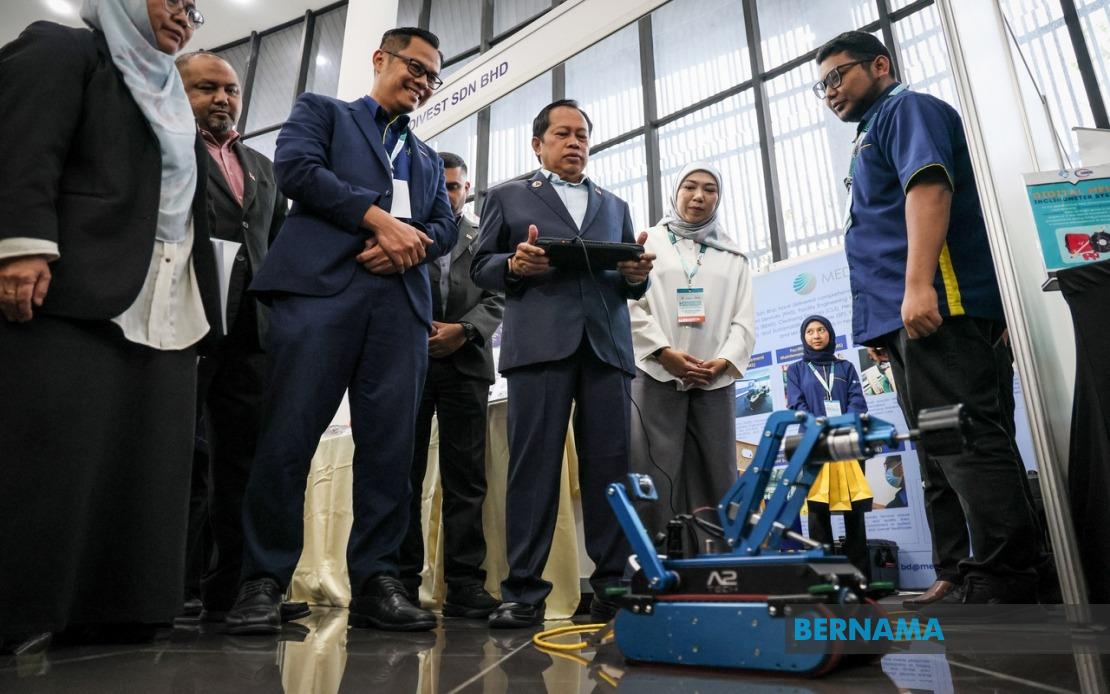
The Works Ministry is making a strategic push to attract more contractors into Malaysia's facility management and maintenance sector, a field that has generated RM39.59 billion in project value between 2023 and 2025 but remains significantly underserved. Deputy Works Minister Datuk Seri Dr Ahmad Maslan made the appeal during the Contractors Convention 2026: NexGen Builders in Butterworth, highlighting a substantial mismatch between market opportunity and industry participation that represents both a challenge and an economic opening for local businesses.
Data compiled by the Construction Industry Development Board (CIDB) reveals the scale of this untapped potential. Over the three-year period, a total of 1,541 facility management and maintenance projects were documented across Malaysia. Yet this impressive volume of work is currently being serviced by fewer than 500 registered contractors holding the necessary F01 and F02 specialisations. With only 468 FM contractors on the formal registry, the sector faces a significant capacity constraint that could hinder service delivery and quality standards across the country's building and infrastructure portfolio.
Dr Ahmad's remarks underscore a fundamental shift in how Malaysia's construction and public asset management sectors should operate. Historically, the construction industry has concentrated resources and expertise on project completion, with maintenance often relegated to a secondary concern once buildings, roads and bridges enter their operational phase. This approach has resulted in suboptimal asset lifecycle management, as infrastructure deteriorates prematurely without adequate upkeep investment. The ministry's new emphasis signals recognition that proper maintenance is neither an afterthought nor merely a cost centre, but rather a specialised business discipline that deserves dedicated contractor capacity and professional expertise.
The economic case for contractors entering the facility management space is compelling. With nearly RM40 billion in declared projects over just three years, the sector offers substantial revenue potential for firms willing to develop the necessary capabilities. Unlike traditional construction contracting, which is cyclical and subject to project availability, facility management provides more predictable, ongoing work streams. Maintenance contracts typically span multiple years, offering contractors steadier cash flows and the opportunity to build long-term client relationships with both government and private asset owners.
The timing of the ministry's initiative aligns with a broader recognition of infrastructure maintenance failures across Southeast Asia. Public buildings, roads and bridges throughout the region have suffered premature deterioration due to inadequate upkeep, resulting in costly emergency repairs and safety risks. Malaysia's policy shift toward formalising facility management as a distinct contractor specialisation represents a more sophisticated approach to asset stewardship, one that could serve as a model for neighbouring countries wrestling with similar maintenance challenges.
Central to this strategy is the launch of CIS 33:2026 – Facility Management Good Practice Guide, a new standard developed by CIDB to establish consistent, systematic and sustainable frameworks for facility management across the construction industry. This guideline is intended to function as a common reference point for all stakeholders, including asset owners, facilities managers, contractors and engineering consultants. By establishing standardised practices, the guideline aims to elevate the professionalism of the sector and ensure that maintenance work delivers optimal value and extends asset lifespan effectively.
The introduction of formal industry standards reflects a maturation of Malaysia's approach to facility management. Previously, maintenance practices varied widely depending on individual client preferences and contractor experience. Standardisation brings multiple benefits: it ensures quality consistency, reduces risk through proven methodologies, facilitates knowledge transfer between practitioners, and provides clients with clearer performance expectations. For contractors, CIS 33:2026 offers a roadmap for developing competitive service offerings and demonstrates the ministry's commitment to professionalising what has historically been an informal, fragmented subsector.
Dr Ahmad's framing of facility management as a potential revenue diversification strategy for construction contractors addresses a structural problem in Malaysia's construction industry. Many contractors have remained dependent on a narrow range of services, leaving them vulnerable to market downturns and project scarcity. Those who develop FM capabilities can offer integrated solutions to clients—handling initial construction and then providing long-term maintenance, creating customer stickiness and multiple revenue streams from single relationships. This business model also reduces volatility and provides more predictable employment for skilled workers.
The gap between available projects and registered contractors carries implications beyond simple market economics. A sector starved of professional capacity often sees work allocated to underqualified providers, resulting in poor maintenance outcomes and wasted public resources. Conversely, attracting more qualified contractors to the FM space should improve service standards across Malaysia's infrastructure portfolio, from government offices to public hospitals and transportation networks. Better-maintained assets translate directly into improved public services and reduced emergency intervention costs.
For multinational contractors and regional firms operating across Southeast Asia, Malaysia's formal recognition of facility management creates new business pathways. The region's rapid urbanisation and infrastructure development have created enormous backlogs of aging assets requiring professional maintenance. Companies that develop FM expertise in Malaysia can potentially replicate these services across Thailand, Indonesia, the Philippines and Vietnam, where similar infrastructure maintenance challenges exist but formal contractor specialisation remains less developed.
The ministry's initiative also sends signals to Malaysia's business education and vocational training sectors. To grow the FM contractor base, the country will require more graduates trained in facilities management principles, building systems, maintenance scheduling, and asset management software. This could stimulate curriculum development at technical colleges and universities, creating new educational pathways and employment opportunities for students seeking alternatives to traditional engineering roles.
Attractively, the facility management opportunity extends beyond government assets. Private developers, shopping malls, industrial facilities, and commercial property owners also require professional maintenance services. As Malaysia's private sector recognises the cost savings and operational efficiency gains from outsourcing FM to specialised contractors, demand should expand significantly beyond the 1,541 projects already declared to CIDB. First-mover contractors who develop strong capabilities and track records now could position themselves to capture large shares of this emerging market.
The Works Ministry's push ultimately reflects a pragmatic understanding that construction contracts alone cannot sustain a healthy, resilient contractor ecosystem. By channelling attention toward facility management, policymakers are helping contractors build more stable, diversified business models while simultaneously addressing a genuine public need for better infrastructure maintenance. For Malaysian contractors willing to invest in developing FM expertise and obtaining proper registrations, the sector presents a rare opportunity to enter a growing market with limited competition at the ground level.

