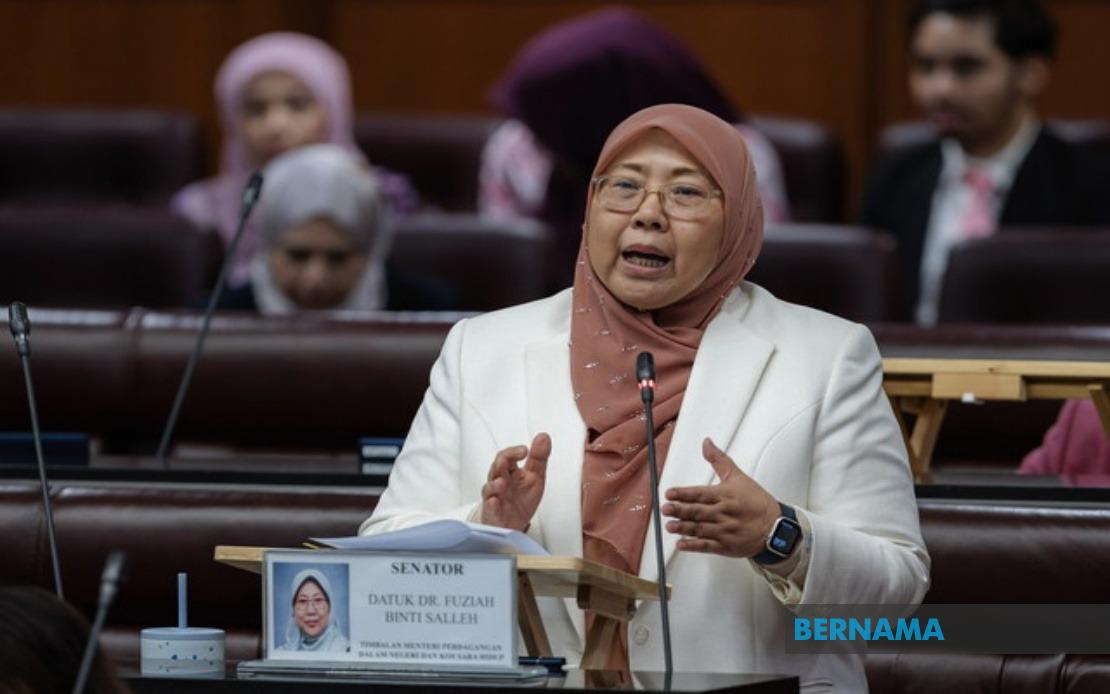
The Malaysian government has clarified that copyright owners must grant approval before their works are used to train artificial intelligence systems, establishing a framework where licensing agreements and royalty payments will be negotiated among interested parties under the existing Copyright Act 1987. Deputy Domestic Trade and Cost of Living Minister Datuk Dr Fuziah Salleh made the pronouncement during parliamentary questioning, confirming that the requirement extends across all applications of copyrighted material, regardless of whether the intended use involves AI technology or traditional commercial purposes.
The legal position reflects Malaysia's longstanding intellectual property stance. Section 27 of the Copyright Act 1987 provides the foundation for these arrangements, stipulating that compensation details remain subject to voluntary agreements negotiated directly between copyright holders and those seeking to use their work. Fuziah outlined three primary mechanisms through which copyright owners could participate in and benefit from licensing their material: direct licensing arrangements negotiated case-by-case, formal assignment of rights to AI developers, or engagement through Collective Management Organisations that represent and manage compensation for groups of creators.
This clarification arrives at a critical juncture for Malaysia's creative industries and technology sector. The rapid expansion of generative AI applications globally has sparked contentious debates about how creative professionals—from writers and artists to musicians and journalists—should be compensated when their work becomes training data for sophisticated machine learning systems. The Malaysian government's position signals that it intends to protect existing copyright holders' economic interests while avoiding the alternative approach some jurisdictions have explored, where AI training might qualify as a fair use exception to copyright restrictions.
However, Malaysia's approach confronts a substantial practical challenge: the sheer volume and complexity of identifying copyright holders across digital ecosystems. Copyright works often exist in fragmented ownership arrangements, with multiple parties holding different rights to individual creations. Additionally, the technical difficulty of determining precisely which copyrighted materials contributed to an AI system's capabilities complicates the negotiation and licensing process. These practical obstacles mean that Malaysia's formal legal position may prove difficult to enforce uniformly across the rapidly evolving technology landscape.
Fuziah acknowledged that the government has not yet undertaken a focused analysis examining how AI-generated content affects employment prospects and income potential for Malaysian creative professionals. Rather than rushing toward new regulatory measures, the Ministry has chosen to engage systematically with stakeholders across the creative industries, technology sector, and cultural institutions while simultaneously studying how other jurisdictions—particularly advanced economies facing comparable challenges—have structured their own AI governance frameworks. This deliberate pace reflects recognition that artificial intelligence technology continues evolving at unprecedented speed, making premature legal codification potentially counterproductive.
A notable gap exists in Malaysia's current copyright protection framework: works generated entirely by artificial intelligence systems without meaningful human creative contribution do not qualify for copyright protection under existing law. The Copyright Act 1987 restricts protection to works demonstrating originality achieved through demonstrable human effort, expertise and intellectual contribution. This distinction creates legal ambiguity in scenarios where AI systems generate derivative works that incorporate training data from copyrighted sources. The question of whether such hybrid creations should receive protection, and how attribution and compensation should function, remains unresolved within Malaysia's current legal architecture.
The complete absence of recorded court cases in Malaysia involving copyright infringement claims related to AI technology suggests either that the practice remains nascent within the Malaysian context, or that potential disputes have been resolved through informal settlements rather than litigation. This contrasts sharply with international developments, where multiple high-profile lawsuits have been filed against major AI companies by creative organizations and authors alleging unauthorized use of copyrighted material in training datasets. The Malaysian creative sector's relative quiet on this issue may reflect either the lesser prevalence of intensive AI training operations within the country, or a lack of legal awareness and enforcement capacity among copyright holders.
The government's acknowledgement that ongoing international consultations will inform future policy development indicates Malaysia is monitoring how sophisticated AI economies manage this tension. Countries including the United States, European Union member states, and the United Kingdom are actively debating whether copyright protections should extend to AI-generated outputs, and whether new compensation mechanisms should be established for creators whose work substantially contributed to training datasets. Malaysia's willingness to study these models before committing to new legal frameworks suggests the government recognizes the stakes involved—protecting local creative professionals while avoiding barriers to AI innovation and technology adoption.
For Malaysian creators, this interim period presents both opportunity and vulnerability. The government's stated commitment to copyright protection under existing law provides a foundation, but enforcement mechanisms remain underdeveloped and the practical ability to track and monitor AI training datasets remains limited. Creative professionals and content owners may need to proactively negotiate licensing agreements directly with AI developers rather than awaiting government enforcement action. Simultaneously, technology companies operating in Malaysia face regulatory clarity that their use of copyrighted material requires explicit permission and compensation arrangements, establishing conditions that could shape how the Malaysian AI ecosystem develops relative to less regulated international competitors.
Looking forward, Malaysia's approach will likely require continuous recalibration as technology capabilities accelerate and international standards emerge. The government's commitment to studying foreign models and engaging stakeholders suggests eventual movement toward specialized AI copyright policies, potentially within the next two to three years. These policies might encompass mechanisms for collective licensing, default compensation structures, and clearer definitions of what constitutes acceptable training data use. Until such frameworks materialize, both copyright holders and AI developers must navigate Malaysia's existing legal landscape with considerable uncertainty about long-term expectations and enforcement patterns.

