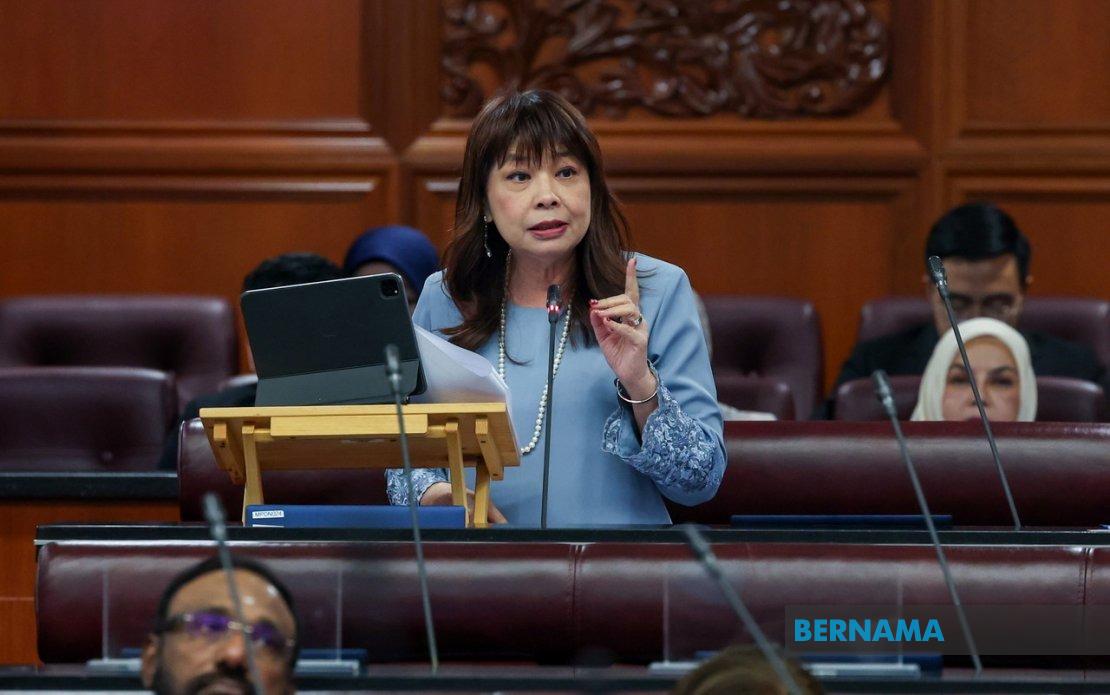
The Talian Kasih 15999 hotline, Malaysia's primary social welfare contact centre, has received 9,327 calls pertaining to domestic violence across a span of roughly three years, according to Deputy Minister of Women, Family and Community Development Lim Hui Ying. Speaking during parliamentary Question time at the end of June, Lim disclosed that these figures represent merely a fraction of the broader caseload managed by the service, which has processed a total of 127,000 calls covering diverse social and welfare matters within the identical timeframe.
The resolution rate for domestic violence cases handled through the hotline has been notably comprehensive. Lim indicated that all complaints registered between 2022 and the present have been processed to completion, though the timeline for resolution varies considerably depending on case complexity and victim circumstances. During the first five months of this year alone, the hotline logged 470 domestic violence-related calls, a figure that underscores the persistent nature of the problem across Malaysian society. Of those recent cases, 406 have been resolved, whilst 64 remain under active investigation or intervention, signifying an 86 percent resolution rate within the current reporting period.
The question posed by Datuk Muslimin Yahaya, Member of Parliament for Sungai Besar representing Perikatan Nasional, sought to evaluate the practical effectiveness of the hotline and the extent to which cases received substantive follow-up action beyond initial documentation. This inquiry reflected growing parliamentary scrutiny of victim support mechanisms and whether resources allocated to social services translate into tangible protection and assistance for those experiencing abuse. The question provided an opportunity for the ministry to detail its operational protocols and demonstrate accountability in its mandate to safeguard vulnerable populations.
Beyond recording complaints, Talian Kasih coordinates active protective interventions designed to shield victims from continued harm. The ministry deploys Emergency Protection Orders, temporary legal instruments that can be obtained rapidly when individuals face imminent danger, as well as Interim Protection Orders that provide longer-term judicial safeguards against abusers. For those requiring immediate sanctuary, the hotline facilitates placement in government-designated safe houses where victims can escape threatening environments whilst determining next steps. These mechanisms form part of a comprehensive response framework intended to move beyond complaint documentation toward concrete victim protection.
A notable development highlighted by Lim concerns the demographic composition of domestic violence complainants. Historically, domestic abuse discourse in Malaysia has concentrated predominantly on female victims, reflecting both the statistical prevalence of such cases and the social advocacy movements that have prioritized women's safety. However, Lim's remarks indicate a measurable increase in cases involving male victims, a phenomenon that, while numerically smaller than cases involving women, represents a growing proportion of overall domestic violence reports. This trend aligns with international patterns observed across developed and developing nations, where recognition of male victimization has expanded as awareness campaigns broaden and stigma surrounding male victims diminishes.
The ministry's response to this demographic shift reflects an institutional commitment to gender-neutral victim protection. Rather than maintaining a framework exclusively or primarily oriented toward female beneficiaries, the Women, Family and Community Development Ministry has explicitly repositioned its mission to encompass individuals of all genders experiencing domestic abuse. Lim's statement underscored that the ministry's protective mandate extends across racial and gender lines without discrimination, suggesting an evolution in how Malaysian social welfare institutions conceptualize and address family violence. This inclusive approach acknowledges that domestic abuse transcends conventional demographic categories and that comprehensive victim support requires institutional neutrality in identifying and assisting those at risk.
The scale of call volumes processed by Talian Kasih demonstrates the service's role as a critical infrastructure for social welfare reporting in Malaysia. Averaging approximately 3,000 calls monthly across all categories, the hotline functions as a primary conduit through which Malaysians report concerns ranging from child abuse and elder neglect to domestic violence and sexual exploitation. The 127,000 total calls received over three years reflects sustained public awareness of the service and its accessibility as a free, confidential reporting mechanism. For domestic violence specifically, the 9,327 calls represent documented cases that might otherwise remain unreported due to shame, fear, or isolation commonly experienced by abuse victims.
The resolution timeline for domestic violence cases varies considerably based on circumstantial factors. Cases may require criminal investigation by police, civil proceedings for protection orders through the courts, psychological counseling for victims, mediation efforts where appropriate, or ongoing monitoring to ensure victim safety. Lim's distinction between cases closed from 2022 onwards versus the current year's remaining open cases reflects this complexity. The 64 unresolved cases from January through May remain active likely because they involve ongoing legal proceedings, victim rehabilitation, or investigations still under way rather than cases abandoned or neglected by authorities.
The parliamentary exchange illuminates broader policy questions about domestic violence prevention and victim support capacity in Malaysia. Whilst hotline statistics indicate significant demand for protective services, they provide limited insight into the broader epidemiology of domestic abuse, including cases unreported or resolved through informal mechanisms. Research across Southeast Asian contexts suggests that formal reporting represents only a fraction of actual domestic violence incidents, constrained by victim reluctance to involve authorities, cultural pressures to reconcile families privately, or limited awareness of available services. Consequently, the 9,327 recorded calls likely underestimate the true prevalence of domestic violence across Malaysian households.
Looking forward, the ministry faces sustained challenges in expanding both reach and responsiveness of its victim support infrastructure. Lim's emphasis on follow-up action and protective orders indicates institutional recognition that receiving a call represents merely the initial stage of victim assistance. Translating that contact into sustained protection, legal remedies, and psychological support requires coordination across police, courts, social workers, and shelter providers. The demonstrated capacity to resolve 406 of 470 recent cases within months suggests operational competence, yet the persistence of 9,327 cases over three years underscores the magnitude of domestic violence as a public health and social issue requiring continued policy attention, resource allocation, and community engagement across Malaysian society.

