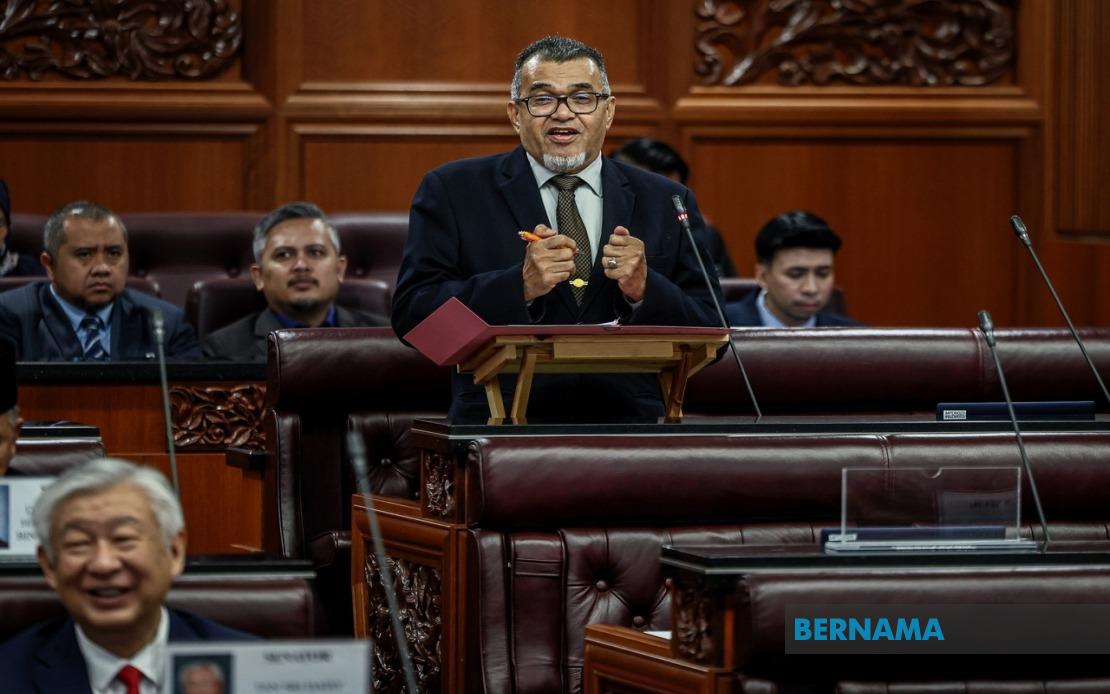
Malaysia's unmanned aerial vehicle sector has expanded dramatically, with the Civil Aviation Authority of Malaysia (CAAM) now overseeing 250,000 registered drones employed across diverse applications ranging from personal recreation to commercial agriculture. This substantial fleet, discussed in parliament's upper house on July 29, reflects the rapid proliferation of drone technology across the country and underscores the pressing need for coordinated government oversight to manage the growing operational landscape.
Deputy Transport Minister Datuk Hasbi Habibollah told the Dewan Negara that the exponential growth in drone deployment has necessitated the development of a comprehensive Low Altitude Economy (LAE) regulatory framework, a multi-agency undertaking currently in advanced stages. The LAE concept recognises that operations below conventional aircraft altitudes involve considerations extending well beyond aviation alone, encompassing safety protocols, cybersecurity measures, and coordination between government departments responsible for security, telecommunications, and industrial standards.
The government's approach reflects international best practices in managing emerging aviation technologies. Rather than impose restrictive regulations immediately, authorities are conducting an inclusive public consultation process beginning in August, with ministerial approval anticipated in September and full framework implementation targeted for December 2024. This deliberate timeline allows stakeholders—including technology companies, industry operators, academic institutions, and civil society—to provide meaningful input on how rules should function in a rapidly evolving sector.
Establishing a dedicated coordination mechanism represents a central element of the regulatory design. Hasbi indicated that the framework's development includes evaluation of whether CAAM should house a centralised control centre responsible for orchestrating LAE operations across multiple government bodies. Such coordination is necessary because drone operations simultaneously implicate the Malaysian Communications and Multimedia Commission (MCMC) regarding frequency spectrum allocation, the Standards and Industrial Research Institute of Malaysia (SIRIM) for technical standards compliance, and CAAM for operational licensing and safety monitoring.
The regulatory architecture being constructed distinguishes between frequency approval and operational authorisation. MCMC maintains authority over drone communications frequencies, while SIRIM establishes technical standards. However, operators must register operational specifics with CAAM, including geographic location, pilot credentials, altitude parameters, and mission purpose. This division of responsibilities ensures that each agency focuses on its core competency whilst maintaining integrated oversight across the ecosystem.
To support framework development and test operational concepts, the government has designated multiple regulatory sandbox sites where approved organisations can conduct controlled trials under relaxed restrictions. These facilities at MRANTI Park in Kuala Lumpur, Iskandar Malaysia in Johor, Universiti Selangor, and Universiti Malaysia Perlis provide spaces where industry partners and researchers can validate new applications, identify regulatory gaps, and demonstrate emerging technologies before wider commercial deployment.
The Low Altitude Economy concept encompasses substantially more than recreational or agricultural drones. The government is simultaneously developing operational frameworks for Advanced Air Mobility (AAM), a broader category including electric vertical-takeoff aircraft, autonomous delivery systems, and other emerging platforms. The AAM concept of operations will be formally unveiled in October during Transport Expo Asia (TXA) 2026, positioning Malaysia alongside global leaders in advanced transportation technology standardisation.
For Malaysia and the broader Southeast Asian region, this regulatory framework carries significant economic implications. The LAE represents a substantial growth opportunity for technology companies, logistics providers, and service operators who can incorporate autonomous or remotely-piloted systems into their business models. Countries that establish clear, proportionate regulatory frameworks tend to attract investment and innovation faster than those maintaining ambiguous or excessively restrictive approaches, giving early adopters of comprehensive LAE policies competitive advantages.
The 250,000 registered drones already in operation provide a substantial test population for the framework's effectiveness. Agricultural applications have proven particularly valuable in Malaysia's tropical climate, where drones enable precision crop monitoring, fertilizer application, and pest management across challenging terrain. Personal and commercial imaging applications have expanded similarly, creating demand for clear rules governing privacy, airspace usage, and operator qualifications.
Potential challenges in implementing the framework include ensuring adequate technical capacity within CAAM to process operational registrations and approvals as volume increases substantially, maintaining cybersecurity standards as drone technology becomes more sophisticated, and balancing innovation incentives against legitimate security concerns. Border regions and sensitive infrastructure sites present particular complexity given the national security dimensions of airspace oversight.
The international context reinforces Malaysia's regulatory priorities. Singapore, the European Union, and the United States have already implemented or are finalising LAE regulatory frameworks, creating pressure for Malaysia to establish competitive standards that facilitate cross-border operations and technology transfer. A clearly articulated Malaysian framework also positions the country to participate meaningfully in regional aviation standardisation discussions within ASEAN.
Success of the LAE framework will ultimately depend on stakeholder acceptance and practical enforceability. The inclusive consultation process beginning in August suggests government recognition that sustainable regulations require industry buy-in rather than top-down imposition. As the framework approaches December launch, operators, technology providers, and agencies will be observing whether the final rules create sufficient certainty for investment whilst maintaining genuine safety and security protections.

