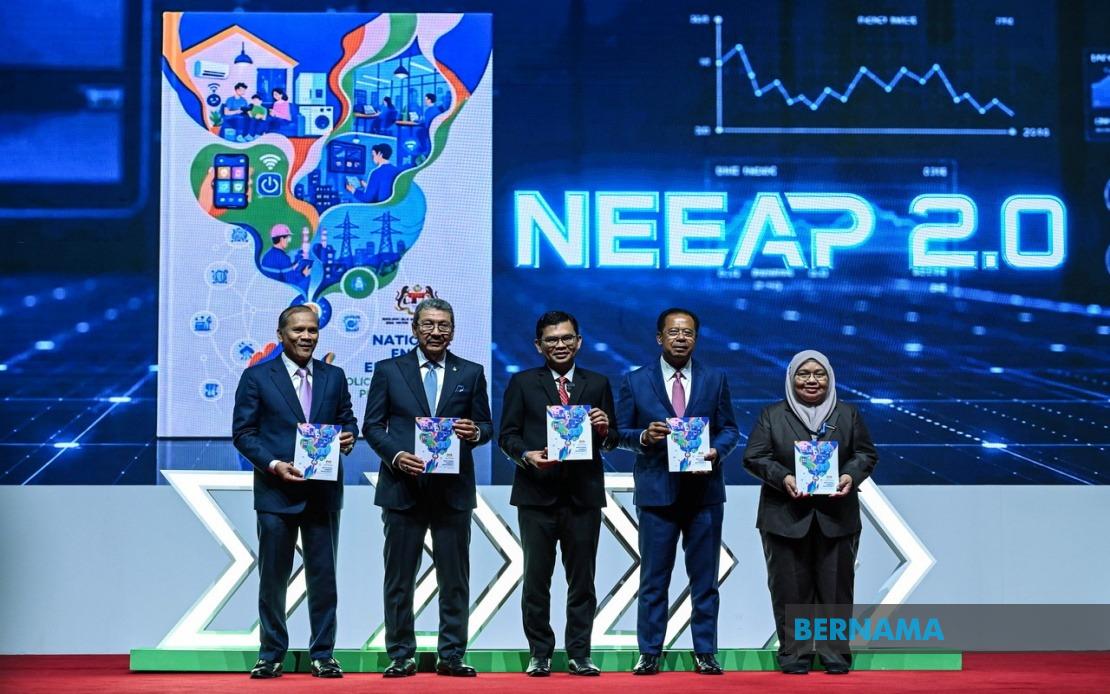
Malaysia has unveiled an ambitious decade-long energy efficiency initiative that promises to reshape how the nation consumes power across industrial, commercial and household settings. The National Energy Efficiency Policy and Action Plan 2026-2035, known as NEEAP 2.0, was formally launched in Putrajaya on August 11 during the 7th International Sustainable Energy Summit. The Ministry of Energy Transition and Water Transformation projects the programme will deliver RM85 billion in accumulated net energy savings while simultaneously attracting RM36 billion in private sector investment over the ten-year implementation period.
The employment dimension of NEEAP 2.0 underscores Malaysia's commitment to creating a green economy that benefits workers across multiple sectors. The plan is estimated to generate approximately 29,000 new job opportunities, ranging from technical roles in energy auditing and retrofitting to positions in policy administration and renewable energy infrastructure. This employment generation represents a tangible economic benefit beyond the headline energy savings figures, as it signals Malaysia's growing capacity to transition toward sustainable development without sacrificing job creation.
From an environmental standpoint, the initiative carries significant climate implications for the region's largest Southeast Asian economy. Implementation of NEEAP 2.0 is projected to reduce carbon emissions by an equivalent of 26 million tonnes of carbon dioxide by 2035. This reduction sits within Malaysia's broader commitment to achieving net-zero emissions by 2050, positioning the country as a credible actor in regional climate governance at a time when Southeast Asia faces mounting pressure to decarbonise.
The technical ambition embedded in NEEAP 2.0 reflects Malaysia's determination to improve energy productivity across its economy. The programme targets an 11.6 per cent improvement in electricity and thermal energy efficiency when measured against a business-as-usual scenario. This seemingly modest percentage represents a cumulative energy saving of 815,000 terajoules over the decade—an amount equivalent to meeting the entire electricity requirements of Peninsular Malaysia for nearly two years. The scale of this achievement demonstrates that efficiency gains, while less visible than renewable energy capacity additions, can deliver substantial absolute energy reductions.
Building on prior successes, NEEAP 2.0 functions as an evolution rather than an overhaul of Malaysia's energy efficiency framework. The previous National Energy Efficiency Action Plan established institutional mechanisms, baseline measurements, and sectoral targets that NEEAP 2.0 now seeks to deepen and expand. This continuity ensures that investments made in awareness campaigns, certification programmes and monitoring systems compound rather than reset, allowing Malaysia to avoid the false starts that sometimes plague long-term policy implementation.
The policy's alignment with Malaysia MADANI, the government's broader developmental aspiration, underscores political commitment to energy transition at the highest levels. By framing energy efficiency as central to the Malaysia MADANI narrative of efficient, sustainable and inclusive development, policymakers have embedded this initiative within a larger national vision rather than treating it as a standalone environmental programme. This integration into overarching governance philosophy increases the probability that NEEAP 2.0 will receive sustained funding and bureaucratic support across electoral cycles.
PETRA has structured NEEAP 2.0 to prioritise high-impact sectors that drive Malaysia's economic growth, recognising that efficiency improvements must occur where they generate maximum return on investment and employment benefit. Energy-intensive industries such as manufacturing, petrochemicals, and semiconductor production represent primary targets, as improvements in these sectors yield multiplier effects throughout the supply chain. Simultaneously, the policy acknowledges that household and commercial efficiency upgrades matter for equity and energy affordability, ensuring that all demographic segments participate in and benefit from the transition.
The scale of private investment expected under NEEAP 2.0—RM36 billion—signals that Malaysia's efficiency transition enjoys market confidence. Private actors ranging from construction firms to energy service companies have calculated that retrofitting buildings, installing smart meters, and deploying industrial equipment upgrades will generate profitable returns. This private capital participation reduces fiscal pressure on government budgets while creating healthy competition that drives innovation in efficiency technologies and service delivery.
For Malaysian businesses operating in global supply chains, NEEAP 2.0 offers competitive advantage in an era of increasing corporate carbon accounting. Multinational manufacturers are increasingly demanding that Malaysian suppliers demonstrate energy efficiency credentials as a condition of procurement contracts. Companies that achieve certified efficiency status under the plan strengthen their position in these relationships while potentially accessing better financing terms from lenders who reward sustainable operations.
Regional implications of NEEAP 2.0 extend beyond Malaysia's borders, as neighbouring countries monitor how effectively the nation implements large-scale efficiency transitions. The plan's focus on institutional capacity, sectoral engagement, and balanced economic-environmental outcomes provides a potential blueprint for Indonesia, Thailand, and the Philippines as they design their own energy transition strategies. Success in Malaysia could accelerate regional momentum toward efficiency improvements across Southeast Asia.
The energy security dimension of NEEAP 2.0 deserves emphasis, particularly given Malaysia's strategic importance as an energy producer and trader. By reducing domestic energy consumption through efficiency gains, Malaysia preserves more hydrocarbon supplies for export revenue, maintaining foreign exchange earnings while simultaneously meeting climate commitments. This approach acknowledges that the nation's energy transition cannot follow the same timeline as smaller, wealthier developed economies.
Implementation success for NEEAP 2.0 will ultimately depend on whether Malaysia can sustain the political will required to enforce efficiency standards, fund monitoring systems, and support sectors undergoing transitions. Past national plans have sometimes faltered when initial enthusiasm gave way to competing budgetary priorities. PETRA's challenge will be maintaining momentum throughout the full ten-year cycle, particularly if global energy prices shift or political administrations change.

