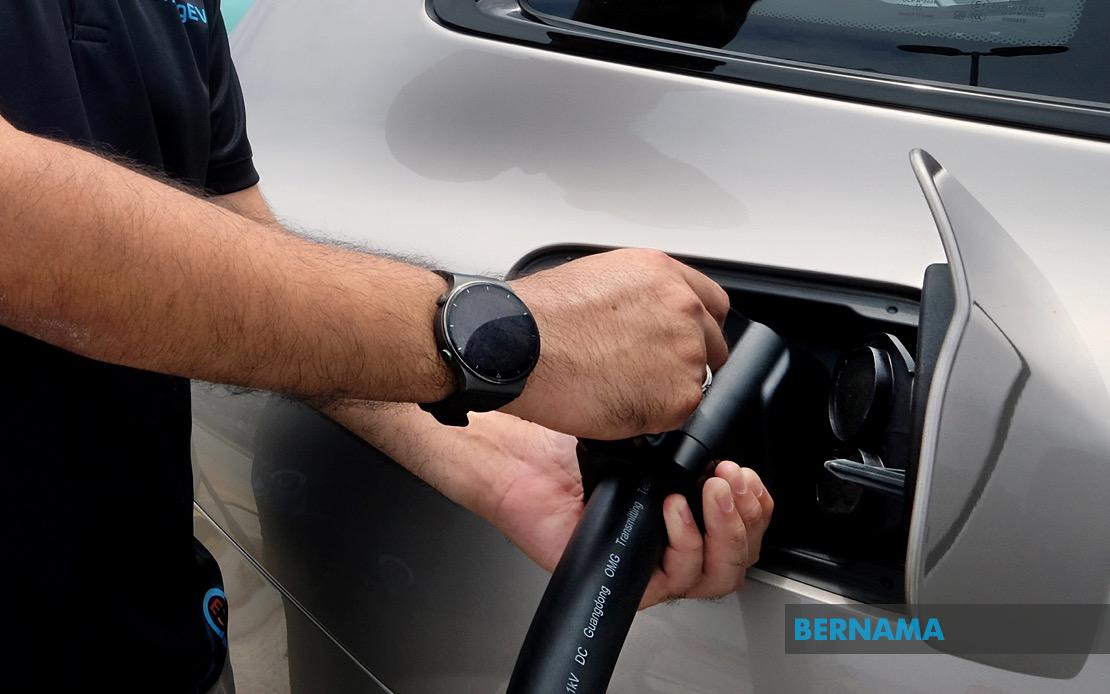
Malaysia's push toward electric mobility has reached a significant milestone with 6,416 public EV charging stations now operational across the country, the Ministry of Investment, Trade and Industry revealed in Parliament this week. The infrastructure breakdown shows a deliberate strategy balancing rapid-charging capability with widespread accessibility, with 2,143 direct current fast chargers complementing 4,273 alternating current stations. This two-pronged approach addresses different consumer needs—commuters seeking quick top-ups on highways against homeowners and office workers wanting overnight charging solutions.
The charging network expansion reflects government recognition that infrastructure gaps have historically deterred EV uptake among Malaysian consumers hesitant about range anxiety. Recognising these impediments, authorities have streamlined approval mechanisms through PLANMalaysia's EV Charging Bay Planning Guidelines, reducing what once took months into a 14-working-day turnaround. This efficiency gain removes bureaucratic obstacles that previously frustrated private operators and developers seeking to establish charging facilities in residential areas, commercial districts and public spaces.
The whole-of-government coordination underpinning this expansion demonstrates the complexity of transitioning transport systems at national scale. Energy Commission oversight ensures grid capacity, while Tenaga Nasional Bhd manages the power supply backbone. Local authorities provide land and planning approval, charging operators handle commercial deployment, and industry associations align standards across providers. This multilayered approach prevents the fragmentation that could otherwise create incompatible charging ecosystems across different states and municipalities.
Beyond infrastructure, MITI's strategy encompasses supply-side development crucial for Malaysia's industrial competitiveness. The National EV Project under Perodua's stewardship involves 62 domestic suppliers and over 300 Malaysian engineers in component development, signalling serious commitment to capturing value beyond final assembly. Similarly, Proton's EV initiative targets 40 local suppliers, creating cascading opportunities through automotive clusters. These collaborations position Malaysian firms not merely as assembly operations but as genuine participants in battery, motor and safety systems manufacturing—segments commanding higher profit margins and technology sophistication.
Technology transfer mechanisms embedded in these projects offer long-term industrial development benefits beyond individual vehicle sales. Foreign technology providers collaborating with local manufacturers inevitably elevate engineering capabilities within Malaysian companies. This knowledge accumulation strengthens regional competitiveness, potentially allowing Malaysian suppliers to serve other Southeast Asian markets as EV adoption spreads through Brunei, Thailand and Indonesia. The automotive sector's historical importance to Malaysia's economy makes this upskilling strategically significant.
The government's focus on domestic value chains addresses a fundamental weakness in previous industrial policies—over-reliance on imports for critical components. By encouraging local production of batteries and advanced systems, policymakers reduce foreign exchange outflows and insulate the economy from global supply disruptions of the kind that paralysed semiconductor-dependent industries during recent pandemic periods. Enhanced local capability also means jobs remain in Malaysia rather than flowing to overseas manufacturing hubs.
Chargeable affordability remains an understated dimension of Malaysia's EV transition. Even as charging stations proliferate, the average consumer's first consideration centres on vehicle purchase price. Government collaboration with Perodua and Proton on domestic EV production directly targets this bottleneck by enabling locally-assembled vehicles at price points competitive with conventional automobiles. Without affordable options, charging infrastructure benefits only affluent early adopters; with them, mass adoption becomes economically feasible for middle-income households.
The low-carbon mobility agenda underlying these initiatives aligns with Malaysia's climate commitments and regional positioning. As regional economies set decarbonisation targets, early infrastructure investment positions Malaysia as a credible partner for ASEAN coordination on transport standards and environmental goals. Southeast Asian economic integration makes harmonised EV policies increasingly valuable; divergent charging standards or supply chains across the region fragment markets and confuse consumers. Malaysia's coordinated approach sets precedent for neighbours considering similar transitions.
Fuel import dependency reduction constitutes another strategic advantage often overlooked in mainstream commentary. Malaysia's petroleum-dependent transport sector creates vulnerability to global oil price shocks and geopolitical disruptions. Electrification redirects spending toward domestically-generated electricity, strengthening energy security even as coal imports may increase. Over decades, this structural shift reduces external vulnerabilities accumulated through transport sector imports, enhancing economic resilience during international crises.
Looking forward, the 6,416-station baseline represents progress but not completion. Achieving genuine mass adoption requires chargers proliferating into rural areas, smaller towns and residential neighbourhoods beyond major urban corridors. The 14-day approval process acceleration should facilitate this expansion, though maintaining quality standards and equitable distribution demands continued vigilance. State governments must resist the temptation to concentrate infrastructure in prosperous areas, instead ensuring charging reaches communities where transportation costs burden household budgets most heavily.

