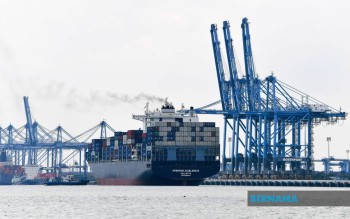
Malaysia's export outlook for 2026 has brightened considerably, with RHB Investment Bank lifting its growth projection to 21.7 per cent from an earlier estimate of 15.3 per cent, reflecting stronger-than-anticipated trade momentum year-to-date. The revision comes after Malaysian exports expanded by 27.5 per cent through the first half of 2026, suggesting the economy's export-oriented sectors are capitalising on favourable global conditions. This upgraded forecast represents a significant boost to national economic prospects and underscores the growing importance of technology-driven demand in reshaping Malaysia's trade landscape.
The primary catalyst for RHB Investment Bank's optimism centres on Malaysia's dominance in the electrical and electronics sector, which continues to benefit from an extended technology upgrade cycle propelled by artificial intelligence adoption worldwide. As multinational corporations accelerate investment in AI infrastructure, cloud computing capabilities, and related semiconductors, Malaysian manufacturers and component suppliers have positioned themselves as critical nodes in these global production networks. The ongoing investment cycle shows no signs of abating, with demand stemming from data centre expansions, electric vehicle manufacturing, and industrial automation initiatives across developed and developing economies alike.
Second-quarter trade data provides empirical support for analyst confidence. Malaysia recorded a trade surplus of RM83.9 billion in 2Q 2026, a dramatic improvement compared with RM15.3 billion in the same quarter of 2025. This sevenfold expansion in the trade surplus reflects not merely higher export volumes but also relative strength in Malaysia's competitive positioning. The substantial swing in the trade balance is expected to provide meaningful support to gross domestic product calculations for the quarter, contributing positively to overall economic growth metrics that policymakers and investors scrutinise closely.
Beyond the immediate export momentum, Malaysia's structural advantages position the country favourably for sustained trade expansion. The economy's integration into regional and global supply chains, accumulated through decades of manufacturing-focused development policies, provides resilience and flexibility. Unlike economies dependent on narrower export bases, Malaysia can adjust production and market focus relatively quickly as demand patterns shift. Policymakers have simultaneously pursued efforts to diversify export destinations and broaden product offerings, reducing vulnerability to concentrated geographic or sectoral downturns that might otherwise constrain growth.
A second major investment institution, MBSB Investment Bank, has independently reached broadly similar conclusions, projecting export expansion of 18.9 per cent for 2026 compared with 6.6 per cent in 2025. MBSB's analysis identifies additional demand drivers beyond semiconductors and electronics, specifically highlighting technology products generally alongside commodity-dependent exports including petroleum products and liquefied natural gas. This diversification of growth drivers suggests Malaysia's export expansion reflects genuine broad-based strength rather than concentration in single sectors, reducing risks associated with cyclical downturns in any particular industry.
Recent monthly data validates forward-looking assessments. June 2026 trade figures released by the Department of Statistics Malaysia reveal exceptional growth, with total trade expanding 44.7 per cent year-on-year to RM340.9 billion. Exports specifically rose 45.4 per cent to RM177.9 billion whilst imports climbed 43.9 per cent to RM163.0 billion, indicating robust domestic economic activity alongside strong external demand. The trade surplus expanded 64.9 per cent to RM14.9 billion during June alone, demonstrating that export gains translated into genuine trade advantage rather than being offset by import growth.
Yet analysts acknowledge headwinds that could potentially derail this optimistic trajectory. Geopolitical tensions, should they intensify, carry capacity to disrupt supply chains and elevate operating costs across manufacturing sectors. Elevated oil prices represent a double-edged phenomenon, supporting Malaysian energy exports whilst simultaneously raising production and transportation expenses for export-oriented manufacturers. These cost pressures, if sufficiently severe, could compress margins and dampen competitiveness despite strong topline demand growth.
Trade policy uncertainty, particularly regarding potential rule changes in the United States, ranks among the most significant monitored risks. Malaysia's export orientation means heightened vulnerability to protectionist measures or tariff regimes that the incoming American administration might implement. The technology sector, which underpins much of Malaysia's current growth projections, remains particularly sensitive to trade restrictions given its integration into global value chains and reliance on cross-border component movement. Investment banks have flagged this risk explicitly, noting that tighter trade rules could undermine the export momentum that currently appears so promising.
Import growth projections also merit attention for understanding broader economic dynamics. MBSB expects imports to grow 13 per cent in 2026, up from 6.0 per cent in 2025, reflecting sustained expansion in domestic economic activities. This complementary import growth suggests Malaysian businesses and consumers are themselves becoming more economically confident, purchasing equipment and raw materials required to sustain export production and expand domestic consumption. Import strength, if correctly calibrated, indicates healthy economic fundamentals rather than concerning trade imbalances.
For Southeast Asia more broadly, Malaysia's export resurgence carries implications for regional economic momentum. As a major regional manufacturing hub and a crucial link in Asian supply chains, Malaysia's trade health influences neighbouring economies from Thailand to Vietnam to Indonesia. The electronics and semiconductors boom flowing through Malaysia demonstrates how technology globalisation has transformed Southeast Asian economic interdependence, creating opportunities but also mutual vulnerabilities. Strong Malaysian export growth can generate demand for inputs from other regional suppliers whilst potentially heightening regional competition for limited global supply-chain slots.
The composition of Malaysia's projected export growth distinguishes it from commodity-dependent regional economies. Whilst energy exports contribute meaningfully, the dominance of high-value-added electronics and technology products suggests Malaysia is capturing premium segments of global trade rather than competing solely on price and volume. This positioning provides greater scope for wage growth, skill development, and productivity improvements compared with commodity exporters operating in more competitive, lower-margin segments.
Looking forward, Malaysia's export trajectory for 2026 appears broadly positive under base-case assumptions, with multiple investment institutions converging on double-digit growth forecasts. However, the relatively narrow margin of safety around these projections—with substantial risks acknowledged but perhaps not fully quantified—suggests continued vigilance regarding external developments. Policymakers would be prudent to continue diversifying export markets and developing domestic demand sources to insulate the economy from potential trade disruptions, ensuring sustainable growth beyond the current favourable cycle.

