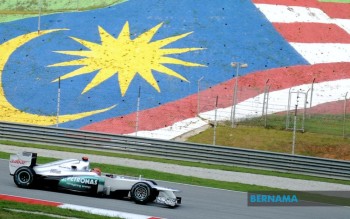
Malaysia is preparing to welcome Formula 1 back to Sepang International Circuit in October 2026 when it hosts the Bahrain Grand Prix, a development that could inject significant revenue into the nation's tourism and hospitality sectors. The one-off event, confirmed by Formula 1 and the Fédération Internationale de l'Automobile on Sunday, will position Malaysia between the Azerbaijan Grand Prix and the Singapore Grand Prix on the championship calendar, from October 2 to 4, 2026, pending final approvals and World Motor Sport Council endorsement. This marks a notable comeback for a country that last hosted a Formula 1 race in 2017, ending a tenure that had made Sepang an established fixture on the global motorsport calendar.
Industry veterans view this arrangement as a pragmatic stepping stone for Malaysia rather than a definitive renewal of the nation's F1 commitment. Datuk Razlan Razali, former chief executive officer of Sepang International Circuit, characterised the race as a valuable opportunity to assess whether Malaysia should pursue deeper involvement with Formula 1 in the future. His assessment reflects the complex calculus facing Malaysian policymakers, who must weigh the substantial costs of hosting a grand prix against potential long-term benefits. The racing venue itself possesses significant advantages in this context—Razali pointed out that Malaysia's circuit represents a cost-effective alternative to other potential venues across Europe and beyond, offering promoters and organisers better financial terms than competing facilities.
From an operational standpoint, Razali indicated that Sepang requires no fundamental overhauls to accommodate the Bahrain Grand Prix, though the FIA will conduct mandatory inspections since the circuit is not currently homologated to Formula 1 standards. The Malaysian facility, managed to the highest operational benchmarks and certified to international motorsport standards, would likely need only minor adjustments to meet the championship's specific requirements. Critically, any substantive infrastructure upgrades would fall to Bahrain's organisers rather than Malaysian authorities, reducing the financial burden on the government or local operators. This arrangement fundamentally alters Malaysia's risk profile compared to hosting a permanent grand prix, where the nation typically shoulders substantial capital expenditure and ongoing operational costs.
Economic projections from motorsport leaders suggest the race could generate meaningful gains across multiple sectors, though the compressed timeline presents both opportunities and limitations. Mokhzani Mahathir, president of the Motorsports Association of Malaysia, expects hospitality, tourism, airline services and food and beverage businesses to capture spending from the estimated 30 percent of Formula 1 spectators who travel internationally. The strategic placement of the event—one week before the Singapore Grand Prix—could prove particularly advantageous, as visitors planning a Southeast Asian motorsport tour may choose to base themselves in Malaysia due to lower accommodation and living costs compared to Singapore. This geographic positioning offers adjacent markets an opportunity to extract tourism revenue from the same visitor cohort without the expense of hosting simultaneous major events.
Domestic tourism stands to benefit substantially, though international attendance may fall short of expectations for a traditional grand prix weekend. Razali acknowledged that the short lead time between the announcement and the October 2026 race creates scheduling challenges for overseas F1 enthusiasts, who typically book travel six months or more in advance. Nevertheless, committed fans of the sport who cherish memories of Sepang's previous Formula 1 era may prioritise attending the event despite the tight timeframe. Local suppliers, contractors and food and beverage operators will encounter opportunities to service the race organisation, potentially capturing spending that might otherwise flow to international vendors. Razali emphasised that Bahrain's role extends primarily to marketing and promotion, with Malaysia's responsibilities centred on track rental and facilitating the use of domestic workforce and supplier networks.
From a financial perspective, Malaysia's participation carries minimal fiscal exposure compared to underwriting a permanent grand prix. Mokhzani highlighted that since Bahrain assumes the financial obligations and risks associated with staging the race, Malaysia's return on investment calculations become substantially more favourable. The Malaysian government faces no obligation to fund infrastructure construction, marketing campaigns, or event operations, yet stands to capture tax revenue, visitor spending and business activity generated by the weekend. This formula contrasts sharply with Malaysia's historical approach to Formula 1, where government backing financed circuit development and ongoing operational costs that frequently exceeded revenue projections. The current arrangement effectively transfers this financial burden to external promoters while allowing Malaysia to capture secondary benefits.
The prospect of Formula 1 returning permanently to Malaysia, however, remains distinctly remote based on assessments from industry leaders. Razali characterised the possibility as unlikely without explicit political direction from Prime Minister Datuk Seri Anwar Ibrahim, and even then, only if the government commits substantial resources to addressing the escalating costs associated with the championship. Formula 1 expenses have grown considerably since Malaysia's final 2017 race, with infrastructure upgrades, safety mandates, and hosting fees expanding dramatically across the sport. The financial case for a standalone Malaysian grand prix would require either sustained government subsidy or a commercial partner willing to absorb substantial losses in pursuit of sporting prestige. Razali suggested that a decision on permanent return status might emerge during the October 2026 race weekend if political leadership chooses to explore that direction.
Malaysia possesses established infrastructure and operational capacity to manage the logistics of a major motorsport event without significant friction. Mokhzani dismissed concerns about the compressed timeline, contending that Malaysia regularly hosts international events of comparable scale and complexity. The country's network of five-star hotels, transportation systems, and telecommunications infrastructure across Kuala Lumpur, Putrajaya and surrounding regions can accommodate the anticipated visitor volume and spectator base. This operational readiness distinguishes Malaysia from markets that might require substantial capital investment to create adequate hosting infrastructure. The reassurance offered by senior industry figures suggests confidence that the October 2026 race will proceed smoothly without major logistical disruptions, building confidence in Malaysia's capacity to manage high-profile international sporting events.
However, commentators caution against viewing the Bahrain Grand Prix as merely a one-weekend tourism transaction divorced from Malaysia's broader motorsport development. Former Formula 1 driver Alex Yoong advocated for a strategic perspective that leverages the event to advance grassroots motorsport, driver development programmes, and wider regional racing capabilities. The presence of Formula 1 at Sepang offers potential for expanding investment in Malaysian motorsport talent, facilitating training pathways for aspiring drivers and engineers, and positioning the country as a regional racing hub. Yoong's perspective suggests that optimal value from the October 2026 event extends beyond ticket sales and hospitality revenues toward long-term capacity building within Malaysia's motorsport ecosystem. This vision aligns with regional aspirations to develop Southeast Asian motorsport capabilities and attract international racing talent development facilities.
The timing of Malaysia's F1 return also carries symbolic significance for younger motorsport enthusiasts who came of age after the 2017 season ended. Mokhzani noted that Malaysian motorsport fans, particularly the generation that missed watching Formula 1 at Sepang during the gap years, will welcome the championship's return regardless of the temporary nature. This demographic reconnection to Formula 1 could stimulate broader interest in motorsport, expanding spectator bases for other racing series and strengthening the commercial foundation for future international events. The psychological impact of Formula 1's return to Malaysia, after nearly a decade of absence, may rekindle the nation's motorsport culture and generate momentum that extends beyond the single October 2026 weekend.
Ultimately, Malaysia's approach to the 2026 Bahrain Grand Prix reflects pragmatic positioning that captures economic benefits while limiting fiscal exposure. The nation avoids the substantial costs inherent in securing an independent grand prix while retaining eligibility to pursue permanent status if political leadership determines the case sufficiently compelling. The October 2026 race functions simultaneously as an economic catalyst for immediate tourism and hospitality gains, a testing ground for assessing sustained Formula 1 involvement, and a platform for broader regional motorsport development. Whether this weekend proves transformative for Malaysia's motorsport future depends partly on attendance, spending patterns, and political appetite for deeper engagement with the championship—factors that will become clearer as the 2026 event approaches.

