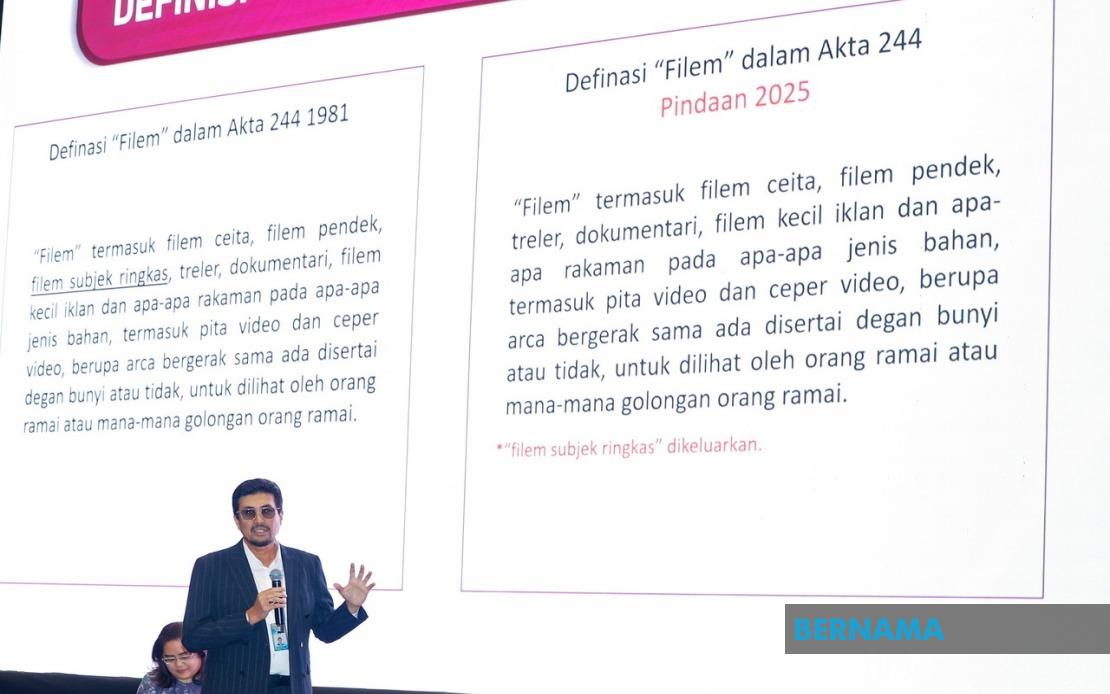
Malaysia's film industry is poised for significant transformation following the imminent launch of the National Film Policy (DFN) 2026-2035, a comprehensive framework designed to revitalise the sector through innovative funding approaches, technological adoption, and expanded commercial opportunities. The policy represents the culmination of two years of intensive consultation and marks the first major legislative update to Malaysia's film strategy since 2005, signalling a decisive shift in how the government intends to develop this culturally and economically important industry.
Datak Azmir Saifuddin Mutalib, chief executive officer of the National Film Development Corporation Malaysia (FINAS), confirmed during a stakeholder engagement session at Menara FINAS Damansara in Petaling Jaya that Cabinet approval is expected imminently, with a formal launch anticipated before the year concludes. The extended development period reflects the complexity of creating a policy framework that harmonises the interests of multiple constituencies—from independent filmmakers to major production houses—while avoiding duplication with existing government initiatives across various ministries.
The DFN 2026-2035 is structured around five interconnected pillars that collectively address systemic challenges plaguing Malaysia's film sector. The financing and investment component tackles perhaps the most persistent obstacle facing local filmmakers: securing adequate capital for production. By promoting alternative funding models beyond traditional bank lending, the policy aims to democratise access to resources and reduce dependence on a handful of well-connected producers. The marketing and promotion pillar recognises that even quality productions struggle without effective distribution channels and audience engagement strategies in an increasingly crowded global entertainment landscape.
Technology integration, particularly the incorporation of artificial intelligence capabilities, represents a forward-looking dimension of the policy that acknowledges Malaysia's position within broader regional and global innovation trends. Rather than resisting technological change, FINAS is explicitly embracing AI as a tool that can enhance everything from scriptwriting and post-production workflows to audience analytics and targeted marketing campaigns. This approach positions Malaysian filmmakers to compete more effectively with productions from more technologically advanced nations, while potentially attracting international collaborations and investment that might otherwise gravitate towards Singapore, South Korea, or other regional production hubs.
The human capital development component addresses a critical skills gap within Malaysia's film ecosystem. By establishing structured training programmes and certification frameworks, the policy seeks to build a more professional, technically competent workforce capable of meeting international production standards. This investment in people is particularly significant for Southeast Asian film ambitions, as the region continues to lag behind East Asian neighbours in developing world-class technical talent and creative expertise. Enhanced workforce capabilities could position Malaysia as an attractive location for regional and international co-productions, generating employment and foreign currency while elevating the quality of local output.
Intellectual property protection emerges as another crucial reform area, reflecting growing concerns about piracy and the need to secure fair returns for creators and investors. Strengthening these protections through legislation and enforcement mechanisms encourages legitimate industry investment and protects Malaysian creative talent from exploitation. This becomes increasingly important as the sector attempts to establish itself internationally and attract higher-calibre talent reluctant to work in jurisdictions with weak IP regimes.
The governance and legislation pillar represents the policy's structural backbone, clarifying roles and responsibilities across government agencies while reducing bureaucratic friction that currently hampers efficient decision-making. By harmonising objectives across the Communications Ministry, FINAS, and other relevant bodies, the framework aims to eliminate conflicting directives and overlapping mandates that have historically confused industry stakeholders about policy direction and support availability.
The policy's formulation involved extensive consultation with industry associations, independent producers, academic institutions including Universiti Teknologi MARA (UiTM) and the National Academy of Arts, Culture and Heritage (ASWARA), and multiple government agencies. This consultative approach ensures that the resulting framework reflects practical industry realities rather than merely reflecting bureaucratic assumptions about what the sector requires. Feedback from recent engagement sessions has focused on clarifying individual initiatives and expanding the detail around cooperation mechanisms between FINAS and industry bodies, suggesting that practitioners view the document as genuinely responsive to their concerns.
The DFN 2026-2035 explicitly positions Malaysia's film industry as a vehicle for economic growth, cultural expression, and international soft power projection. By celebrating Malaysia's multicultural identity through diverse storytelling and inclusive industry participation, the policy acknowledges that authentic representation of Malaysian society enhances both artistic credibility and commercial appeal. This approach aligns with global trends showing that diverse, locally-rooted narratives frequently achieve broader international resonance than productions attempting to appeal to lowest-common-denominator global audiences.
The policy's emphasis on sustainability and inclusivity suggests recognition that Malaysia's film sector has historically concentrated resources and opportunities among a relatively narrow segment of producers and production companies. By deliberately broadening access to financing, training, and market opportunities, FINAS aims to cultivate a more vibrant creative ecosystem where emerging talent and marginalised perspectives can flourish. This democratisation of opportunity could unlock creative potential currently constrained by limited access to resources.
For Malaysian viewers and practitioners, the new policy framework represents a potential inflection point for local cinema's trajectory. Beyond immediate institutional changes, the policy signals government commitment to treating film as a strategic priority rather than a peripheral cultural concern. This political backing creates space for longer-term institutional development and attracts the consistent investment necessary to build sustainable competitive advantages in regional and global markets. As the policy moves through final approval stages, industry stakeholders are watching closely to assess whether rhetoric will translate into concrete resource allocation and implementation effectiveness.

