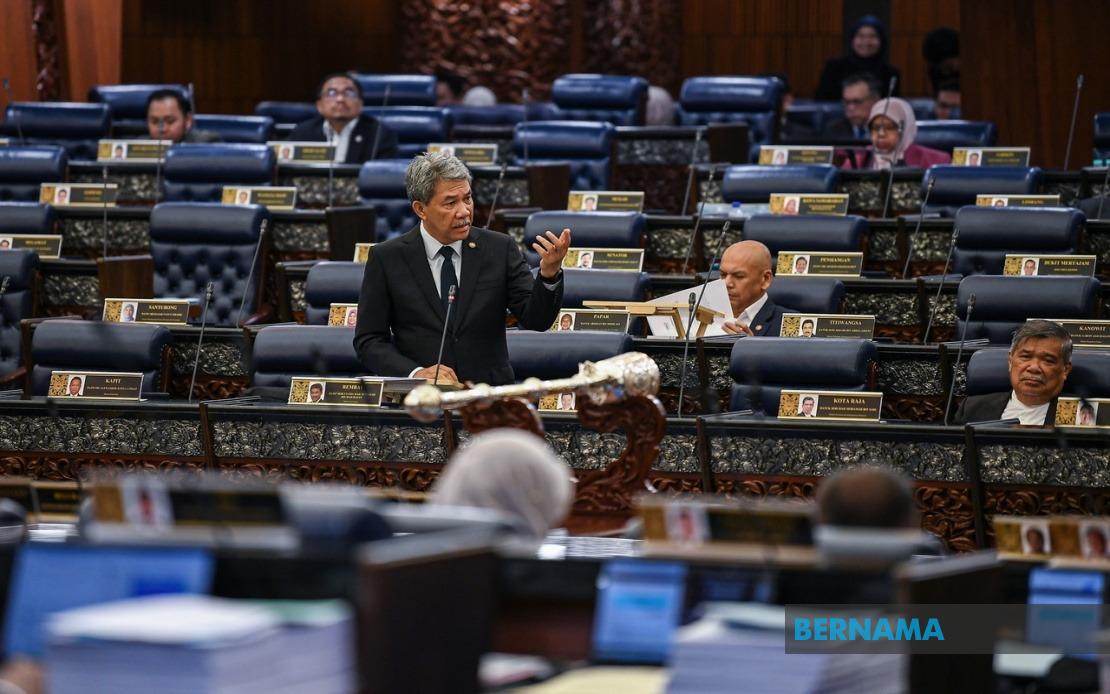
Malaysia's Humanitarian Trust Fund for the People of Palestine operates under rigorous government oversight and transparent management practices, according to Foreign Minister Datuk Seri Mohamad Hasan, who addressed concerns raised in Parliament regarding the disbursement of assistance to Palestinians affected by the ongoing Gaza conflict.
Speaking during Question Time in the Dewan Rakyat, Mohamad rejected allegations suggesting improper management of the fund, clarifying that the AAKRP functions as a state-controlled trust account rather than an independently operated entity. This distinction carries significant implications for accountability, as government-managed accounts are subject to institutional checks and balances unavailable to private organisations. The minister emphasised that all expenditures undergo scrutiny by Malaysia's Auditor-General, the country's highest audit authority, and are subject to regular reporting requirements to the Cabinet, ensuring political accountability at the highest levels.
The clarification comes amid broader public discourse about charitable giving and international humanitarian assistance. Social media platforms have occasionally circulated unverified claims regarding the handling of Palestinian relief funds across multiple countries and organisations. By publicly delineating the fund's institutional status and oversight mechanisms, Mohamad sought to counter misinformation while reaffirming the government's commitment to delivering aid effectively. This transparency measure reflects growing international emphasis on accountability in humanitarian financing, particularly given the scale of the humanitarian crisis in Gaza and the multiple channels through which assistance flows.
Mohamad highlighted that Malaysia ensures assistance reaches intended beneficiaries by funnelling support through established international and regional humanitarian organisations with proven track records. The fund channels resources via the United Nations Relief and Works Agency for Palestine Refugees in the Near East, commonly known as UNRWA, which operates across multiple Middle Eastern countries and maintains extensive field operations. Additionally, assistance flows through the Jordan Hashemite Charity Organisation and the Palestine Red Crescent Society, both established institutions with deep community connections in the region. Direct partnerships with medical facilities, specifically King Hussein Hospital, further ensure that healthcare resources reach patients directly rather than entering opaque distribution networks.
Beyond financial transfers, Malaysia has dispatched tangible humanitarian goods to Gaza, including food supplies, medical equipment, and pharmaceuticals essential for maintaining basic health services. The minister noted that certain consignments had previously faced logistical delays due to border restrictions, but recent diplomatic coordination with Egypt has enabled overland humanitarian corridors to reopen. These supply routes represent critical lifelines for a civilian population facing severe shortages of essential goods and medical supplies. The timing of these deliveries underscores Malaysia's sustained engagement with the humanitarian crisis despite the complex geopolitical environment.
The humanitarian situation in Gaza remains dire, with infrastructure destruction affecting fundamental civilian services. Hospitals, educational institutions, and religious facilities have suffered extensive damage throughout the conflict, limiting civilian access to healthcare, education, and spiritual spaces. This infrastructure degradation compounds the immediate humanitarian emergency, as destroyed medical facilities cannot treat injury and disease, and damaged schools cannot continue educating displaced children. The destruction creates cascading crises affecting multiple aspects of civilian life, from maternal health to disease prevention.
The Foreign Minister's parliamentary intervention represents an attempt to recalibrate public perception of Malaysian humanitarian efforts through institutional transparency. Rather than simply asserting good intentions, Mohamad grounded his response in specific mechanisms of accountability—the Auditor-General's oversight, Cabinet reporting, and partnerships with international organisations—that provide verifiable assurance of proper fund management. This approach acknowledges that public trust in humanitarian financing requires demonstrable institutional safeguards rather than mere declarations of intent.
Mohamad cautioned citizens against accepting unverified social media narratives regarding the fund, emphasising that professional and responsible management distinguishes official government programmes from unaccountable external actors. The warning reflects broader challenges facing governments and international organisations in maintaining public confidence amid disinformation. In the Malaysian context, where considerable public sympathy for Palestinian causes exists, misinformation about aid management risks undermining legitimate humanitarian initiatives by creating false doubts about government credibility.
The parliamentary exchange also reveals Malaysia's diplomatic positioning within Middle Eastern affairs. By maintaining substantial humanitarian assistance alongside transparent management practices, Malaysia balances moral commitments to Palestinian civilians with institutional requirements for sound governance. This positioning allows Malaysia to contribute meaningfully to humanitarian relief while maintaining international credibility regarding aid accountability—an increasingly important consideration as donor countries face scrutiny regarding how assistance is utilised in conflict zones.
Moving forward, the Foreign Ministry's emphasis on institutional mechanisms suggests Malaysia may implement additional transparency measures or public reporting on fund distribution. Such proactive communication could establish clearer benchmarks for public accountability and reduce space for misinformation to flourish. The approach reflects sophisticated understanding that humanitarian effectiveness depends not merely on delivering resources but on maintaining public confidence through demonstrable institutional integrity.