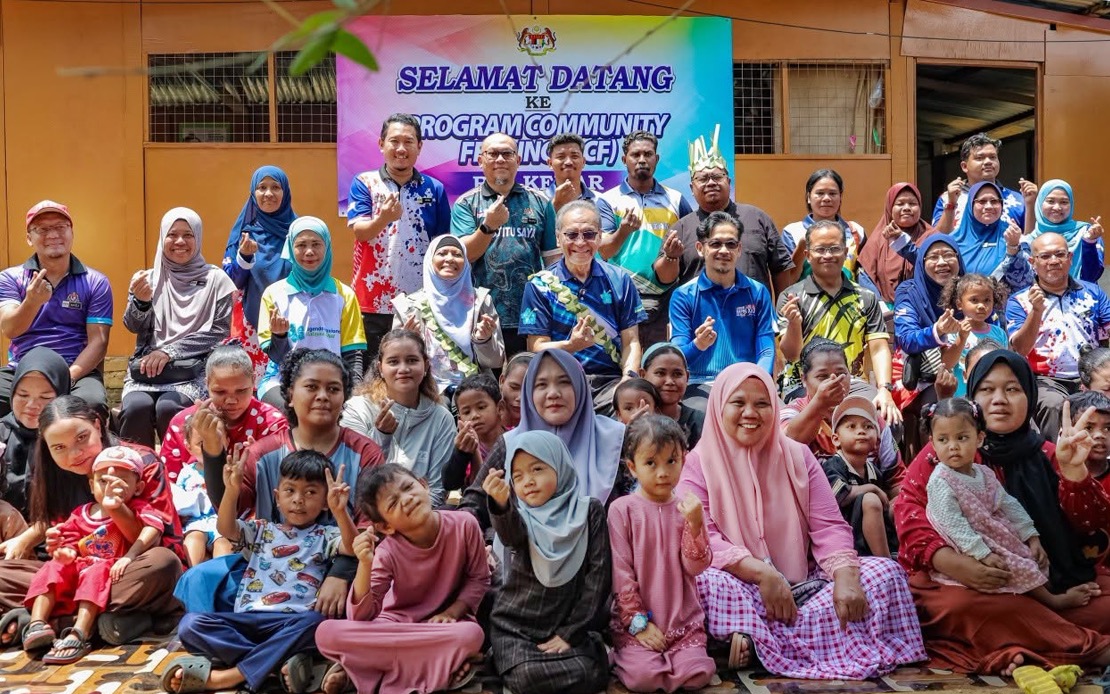
The Ministry of Health has committed RM500,000 in immediate funding to modernise the Kemar Health Clinic in Gerik, signalling renewed efforts to extend comprehensive healthcare to the remote Orang Asli settlements in Hulu Perak. Health Minister Datuk Seri Dr Dzulkefly Ahmad announced the investment during an inspection visit to the facility, emphasising that the improvement programme addresses critical infrastructure deficits that have long hampered service delivery to one of Malaysia's most geographically isolated populations.
The funding package targets several interconnected challenges that have constrained operations at the clinic. A centrepiece of the upgrade involves constructing a modern boat storage facility to replace infrastructure that has deteriorated over more than eleven years of service. The existing structure, designed to accommodate only a single vessel, has proven inadequate for the clinic's operational needs and has compromised the maintenance and protection of critical assets essential for waterborne emergency response. This new facility will substantially enhance the clinic's capacity to manage its growing fleet of rescue and medical transport boats.
Complementing the infrastructure improvements, the allocation will fund the purchase of a four-wheel-drive vehicle to replace an ageing transport asset that has become unreliable for accessing dispersed settlements and connecting to river embarkation points. The funding also covers acquisition of advanced medical equipment, particularly a Video Laryngoscope, a sophisticated device that enables healthcare staff to perform intubation procedures with greater precision during emergency interventions. These technological upgrades reflect recognition that remote clinics serving vulnerable populations must maintain parity with urban medical standards despite logistical challenges.
During his visit, Dr Dzulkefly officiated the deployment of the Medik 8 Boat at Belum Rainforest Resort Jetty, a twelve-passenger multipurpose vessel costing RM350,000 that will expand emergency response capabilities for over 4,500 Orang Asli residents living around the RPS Kemar settlement. The addition of this boat to the ministry's existing fleet of six vessels reflects acknowledgement that waterway transport is not merely convenient but indispensable in communities where river systems form the primary highway network. The investment underscores how healthcare accessibility in Malaysia's interior depends fundamentally on unconventional infrastructure adapted to local geography.
Beyond immediate facility upgrades, the ministry is accelerating construction of a new Type 5 Health Clinic at Kemar, a project Dr Dzulkefly described as central to delivering modern, comprehensive healthcare within significantly improved physical surroundings. This planned facility represents a generational shift in service delivery standards, promising residents access to infrastructure meeting contemporary healthcare specifications rather than the makeshift arrangements that have characterised provision in isolated communities. The timeline for completing this facility remains critical for populations currently dependent on limited capacity.
The broader context of these improvements involves Malaysia's healthcare equity agenda under the Malaysia MADANI framework, which posits that access to quality medicine constitutes a fundamental right regardless of geography or socioeconomic circumstance. Dr Dzulkefly articulated this principle explicitly, arguing that challenging terrain and remote location should never become justifications for denying Malaysians access to modern healthcare. This ideological commitment shapes policy direction, even as implementation remains resource-intensive and logistically complex in practice.
The health minister's visit included recognition of the Community Feeding Programme centre at RPS Kemar, a nutrition intervention targeting Orang Asli children from six months to six years of age. The programme provides full-cream milk, multivitamin supplementation, active assisted feeding, and Ready-to-Use Therapeutic Food for identified malnutrition cases. The programme's decade-long implementation from 2015 to 2025 has demonstrated measurable impact on nutritional status within the settlement, with stunting rates declining from 75.2 percent to 50.8 percent and underweight prevalence falling from 43.7 percent to 25.2 percent. These statistics reflect how sustained, evidence-based nutritional intervention can substantially alter health trajectories in vulnerable populations.
The significance of these improvements extends beyond Kemar to broader questions about healthcare equity in Malaysia's interior regions. Orang Asli communities have historically experienced health disparities rooted in geographic isolation, limited infrastructure investment, and systemic barriers to accessing centralised healthcare facilities. The concerted focus on upgrading boat-based transport, medical equipment, and clinic facilities addresses these structural inequities by embedding resources directly within communities rather than requiring residents to undertake arduous journeys to urban medical centres. This localisation of healthcare capacity represents a practical commitment to proximity and accessibility.
Dr Dzulkefly also highlighted the role of frontline health personnel—doctors, nurses, boat operators, and support staff—whose daily commitment enables service delivery despite environmental obstacles and personal risk. Healthcare workers operating in remote river systems frequently navigate dangerous weather conditions and challenging water conditions to reach patients, often working in understaffed settings with limited equipment. Acknowledging these contributions forms part of the ministry's broader strategy to attract and retain skilled personnel willing to serve in difficult postings, a persistent challenge for rural and remote healthcare systems throughout Southeast Asia.
The RM500,000 allocation, while substantial for a single clinic, reflects the reality that extending healthcare into genuinely remote locations demands investment intensity far exceeding per-capita healthcare spending in urban areas. Each boat, vehicle, and piece of medical equipment represents disproportionately high costs due to limited economies of scale and specialised requirements for waterborne and terrestrial transport. This cost structure helps explain why healthcare universalisation in diverse geographies remains fiscally demanding and why sustained political commitment becomes necessary for maintaining service levels across disparate communities.

