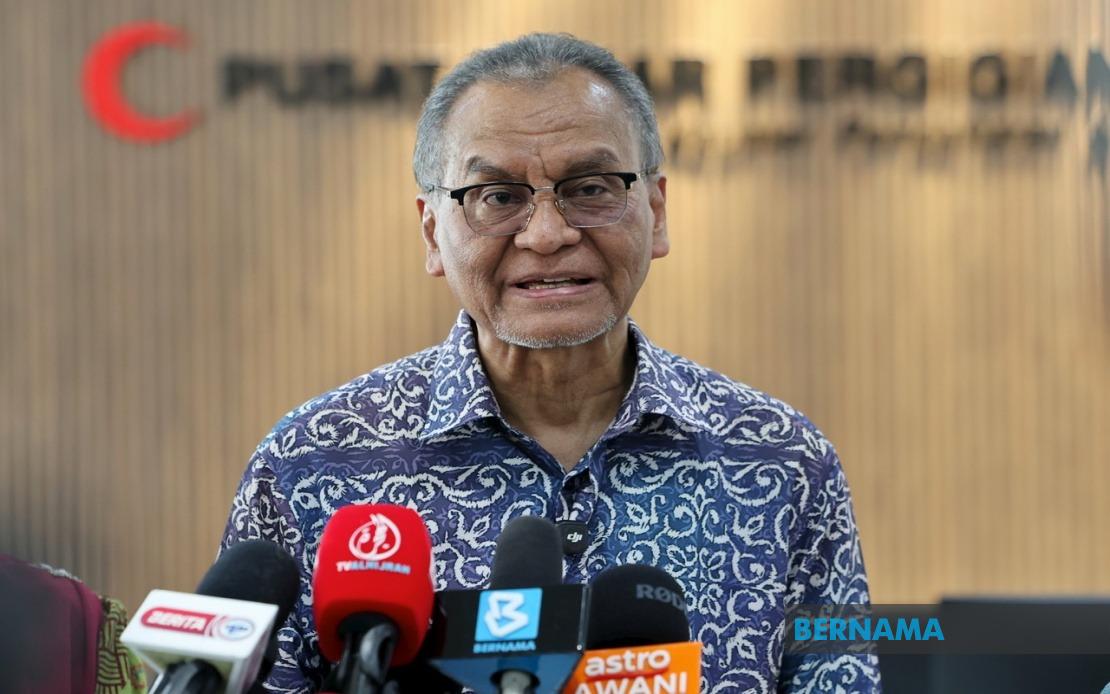
Malaysia's Health Ministry remains in the evaluation phase regarding the integration of dengue vaccines into the National Immunisation Programme, according to Datuk Seri Dr Dzulkefly Ahmad, who cautioned that regulatory approval and market availability do not automatically translate to public health policy adoption. Speaking in Seremban on August 27, the Minister emphasised that the decision involves extensive scrutiny encompassing financial feasibility, epidemiological considerations, and alignment with broader immunisation strategy—a process that cannot be expedited despite mounting public health pressures.
The crux of the Ministry's deliberation centres on economic sustainability. While the National Pharmaceutical Regulatory Agency has already approved and registered at least one dengue vaccine now available through private healthcare facilities, the current market price remains prohibitively steep for incorporation into a universal programme serving Malaysia's population of over 33 million. Dr Dzulkefly specifically referenced ongoing cost-benefit analyses of a Japanese-produced vaccine, signalling that the Ministry is not dismissing the option but rather demanding financial evidence that public funds can be deployed responsibly. This measured approach reflects the reality that adding any vaccine to the National Immunisation Programme commits government resources indefinitely and affects vaccination schedules and healthcare infrastructure nationwide.
The urgency of dengue control is unmistakable. Malaysia recorded more than 61,000 dengue cases nationwide by Epidemiological Week 33 in 2026—representing a stark 60.8 per cent increase compared to the equivalent period in 2025—with 58 fatalities documented during this span. Kuala Lumpur and Selangor emerged as particular hotspots, prompting the Ministry to activate dedicated dengue operations rooms and redeploy personnel to these high-risk zones. The trajectory indicates accelerating transmission rather than stabilisation, placing dengue firmly in the Ministry's crisis management portfolio alongside its routine programme obligations.
Cognisant of this escalating threat, the Ministry has broadened its operational response beyond vaccine procurement. The deployment of Wolbachia-infected mosquitoes as a biological control method represents a non-pharmaceutical intervention gaining traction in Southeast Asia. This approach targets the Aedes mosquito vectors by introducing naturally occurring bacteria that inhibit dengue transmission, offering a complementary strategy whilst the vaccine question remains unresolved. Such methods, however, require sustained vector surveillance, community cooperation, and coordination with municipal authorities—responsibilities that demand resources and political will across multiple governance levels.
Dr Dzulkefly underscored that dengue suppression cannot rest solely on the Ministry's shoulders. Local councils, municipal corporations, environmental health departments, and even residential communities must participate actively in eliminating breeding grounds that allow Aedes populations to flourish. The proliferation of water containers, discarded tyres, and stagnant water in poorly maintained premises remains Indonesia and Malaysia's perennial challenge. Without grassroots compliance and inter-agency coordination, even an effective vaccine programme would address only part of a multi-dimensional problem.
Beyond dengue, Dr Dzulkefly revealed that the Ministry is simultaneously pursuing expansion of dental health coverage under the PeKa B40 scheme, reflecting broader recognition that oral health constitutes an underappreciated dimension of preventive medicine and non-communicable disease management. The establishment of the Negeri Sembilan Dental Specialist Centre, which opened in September 2025 at a cost of RM32 million, exemplifies this renewed strategic emphasis. Operating as Malaysia's first extra-hospital dental specialist referral facility, it has accommodated 11,085 patients within its initial nine months, dramatically reducing specialist consultation wait times from two months to merely two to three weeks.
The Negeri Sembilan centre's performance metrics suggest that infrastructure investment yields measurable service improvements. The introduction of 18 contemporary dental treatment chairs expanded daily capacity by approximately 90 per cent, from 80 to 150 patients daily. This expansion operates across a central zone encompassing Negeri Sembilan, Selangor, Kuala Lumpur, Putrajaya, and Melaka—covering a combined population exceeding 11.89 million residents. The model demonstrates that concentrating specialist resources at strategic hubs, supported by digital information systems and modern imaging capabilities, can alleviate bottlenecks plaguing Malaysia's public healthcare system.
Integral to this transformation is the Dental Information System, which streamlines patient scheduling, referral pathways, and clinical documentation across facilities. Complementing digital infrastructure are skill development laboratories embedded within the centre, serving as continuous professional development venues for dental personnel. These investments reflect an institutional understanding that healthcare modernisation requires not only physical infrastructure but also technological enablement and workforce capability enhancement—principles applicable across medical and dental disciplines.
The Ministry intends to replicate this zonal model progressively throughout Malaysia, commencing with Borneo before advancing to individual states. Simultaneously, eight new mobile dental clinics are scheduled for deployment by year's end across Sabah, Perlis, Penang, Selangor, Putrajaya, and Johor. These mobile units extend basic preventive and treatment services to underserved areas, complementing fixed-facility expansion. Together, these initiatives signal the Ministry's recognition that geographic and socioeconomic disparities in oral health access require differentiated service delivery models operating simultaneously across urban referral hubs, state-level facilities, and mobile outreach platforms.
For Malaysian policymakers and healthcare observers, Dr Dzulkefly's measured stance on dengue vaccination reflects a deliberative institutional culture increasingly characteristic of health ministries confronting resource constraints and competing demands. The dengue situation will likely intensify pressure for accelerated vaccine deployment decisions, particularly if cases and mortalities continue escalating through 2026. Simultaneously, the expansion of dental services exemplifies how the Ministry is attempting to rebalance healthcare priorities toward prevention and primary care, acknowledging that communicable disease control and non-communicable disease management represent equally pressing challenges requiring sustained, evidence-based investment. The outcomes of these parallel initiatives will substantially shape Malaysia's healthcare trajectory and regional public health leadership in the coming years.

