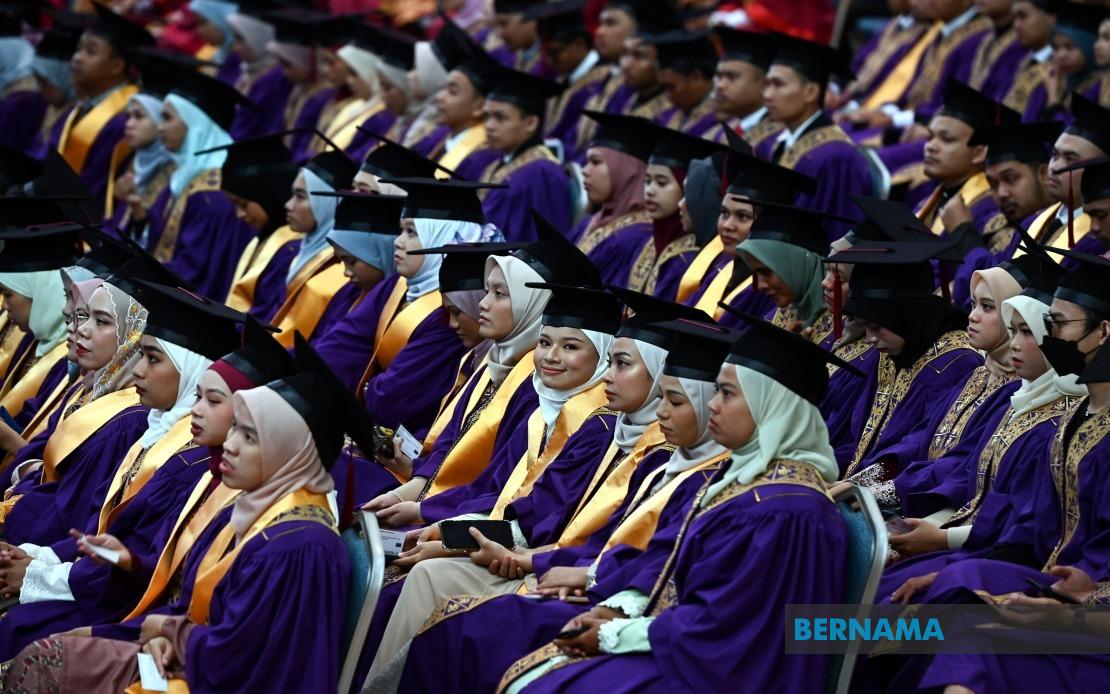
The Ministry of Higher Education has moved swiftly to shield students from disciplinary action related to their exercise of fundamental freedoms, signalling a significant shift in how Malaysia's public universities will handle student activism and expression. The directive, effective immediately, represents a tangible step toward dismantling decades-old restrictions embedded in the Universities and University Colleges Act 1971, which has long been criticised by student advocates, academics, and civil society organisations as incompatible with modern democratic principles. This intervention by the ministry follows remarks by Prime Minister Datuk Seri Anwar Ibrahim at the Malaysia MADANI Intellectuals Forum, where he indicated the government's commitment to eventually repeal the contentious AUKU legislation entirely.
The suspended disciplinary proceedings cover a broad spectrum of student activities that fall within the legitimate exercise of democratic rights. Students can now engage in public criticism, organise peaceful assemblies, manage student organisations, and utilise communication platforms without fear of institutional sanctions based on outdated regulatory provisions. The exemption also extends to students' ability to distribute and publish materials, activities that have historically triggered investigations and disciplinary hearings under the strict interpretations of AUKU. This represents a fundamental recalibration of the power dynamic between universities and their student communities, moving away from a paternalistic governance model toward one that respects constitutional freedoms.
Crucially, the ministry has attempted to strike a balance between expanding liberties and maintaining institutional order. Officials were careful to specify that the protections do not shield students from accountability for genuine misconduct involving violence, property damage, vandalism, or criminal activity. Academic integrity violations remain grounds for discipline, and students must still adhere to valid institutional rules that do not infringe upon their rights. This calibrated approach reflects an understanding that expanded freedoms must coexist with personal responsibility and respect for the law, a distinction that separates legitimate democratic participation from destructive or illegal conduct.
The government has signalled that this is an interim arrangement designed to deliver immediate relief while longer-term legislative reform proceeds. Prime Minister Anwar explicitly advocated for implementing freedoms now rather than waiting for the comprehensive drafting and parliamentary passage of entirely new legislation governing universities. This pragmatic approach acknowledges that legal reform can take years to navigate through the legislative process, during which time students would otherwise remain subject to restrictive rules. By using existing ministerial authority to exempt certain provisions, the government has found a mechanism to achieve substantive change without requiring immediate parliamentary intervention.
The ministry is simultaneously undertaking a legal review to identify additional measures that could be implemented within current legislative frameworks. This suggests authorities are exploring how far they can stretch existing laws to accommodate the government's reform objectives, potentially setting the stage for broader changes once a comprehensive new Act is drafted and passed. The move also underscores a recognition that incremental reform is sometimes more politically viable than attempting comprehensive legislation in a single parliamentary session.
Universities not governed by AUKU will face similar scrutiny. The ministry announced that International Islamic University Malaysia and Universiti Teknologi MARA will undergo comparable reviews of their student regulations to ensure alignment with the broader reform agenda. This nationwide approach suggests the government intends to create a consistent framework across all public higher education institutions, preventing regulatory fragmentation and ensuring that student rights protections are universal rather than institution-dependent. Both IIUM and UiTM have their own governance structures and disciplinary codes, and bringing them into conformity with the spirit of the AUKU reforms will require careful examination of their specific provisions.
For Southeast Asian observers, Malaysia's move carries broader significance. The region has experienced periodic student activism and corresponding institutional crackdowns across multiple countries, often justified by authorities citing stability concerns or institutional discipline needs. Malaysia's decision to proactively protect student expression rather than wait for crisis-driven reforms suggests a model of managed liberalisation that other regional governments might consider. However, the success of this approach depends entirely on implementation—whether universities will genuinely honour the exemptions or find alternate mechanisms to sanction student activism.
The historical context cannot be overlooked. AUKU has been a lightning rod for criticism since the 1970s, with successive generations of students, academics, and human rights advocates arguing that it stifles intellectual discourse and democratic development. International bodies have repeatedly flagged Malaysia's restrictions on university speech as incompatible with international human rights standards. The ministry's acknowledgement that certain provisions require exemption represents an implicit admission that the law, in its current form, is overly restrictive for a nation aspiring to democratic governance and intellectual leadership in the region.
The practical implications for students are substantial. Campus journalism, student political organisations, and student-led advocacy campaigns that have previously operated in legal grey areas or under constant threat of disciplinary action can now function with greater confidence. Student newspapers may publish investigative reporting on institutional matters without triggering accusations of insubordination. Student unions can organise political forums and invite speakers without navigating Byzantine approval processes designed to restrict such activities. Peer discussion groups, online forums, and social media activism gain breathing room from institutional surveillance.
Universities will face an adjustment period as administrators reconcile the new freedoms with their traditional roles as institutional gatekeepers. Faculty members who have grown accustomed to reporting student activism to disciplinary authorities will need reorientation. Some administrators may resist the change, viewing it as an erosion of institutional authority. The government's specification that responsibility and legality must accompany freedom provides universities with a fallback position, but disciplinary bodies will need to distinguish carefully between legitimate expression and genuine misconduct.
The broader implication for Malaysia's higher education ecosystem is transformative. Universities serve as intellectual incubators for future leaders, policymakers, and professionals. An environment where students can freely express dissent, engage in public debate, and organise collectively produces graduates better prepared for democratic participation and civic engagement. Conversely, institutions characterised by surveillance and restrictions on speech tend to produce graduates conditioned to conformity and deference to authority. The ministry's move signals recognition that Malaysia's development aspirations depend partly on cultivating intellectual culture and critical thinking among university populations.
Implementation timelines remain unclear, and questions persist about whether the exemptions will be enforced uniformly across all public universities. Regional variations in institutional culture and administrative interpretation could produce inconsistent outcomes. The eventual comprehensive reform through new legislation will likely need to address enforcement mechanisms and dispute resolution procedures. Nonetheless, the immediate halt on disciplinary proceedings for expression-related offences represents a concrete step toward expanding democratic space within Malaysia's higher education institutions, aligning them more closely with principles of academic freedom and intellectual openness that characterise leading universities globally.

