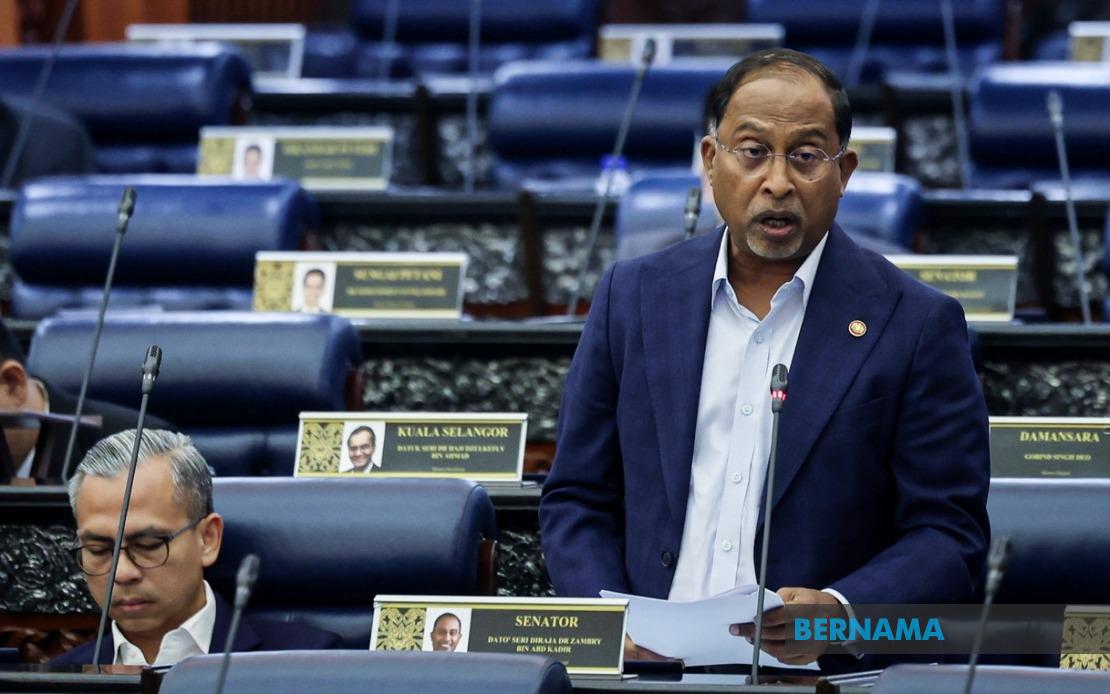
The Ministry of Higher Education (MOHE) has signalled its receptiveness to fresh academic programme proposals aimed at strengthening the higher education landscape across Sabah, seeking to diversify course offerings at public institutions throughout the state. During parliamentary proceedings this week, Higher Education Minister Datuk Seri Dr Zambry Abdul Kadir outlined the ministry's strategy to evaluate such applications using a rigorous framework focused on several fundamental considerations: the applying institution's academic capabilities, alignment with regional industry demands, existing infrastructure and staffing capacity, demonstrated student interest, and the likelihood of graduate employment in relevant sectors. This structured methodology is designed to prevent wasteful programme duplication while ensuring that courses introduced meet genuine educational and economic needs within Sabah specifically.
The minister emphasised that this approach represents a deliberate commitment to ensuring quality and relevance in higher education provision. Rather than expanding programme offerings indiscriminately, MOHE intends to build upon existing institutional strengths whilst carefully matching educational development to Sabah's particular economic trajectory and labour market requirements. This nuanced stance reflects recognition that meaningful expansion in higher education requires strategic planning rather than reactive expansion, particularly in a region where infrastructure and human resources must be allocated judiciously across competing priorities.
The openness to new programmes comes in response to longstanding concerns from Sabah parliamentarians about the state's educational capacity. Member for Kinabatangan Mohd Kurniawan Naim Moktar had raised the issue of limited course variety at Sabah institutions, highlighting how local students frequently relocate to Peninsular Malaysian campuses to access programmes unavailable in their home state. This geographic constraint has broader implications for family finances, student wellbeing, and ultimately workforce retention in Sabah, as graduates who relocate for studies often establish themselves elsewhere rather than returning home. By expanding local provision, MOHE seeks to address these structural disadvantages whilst keeping talented young people rooted in the state.
Currently, Sabah hosts a modest yet growing higher education infrastructure comprising 16 public institutions as of June 30, including four public universities, three polytechnics, and nine community colleges, with several operating branch campuses in addition to main facilities. This distributed network represents substantial public investment but appears insufficient to meet demand for diverse programme options. Universiti Malaysia Sabah (UMS), the state's flagship university, has strategically positioned itself around research-driven fields leveraging Borneo's distinctive characteristics—marine science and aquaculture, tropical biotechnology, medical sciences, heritage studies, social sciences, and ecotourism with business applications. This niche-focused approach, the minister noted, exemplifies how institutions can differentiate themselves while addressing identifiable market needs rather than pursuing generic programme portfolios.
Universiti Teknologi MARA's Sabah Branch operates on a complementary model, concentrating on tourism and hospitality, business administration, science and technology fields. Such differentiation prevents wasteful competition between institutions whilst theoretically ensuring that students can access quality provision across diverse academic domains without necessarily departing the state. However, the diversity remains limited compared to major Peninsular campuses, suggesting considerable scope for expansion should suitable institutional capacity exist and student demand warrant investment.
To support these expansion aspirations, MOHE is implementing 21 distinct development projects valued at RM1.05 billion across Sabah, representing a significant public commitment to strengthening higher education infrastructure. Within the 13th Malaysia Plan framework covering 2023 to 2025, RM160.6 million has been earmarked specifically for higher education under the First Rolling Plan designated for 2026. These financial commitments, whilst substantial, must be viewed against the geographical challenges and demographic scale of Sabah relative to Peninsular regions, where established institutions benefit from decades of accumulated infrastructure and academic depth.
The minister resisted suggestions that MOHE should establish rigid quotas mandating that specific percentages of programmes be offered exclusively in Sabah. Such inflexible targets, he argued, would prove counterproductive, as some disciplines inherently benefit from concentration at larger institutions with established research ecosystems, extensive library resources, and critical masses of specialist faculty. Certain fields—law, medicine, and advanced engineering, for instance—realistically function better when sufficient student cohorts gather at single locations, creating peer learning communities and attracting top-tier academics. Attempting to fragment provision artificially across multiple campuses risked compromising educational quality to serve administrative convenience.
Nonetheless, the minister acknowledged particular opportunities where Sabah could develop genuine competitive advantage. Legal education represents a compelling example, as Sabah and Sarawak face chronic shortages of locally trained lawyers relative to population size and economic complexity. A law programme anchored at UMS could feasibly meet regional needs whilst keeping graduates available for local professional practice. Similarly, fields aligned with natural resource management, indigenous heritage preservation, and tourism represent areas where Sabah's institutional positioning offers inherent advantages that Peninsular competitors cannot easily replicate.
The broader policy framework reflects recognition that higher education expansion must balance competing imperatives: maintaining quality standards, achieving fiscal sustainability, responding to documented student demand, and supporting regional economic development objectives. MOHE's emphasis on institutional expertise and industry alignment suggests the ministry is attempting to move beyond earlier patterns where higher education expansion sometimes preceded clear labour market demand, resulting in unemployed graduates and underutilised facilities. For Sabah specifically, this approach implies that programme growth will occur selectively, concentrated in areas where the state's geographic and natural endowments provide authentic differentiation.
From a Malaysian perspective, Sabah's higher education challenge reflects broader East Malaysia developmental dynamics. The state has historically relied on Peninsular institutions for advanced professional and specialist training, a pattern that perpetuates brain drain and limits local economic development. Strengthening Sabah's institutional capacity to retain students and develop local expertise contributes to more balanced national development whilst improving access for families without resources for prolonged separation from their children. The MOHE's receptiveness to new programmes, coupled with substantial infrastructure investment, suggests growing political recognition of these imperatives.
For prospective students and families in Sabah, the policy implications are moderately encouraging. Rather than facing limited, predetermined options, they may anticipate expanded course availability within the coming years, contingent on rigorous assessment processes. However, expectations should remain tempered; not every proposed programme will receive approval, and certain highly specialised fields may continue requiring interstate relocation. The ministry's insistence on quality, relevance, and sustainability over rapid expansion suggests a measured approach that prioritises educational integrity over headline achievements.

