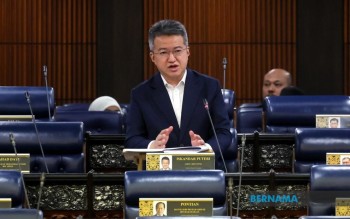
The Malaysian Parliament took a significant step toward securing the nation's long-term economic stability when Deputy Finance Minister Liew Chin Tong tabled the National Trust Fund Bill 2026 for first reading in the Dewan Rakyat on July 14. The landmark legislation seeks to create a dedicated sovereign wealth vehicle through the establishment of the National Trust Fund (KWAN) and its governing entity, the National Trust Fund (Incorporated), designed to serve as a permanent repository of financial resources that will benefit both present and future Malaysian generations. This move represents an important policy shift toward institutionalizing fiscal prudence and ensuring intergenerational equity in how the nation manages its wealth.
The foundational purpose underlying the bill reflects growing recognition among Malaysian policymakers that establishing predictable, mandatory funding mechanisms for long-term reserves creates a more resilient economic foundation. Unlike discretionary funds that depend on annual political decisions, a statutory trust with prescribed contribution formulas removes funding from the vicissitudes of budget cycles, thereby creating stability and predictability. The mechanism acknowledges that Malaysia's prosperity must be built on more than immediate revenue flows, particularly given the nation's dependence on finite natural resources that will eventually diminish. The National Trust Fund concept draws inspiration from similar institutions elsewhere, most notably Norway's oil wealth sovereign fund, though Malaysia's approach reflects the country's distinct fiscal and constitutional circumstances.
Under the proposed framework, the Federal Government faces mandatory annual contributions calculated through multiple channels that together create a comprehensive revenue-sharing arrangement. The government must allocate a minimum of 0.1 per cent of its projected annual revenue to the fund each year, establishing a baseline commitment proportional to overall fiscal capacity. Beyond this floor contribution, the legislation specifies that at least two per cent of all dividends received from Petroliam Nasional Bhd (Petronas) must flow directly into the fund, recognizing the central importance of the national oil corporation to Malaysia's economic revenue base. A third revenue stream comprises no less than two per cent of export duties collected on depleting natural resources after any duty-related allocations to states, ensuring that revenues derived from exhaustible assets are partially preserved rather than entirely consumed.
This multi-source contribution model proves significant for Southeast Asian observers because it demonstrates how a resource-rich nation can institutionalize fiscal discipline across different revenue categories simultaneously. Rather than relying on a single funding source that might fluctuate unpredictably, the three-pronged approach spreads obligations across general budget performance, corporate dividend flows, and resource extraction fees. The design recognizes that Petronas dividends may vary substantially year to year depending on global oil prices and production levels, while general revenues scale with overall economic growth. By incorporating resource taxes separately, the bill acknowledges that wealth extracted from finite natural resources carries special obligations to preserve value for posterity. Malaysian policymakers thereby embed an intergenerational principle directly into the revenue collection architecture.
Parliamentary procedures indicate that momentum behind the legislation builds rapidly, with Deputy Finance Minister Liew Chin Tong announcing during the first reading that the second reading will occur during the current parliamentary session. This compressed timeline suggests government commitment to moving the bill through legislative processes expeditiously. The National Trust Fund Act 2026 itself will not become operational until the Finance Minister issues a notification in the Gazette specifying the commencement date, providing administrative flexibility for implementing the necessary governance infrastructure and operational procedures. This phased approach allows time for establishing the National Trust Fund (Incorporated) as a fully functional entity with appropriate board structures, investment policies, and compliance mechanisms before actual fund operations commence.
The governance structure established by the bill places significant responsibility on the National Trust Fund (Incorporated) board to exercise investment judgment consistent with long-term wealth preservation objectives. The board must formulate and maintain a strategic asset allocation framework that articulates the fund's long-term investment strategy, moving beyond simple cash accumulation toward active portfolio management designed to generate returns that outpace inflation and compound wealth over decades. This governance requirement reflects international best practice in sovereign wealth fund administration, recognizing that merely holding contributed amounts in low-yield instruments would fail to fulfill the intergenerational wealth-building mandate. The board's investment discretion must operate within parameters established by statute and ministerial direction, balancing professional asset management expertise with public accountability.
Financial reporting and transparency mechanisms embedded within the legislation create important accountability infrastructure that Malaysian taxpayers can monitor. The National Trust Fund (Incorporated) must furnish the Finance Minister with comprehensive returns, reports, accounts, and other information regarding fund assets and activities according to ministerial specifications. These reporting requirements ensure that fund management operates within a framework of parliamentary and public oversight, addressing concerns that might otherwise arise when large sums of public money are placed under independent management. The explicit requirement to provide regular reporting to the Finance Minister, and implicitly to parliament through the government's financial accountability processes, creates a system where the public's representatives can scrutinize whether fund management aligns with national interests and statutory objectives.
The bill's provisions permitting contributions from state governments that derive royalties from petroleum or other depleting resources extend the fund's scope beyond the Federal Government alone, creating potential for a truly national trust mechanism. Malaysian states with significant resource extraction activities, particularly those with offshore petroleum reserves, possess fiscal incentives to participate in the trust framework. This federalist dimension reflects Malaysia's constitutional structure where natural resources are subject to concurrent state and federal jurisdiction in certain circumstances. By creating the legal architecture for voluntary state contributions, the legislation acknowledges that long-term wealth preservation requires coordination across Malaysia's multiple levels of government, particularly regarding resources where both federal and state authorities exercise legitimate claims.
Operational expenses and board remuneration provisions within the bill reflect pragmatic recognition that managing substantial financial assets requires capable administration and fair compensation for qualified personnel. The legislation explicitly authorizes use of fund moneys for payment of board member compensation, reimbursement of officer and staff expenses, and costs attributable to fund administration, management, and investment activities. This provision proves essential because underfunding or inadequate compensation structures would inevitably result in difficulty attracting talent capable of managing what will eventually become a substantial financial portfolio. Malaysian observers familiar with sovereign wealth fund operations elsewhere understand that attempting to operate such entities with minimal overhead typically results in poor investment performance that ultimately costs the nation far more than expenditures on capable administration.
The strategic implications of the National Trust Fund Bill 2026 extend beyond Malaysia's borders to regional economic dynamics and Southeast Asia's collective approach to long-term fiscal sustainability. As the Association of Southeast Asian Nations' most developed resource-based economy in certain sectors, Malaysia's establishment of a sophisticated sovereign wealth mechanism may influence how other resource-rich regional economies approach similar challenges. Singapore, which established its Temasek Holdings decades ago, has demonstrated the advantages of institutionalizing asset management outside normal political budget cycles. Indonesia, Thailand, and Vietnam all face comparable decisions regarding how to preserve wealth derived from finite resources for future generations. Malaysia's legislative framework, should it prove successful in practice, may offer a model that other developing nations can adapt to their own circumstances.
The second reading scheduled during the current parliamentary session will afford legislators opportunity to debate specific provisions, raise concerns about governance frameworks, and potentially propose amendments strengthening the bill's architecture. The speed of parliamentary progression suggests government confidence that the legislation commands broad support, though opposition scrutiny will likely focus on questions regarding board composition, investment restrictions, and ministerial oversight mechanisms. These parliamentary debates will clarify the degree to which the National Trust Fund concept commands consensus support or whether significant political divisions exist regarding how Malaysia should manage long-term wealth accumulation. The outcome will signal whether Malaysia's political establishment shares commitment to intergenerational equity and long-term economic sustainability, or whether the bill represents merely aspirational legislation that fails to address practical implementation challenges.

