The Malaysian government is moving to cushion the impact of ongoing global supply chain disruptions on its workforce by deploying a comprehensive retraining initiative. The Ministry of Human Resources (KESUMA) announced this week that it will channel workers displaced by international logistical challenges into Technical and Vocational Education and Training programmes, offering them pathways to secure fresh employment in growing sectors. The initiative reflects policymakers' recognition that supply chain volatility—a persistent headwind since the pandemic—continues to ripple through Malaysia's labour market, particularly in export-dependent industries.
Minister Datuk Seri R. Ramanan outlined the scope of the intervention during a June 23 event in Johor Bahru, emphasizing that jobless workers from the services, manufacturing, and construction sectors will receive direct employment matching assistance. The government's approach leverages the Social Security Organisation's MYFutureJobs platform, a digital ecosystem designed to connect retrained workers with available positions. Ramanan stressed that placements would be carefully vetted to ensure compatibility between worker skills and employer requirements—a detail that suggests the ministry is banking on improved matching rather than simply pushing displaced workers into any available role. This methodical approach differs from cruder labour redeployment strategies and suggests confidence that supply chain challenges can be turned into opportunities for workforce modernisation.
The manufacturing and construction sectors, historically pillars of Malaysian employment, have absorbed considerable shocks from global supply chain fragmentation. Worker dislocation in these sectors often leaves individuals without readily transferable credentials, making TVET programmes critical bridges to alternative industries. By focusing on services, manufacturing, and construction, KESUMA is acknowledging these three segments as particularly vulnerable to further disruption. The ministry's decision to pair reskilling with employment facilitation indicates an understanding that training alone will not resolve labour market mismatches; active job placement support is equally essential to help displaced workers transition into sustainable roles.
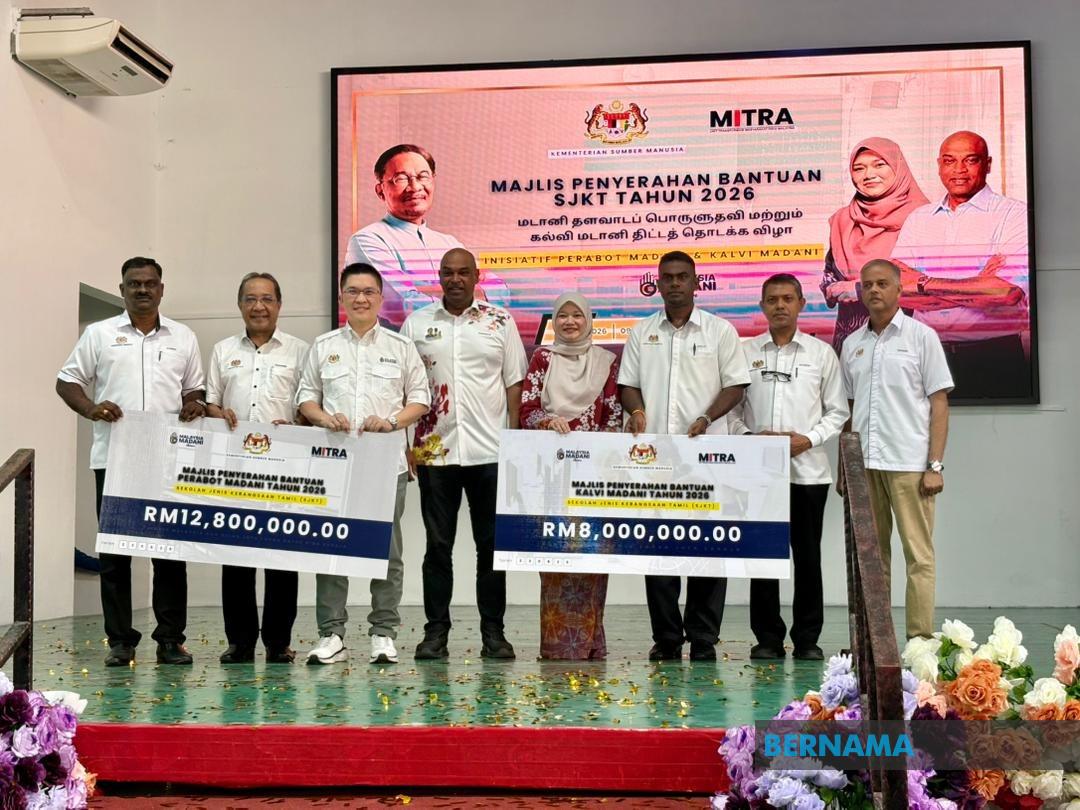
Paralleling the jobs support initiative, the government unveiled substantial investment in Tamil-medium vernacular schools, signalling broader commitment to educational equity and inclusive development. The MADANI Furniture Initiative, backed by RM12.8 million in funding, will supply 14 types of school furniture and equipment to 361 government-aided Tamil vernacular schools serving nearly 40,000 pupils and over 5,200 teachers. Furniture procurement will roll out in phases from June through August, addressing long-standing infrastructure gaps in these educational institutions. While seemingly modest, this intervention addresses a concrete barrier to learning quality—many vernacular schools operate with decades-old or insufficient furnishings that undermine classroom comfort and educational effectiveness.
The complementary KALVI MADANI Programme allocates an additional RM8 million to enhance the educational experience for approximately 10,410 Indian pupils across 315 selected Tamil schools. Beyond physical infrastructure, the programme encompasses free tuition support, nutritional provisions, learning resources including digital devices, and targeted welfare measures for teachers. This holistic approach recognises that quality education requires support across multiple dimensions. Nutrition assistance, for instance, addresses food insecurity that undermines concentration and learning outcomes. Provision of learning devices ensures students can access digital educational content, a necessity that has become apparent during and after the pandemic. Teacher welfare initiatives signal understanding that educator burnout and resource constraints directly affect instructional quality.
Education Minister Fadhlina Sidek and Deputy Education Minister Wong Kah Woh attended the launch, underscoring cross-ministerial coordination on educational access. The presence of senior education officials alongside KESUMA's leadership suggests these initiatives enjoy high-level political backing and institutional integration. Such coordination matters because education quality and workforce development are intertwined; today's vernacular school pupils represent tomorrow's workforce, and improving their educational foundation enhances long-term economic participation.
The twin initiatives—worker retraining for supply chain disruption and education investment for Tamil vernacular schools—reflect complementary policy priorities within Malaysia's broader human capital agenda. Both address vulnerability: workers displaced by global forces and students from lower-income communities potentially locked out of quality education. Both invest in skills development and opportunity expansion, whether through TVET or improved school infrastructure and tutoring. Together, they signal government determination to mitigate the uneven impacts of economic shocks and ensure no demographic group falls permanently behind.
For Malaysian manufacturing exporters and service providers dependent on international supply chains, the KESUMA initiative offers some reassurance that workforce turbulence will be met with proactive government support rather than passive acceptance of displacement. This reduces the long-term social costs of supply chain stress and facilitates faster rehiring when supply normalisation eventually occurs. Employers in growth sectors should benefit from access to trained workers transitioned from declining segments, easing skills bottlenecks that have constrained expansion in areas like digital services and advanced manufacturing.
The timing of these announcements, in mid-2024, arrives as global supply chains remain volatile and recovery timelines remain uncertain. Port congestion, geopolitical tensions, and shifts in sourcing patterns continue to create instability for Malaysia's trade-dependent economy. The government's dual approach—helping current jobless workers while investing in tomorrow's labour pipeline—reflects recognition that supply chain challenges may persist longer than initially anticipated. Rather than simply waiting for normalisation, policymakers are building adaptive capacity within the workforce.