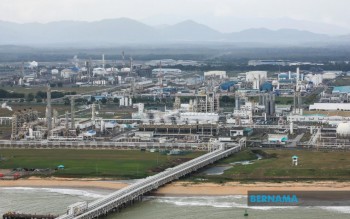
Malaysia's decision to examine the feasibility of establishing a national petroleum reserve has found backing among energy analysts, who view the initiative as a prudent response to deepening vulnerabilities in global energy supply chains. Prime Minister Datuk Seri Anwar Ibrahim announced the government's intention to study the necessity and implementation approaches for creating such a reserve, framed as essential insurance against the mounting risks of geopolitical disruption and international supply crises that have become structural rather than episodic features of the global energy landscape.
The timing of this policy consideration reflects a fundamental shift in how analysts perceive threats to energy security. The Strait of Hormuz, one of the world's most strategically vital waterways, carries approximately 20 million barrels daily of petroleum liquids—roughly one-fifth of humanity's total supply. Rather than treating periodic tensions in this chokepoint as occasional shocks, energy market observers increasingly characterise the risks as permanent features requiring systematic mitigation. Stephen Innes, managing partner at SPI Asset Management, argues that the succession of threats to shipping transit, insurance cost escalations, and vessel availability constraints have embedded a persistent risk premium into global energy markets that shows no sign of dissipating absent fundamental infrastructure changes.
The structural nature of these vulnerabilities becomes clearer when examining the scale of investment and time required to build alternative energy pathways. Comprehensive solutions involving expanded pipeline networks, new export routes, and shipping bypasses remain years away from completion, meaning that instability in the Strait of Hormuz will likely persist as a recurring source of price volatility and market uncertainty. This prognosis has driven policymakers across Southeast Asia to reconsider their preparedness for extended supply disruptions rather than treating energy security as a matter of managing occasional price spikes.
Recent geopolitical developments have amplified these concerns considerably. Houthi forces aligned with Iran, operating from Yemen, have undertaken military preparations targeting vessels in the Red Sea's southern passages and have claimed responsibility for attacks on Saudi oil tankers following fresh American military strikes on Iranian facilities. These incidents demonstrate that energy supply vulnerabilities extend beyond the traditional focal point of the Persian Gulf, creating what analysts describe as compounding regional risks. The possibility of simultaneous disruptions affecting both the Strait of Hormuz and the Red Sea corridor represents a scenario that could rapidly elevate global oil prices, increase freight expenses dramatically, and create cascading supply delays across Asia-Pacific markets.
For Southeast Asia, including Malaysia, these interconnected vulnerabilities carry particular significance. The region's economic growth depends on reliable energy access, yet many nations depend heavily on foreign supplies through these contested waterways. Innes has recommended that regional governments prioritise reviewing strategic fuel stockpiles, diversifying their networks of crude and liquefied natural gas suppliers, and strengthening Association of Southeast Asian Nations coordination mechanisms for managing emergency inventory protocols. These measures would provide crucial buffers against the kind of prolonged disruptions that regional economies are ill-equipped to absorb without significant economic consequences.
Malaysia's specific energy profile underscores why such planning carries particular urgency for the country. Despite producing approximately 570,000 barrels of oil daily, Malaysia remains a net importer of refined petroleum products and sourced nearly 70 per cent of its crude oil imports from Strait of Hormuz-connected suppliers during 2025. This dependence on a narrow geographic supply corridor creates vulnerability that no single mitigation measure can completely eliminate. A national petroleum reserve would serve as what Innes characterises as "emergency insurance," providing policymakers with critical time to activate alternative arrangements during acute supply disruptions rather than representing a complete solution to supply problems.
BMI's oil and gas analyst Tariro Chiweza emphasises that commercial petroleum inventories maintained by private companies for routine operational needs differ fundamentally from strategic reserves designed to withstand extended external shocks. The distinction matters because commercial stocks typically meet consumption requirements for weeks rather than months, leaving little margin for protracted supply chain breakdowns. Chiweza argues that establishing a national reserve now forms a more compelling component of Malaysia's broader energy resilience strategy, particularly given forecasts showing Malaysia's dry gas production reaching 82.3 billion cubic metres by 2026, which would strengthen domestic supply foundations.
Market conditions have reinforced the case for such preparedness measures. At the time analysts offered their perspectives, Brent crude oil was trading at USD96.86 per barrel following a 2.97 per cent rise, while West Texas Intermediate crude climbed 1.93 per cent to USD88.76 per barrel, reflecting the persistent risk premiums embedded in energy markets by ongoing geopolitical tensions. These price levels illustrate both the immediate economic consequences of supply uncertainty and the compelling economic rationale for investments in energy security infrastructure that could moderate future price volatility.
Experts stress that an effective national petroleum reserve cannot stand alone as energy policy. Innes advocates for Malaysia to simultaneously pursue multiple complementary strategies, including diversified fuel suppliers and alternative transport routes, commercially viable domestic gas production, strengthened regional electricity grid interconnections, and accelerated renewable energy development supported by battery storage systems. Such an integrated approach addresses energy security—ensuring access to supplies—and energy resilience, ensuring that energy systems maintain functionality even when normal supply routes or delivery mechanisms fail.
Regarding fuel price management, analysts recommend that governments reassess broad subsidy programmes that become increasingly unsustainable if oil prices remain elevated. Targeted support for lower-income households and critical industries, they argue, offers more durable policy foundations than universal price controls. This fiscal consideration becomes particularly relevant for Malaysia and other developing economies where comprehensive fuel subsidies constrain budgets available for longer-term energy infrastructure investments.
Malaysia's existing renewable energy initiatives, including Solar@PETRA and the Corporate Renewable Energy Supply Scheme for businesses, alongside B15 biodiesel programmes and electric public transport expansion, already support broader resilience objectives. These initiatives complement potential strategic reserve establishment by diversifying the country's overall energy mix and reducing future crude oil import requirements. Chiweza notes that expanding nuclear power capacity represents another avenue for strengthening Malaysia's energy independence, though such projects require extensive planning and international cooperation.
The convergence of expert opinion around Malaysia's reserve study reflects recognition that energy security represents an increasingly complex challenge requiring multifaceted responses. No single policy instrument—whether national reserves, renewable energy transitions, or supplier diversification—can independently ensure protection against the full spectrum of modern energy supply risks. Instead, policymakers must view strategic reserves as one essential component within comprehensive frameworks that address supply diversification, infrastructure modernisation, and regional cooperation mechanisms simultaneously.

