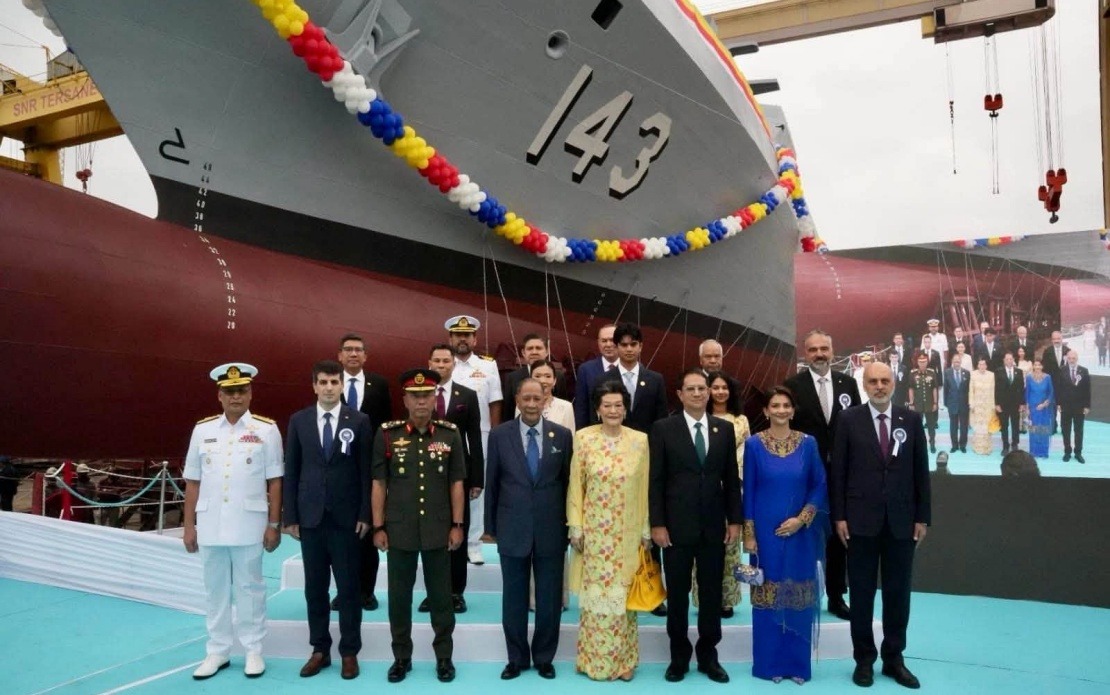
Malaysia has launched the third vessel in its historic defence collaboration with Turkey, underscoring the government's determination to equip the Royal Malaysian Navy with contemporary combat platforms capable of addressing mounting maritime security threats across Southeast Asia's critical waterways. Defence Minister Datuk Seri Mohamed Khaled Nordin marked the occasion by reaffirming Kuala Lumpur's strategic commitment to modernising naval capabilities in an increasingly contested regional environment where competition over sea lanes and resources continues to intensify.
The newly commissioned ship, named Tunku Osman Jewa in honour of the late General Tan Sri Tunku Osman Tunku Mohammad Jewa, a former Armed Forces chief and member of the Kedah royal family, represents a pivotal milestone in Malaysia's naval transformation agenda. The naming ceremony, graced by Sultan of Kedah Al Aminul Karim Sultan Sallehuddin Sultan Badlishah and Sultanah Maliha Tengku Ariff, underscores the political significance attached to the acquisition programme and the profound respect accorded to military leaders who shaped Malaysia's defence establishment.
The Littoral Mission Ship Batch 2 programme exemplifies a fundamental shift in Malaysia's procurement strategy, moving away from traditional Western suppliers towards strategic partnerships with regional and emerging powers. This Malaysia-Turkey Government-to-Government arrangement marks the first instance of such direct collaboration in acquiring warships for the RMN, signalling a diversification of defence partnerships that reflects broader regional geopolitical realignments. By engaging Turkish shipbuilders, Malaysia not only secures modern naval assets but also establishes industrial cooperation that could yield long-term benefits for domestic maritime engineering capabilities.
Each Littoral Mission Ship represents a purpose-built platform designed to operate effectively in coastal and near-littoral environments, where Malaysia faces diverse security challenges ranging from piracy and human trafficking to illegal fishing and territorial intrusions. The vessels' design emphasises versatility and rapid deployment, critical attributes for a navy responsible for protecting one of the world's busiest shipping corridors and the strategic Strait of Malacca. These ships strengthen Malaysia's ability to enforce sovereignty over contested maritime zones and maintain freedom of navigation in waters vital to regional trade flows.
The completion of all three LMSB2 vessels, scheduled for delivery by the end of 2027, forms a cornerstone of the RMN's broader 15-to-5 Transformation Plan—an ambitious modernisation initiative aimed at creating a leaner but substantially more capable maritime force. This strategic framework prioritises quality over quantity, concentrating resources on platforms equipped with advanced sensors, communications systems, and weapons capabilities that multiply operational effectiveness. Such modernisation becomes increasingly essential as regional navies expand their fleets and upgrade their technological sophistication.
Malaysia's maritime security environment has grown exponentially more complex in recent years, driven by rising great power competition, increased naval activities by extraregional powers, and persistent transnational maritime crimes. The South China Sea remains a focal point of tension where multiple claimants pursue competing territorial assertions, while the Strait of Malacca faces unprecedented security pressures. The RMN's capacity to respond effectively to these multifaceted challenges directly influences Malaysia's ability to maintain strategic autonomy and protect national economic interests dependent on maritime commerce.
The Turkish partnership carries additional significance within the context of Malaysia's defence diplomacy. Turkey has emerged as a capable naval power with considerable expertise in designing and constructing modern warships tailored for littoral operations. By collaborating with Ankara rather than relying exclusively on established Western suppliers, Malaysia demonstrates strategic flexibility and cultivates relationships with emerging defence-industrial powers. This approach provides leverage in international negotiations whilst potentially reducing dependency on any single supplier and exposing Malaysian personnel and industries to diverse technological approaches and manufacturing methodologies.
The investment in contemporary naval platforms reflects broader recognition across Malaysia's security establishment that aging vessels and outdated systems increasingly undermine operational credibility. The RMN faces persistent equipment maintenance challenges with its existing fleet, absorbing considerable resources that might otherwise support modernisation. By systematically replacing aged vessels with purpose-built platforms featuring reduced through-life operating costs and lower maintenance burdens, Malaysia positions itself to allocate greater resources towards training, operational readiness, and sustained presence throughout its maritime domain.
Regional implications extend beyond Malaysia's borders, as the strengthening of the RMN contributes to overall Southeast Asian maritime stability. A more capable Malaysian navy enhances ASEAN's collective capacity to maintain regional security, enforce international maritime law, and resist pressure from powers seeking to dominate contested waters. The modernisation programme also signals to regional partners that Malaysia remains committed to maintaining credible maritime defences, reinforcing confidence in regional security architectures and encouraging continued cooperation on shared maritime challenges.
Defence Minister Mohamed Khaled's emphasis on continuous modernisation reflects strategic realities that demand sustained investment in naval capabilities. Modern maritime security encompasses not merely conventional naval warfare but also sophisticated surveillance, rapid response to humanitarian crises, counter-terrorism operations, and protection against sophisticated adversaries employing advanced weapons systems. The LMSB2 vessels, equipped with contemporary capabilities, position the RMN to address this spectrum of challenges whilst remaining cost-effective platforms suitable for a developing economy.
Looking forward, Malaysia's success in executing the 15-to-5 Transformation Plan will significantly influence the RMN's strategic trajectory throughout the 2030s. Timely delivery and successful integration of the Turkish-built vessels will establish confidence in the broader modernisation vision and potentially unlock additional resources for subsequent phases. Conversely, delays or technical difficulties could constrain the navy's development and complicate efforts to maintain maritime security across Malaysia's extensive coastal zones and offshore economic interests.

