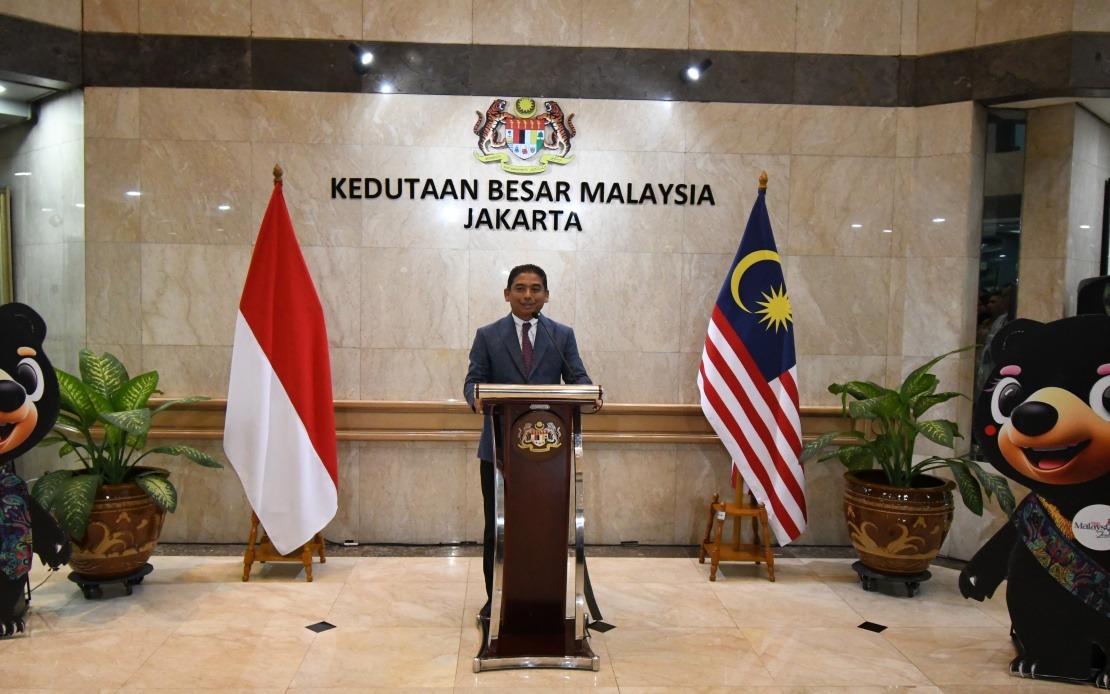
Datuk Muzafar Shah Mustafa has formally commenced his duties as Malaysia's Ambassador to Indonesia, arriving in the capital city on August 10 to lead the mission during a period of strengthening bilateral ties between the two neighbouring nations. The diplomat, who received his letter of credence from Yang di-Pertuan Agong Sultan Ibrahim at Istana Negara on July 14, represents Malaysia's commitment to deepening engagement across the region through experienced diplomatic leadership.
The Indonesian-Malaysian relationship occupies a special place in regional diplomacy, given the shared history, cultural connections, and economic interdependencies that bind the two countries. Muzafar's appointment comes at a time when both nations are navigating complex regional dynamics, including maritime boundary management, trade facilitation, and coordination on broader Southeast Asian issues. His arrival signals continuity in diplomatic representation and the importance Malaysia places on its closest neighbour.
Muzafar brings substantial international experience to the role, having spent nearly three decades serving the Foreign Ministry since 1995. His most recent assignment saw him stationed in New Delhi, where he served as High Commissioner for close to three years before departing on July 9. The transition from India to Indonesia represents a significant shift in geographical focus, moving from South Asian engagement to the heart of Southeast Asian affairs, where Malaysia's direct interests and regional influence are most concentrated.
Throughout his career, this ambassador has accumulated diverse posting experience across three continents, providing him with a comprehensive understanding of multilateral diplomacy and bilateral relationships. His tenure in Mexico from 2018 to 2023 required him to manage Malaysia's interests across Central America, simultaneously accrediting to Belize, Costa Rica, El Salvador, Guatemala, and Honduras. This responsibility in a geographically dispersed region demonstrated his capacity to coordinate multiple diplomatic relationships efficiently and represent Malaysian interests in less traditional markets.
Prior to his Mexican posting, Muzafar served as Ambassador to Venezuela between 2016 and 2018, further expanding his Latin American experience. His earlier career included deployment to Venezuela, providing him with understanding of both Spanish-speaking regions and the complexities of representing Malaysia in countries outside the traditional Asia-Pacific sphere where most Malaysian diplomatic infrastructure concentrates.
European experience also features prominently in his professional journey. Muzafar spent four years as counsellor at the Malaysian Embassy in Berlin from 2007 to 2011, working within the European diplomatic corps and gaining exposure to complex multilateral organisations and Western diplomatic conventions. This continental experience provides valuable perspective on international relations practices beyond the Asian context.
His earliest overseas postings took him to the Middle East, where he served as second secretary at the Malaysian Embassy in Baghdad from 1999 to 2003. This assignment during a turbulent period in Iraqi history would have required diplomatic acuity and cultural awareness in managing Malaysian interests in a challenging environment. Such experiences form the foundation of diplomatic maturity necessary for handling sensitive bilateral issues.
Muzafar's personal background includes his marriage to Datin Najwa Zainal and four children, a family composition typical of Malaysian diplomatic service that requires significant personal commitment and flexibility given the frequent postings and international relocations inherent in the profession. His family's adjustment to multiple countries and cultures reflects the demands placed on diplomatic personnel and their dependents.
The Indonesian posting represents a return to core Southeast Asian affairs after an extended period managing Malaysian interests in more distant markets. This geographical refocus suggests strategic positioning by Malaysia's Foreign Ministry, recognising the primacy of Indonesia relations in regional policy. The two countries share the Strait of Malacca, a critical global shipping route, and coordinate on numerous regional platforms including ASEAN, where their relationship carries outsized importance.
Muzafar's appointment also reflects Malaysia's diplomatic bench strength, demonstrating that the ministry maintains experienced professionals capable of managing major bilateral relationships. The careful selection of ambassadors to key posts indicates how Malaysia calibrates its diplomatic presence to match the strategic importance of each posting. Indonesia, as the region's largest economy and most populous nation, clearly merits this calibre of diplomatic representation.
The timing of this ambassadorial transition occurs as both countries continue implementing their bilateral agenda across trade, investment, security, and cultural domains. Muzafar's long diplomatic experience positions him to navigate these multifaceted relationships while building on the foundation established by his predecessor. His understanding of protocol, established relationships with counterparts, and exposure to different diplomatic traditions will facilitate smooth engagement with Indonesian counterparts and civil society.
Looking forward, Muzafar's tenure will likely focus on strengthening Malaysia-Indonesia cooperation across priority areas while managing any tensions that emerge between the neighbours. His background suggests capacity for both formal bilateral negotiations and informal relationship-building, essential qualities for an ambassador in a relationship as complex and multifaceted as that between Malaysia and Indonesia. The diplomatic exchange of this calibre underscores the enduring importance Southeast Asian nations place on direct representation and engagement with key regional partners.

