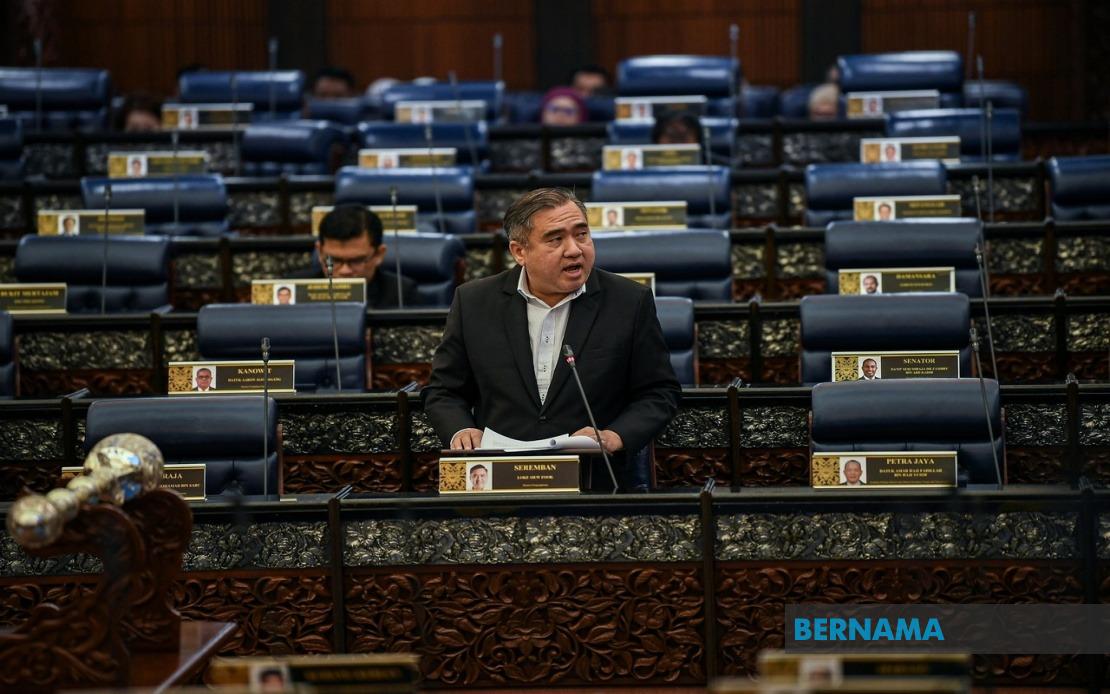
Malaysia is moving to close a significant legal loophole in its traffic enforcement framework with the introduction of the Road Transport (Amendment) Bill 2025, which creates a dedicated offence for illegal racing and speed trials on public roads. Transport Minister Anthony Loke unveiled the legislation during its second reading in the Dewan Rakyat on June 23, marking a watershed moment in the country's efforts to curb the widespread phenomenon of street racing that has plagued Malaysian highways and urban thoroughfares.
The proposed Section 42A represents a fundamental shift in how authorities will address organised and impromptu racing activities. Rather than relying on the existing dangerous driving provisions of the Road Transport Act 1987, which require evidence of accidents or injuries to secure convictions, the new framework allows enforcement officers to intervene at the point of illegal activity itself. This eliminates the enforcement paradox where authorities have essentially been forced to wait for tragedy to strike before they can take meaningful legal action against racers.
Under the new law, first-time offenders face a financial penalty ranging from RM2,000 to RM10,000, custodial sentences of up to two years, or a combination of both. The graduated penalty structure reflects the seriousness with which policymakers view the offence, while providing judges with discretionary latitude based on individual circumstances. The language used in framing the offence is notably broad, encompassing not only organised racing between multiple vehicles but also isolated instances where individual drivers attempt to test their vehicle's speed capabilities on public thoroughfares.
Repeat offenders face substantially harsher consequences that escalate the legal jeopardy considerably. Those convicted for a second time or subsequently may be fined between RM5,000 and RM20,000 and face imprisonment extending up to five years, or a combination of both penalties. This tiered approach signals legislative intent to impose escalating consequences for persistent offenders, potentially serving as a deterrent for those inclined to engage in habitual racing behaviour. The five-year maximum prison term places racing violations on par with serious traffic-related offences, underscoring the government's classification of the behaviour as a significant public safety threat.
The practical implications of this legislative change extend across multiple enforcement scenarios that currently challenge Malaysia's road safety authorities. Consider the common situation where two motorcyclists engage in a spontaneous speed competition along a federal highway, or car enthusiasts converge to conduct impromptu acceleration contests in industrial areas during late hours. Under existing legislation, such conduct has been difficult to prosecute comprehensively because the authorities must demonstrate dangerous driving consequences. The new provision eliminates this evidentiary burden entirely, allowing enforcement to proceed solely on proof that racing or speed testing occurred on a public road.
Beyond the racing provisions themselves, the Bill introduces complementary enforcement measures through proposed Section 110B, which creates offences related to obstructing or interfering with traffic enforcement operations. Individuals who impede enforcement officers, assault them, make threats, or engage in surveillance of enforcement operations—as well as those who deliberately share information about enforcement activities to help offenders escape detection—face penalties of RM10,000 to RM50,000 in fines and imprisonment from one to five years. Significantly, these offences are classified as arrestable, meaning police can detain suspects without warrant, substantially strengthening enforcement capacity.
This anti-interference provision addresses a particular enforcement challenge that Malaysian authorities have faced: organised groups that maintain communication networks to alert racers about police operations and checkpoint locations. By criminalising the dissemination of such operational intelligence, the legislation targets the coordination infrastructure that enables widespread illegal racing networks to persist. The arrestable classification ensures that enforcement officers possess the legal tools necessary to disrupt these coordinated networks at critical junctures.
The amendment's scope extends beyond racing to address overloading violations, non-compliant vehicles, and commercial vehicle infractions that have long plagued Malaysian roads. By strengthening enforcement capacity against these diverse categories of violations simultaneously, the government is attempting to create a more comprehensive deterrent ecosystem where multiple categories of road misdemeanours face intensified scrutiny and consequence.
Another significant component of the Bill involves revising the compound penalty structure for selected offences. The government proposes elevating the minimum compound amount from RM300 to RM500, with implementation scheduled for January 1, 2029. Importantly, Loke emphasised that this increase does not automatically result in RM500 compounds for all violations; rather, it establishes a ceiling that enforcement officers can negotiate upward based on offence severity, aggravating circumstances, settlement timing, and procedural considerations. This flexibility permits proportionate responses to violations of varying gravity while signalling a general trajectory toward more substantial financial consequences for road traffic breaches.
The phased implementation timeline for the increased compound limits—with nearly four years' notice before the January 2029 effective date—provides substantial lead time for the public, enforcement agencies, and the transport industry to adjust operational procedures and expectations. This deliberate staging suggests policymakers are attempting to balance deterrent effect against the potential economic burden on the driving public.
For Malaysian motorists and the broader transport sector, this legislation carries significant implications. Racing enthusiasts will need to confine high-speed activities to licensed racing facilities rather than public roads, as the legal consequences have become substantially more severe. Commercial transport operators, already subject to heightened scrutiny regarding vehicle maintenance and load limits, face further enforcement intensity. The ordinary driving public benefits from enhanced enforcement against dangerous behaviours, though they should anticipate more rigorous compliance expectations across multiple dimensions of road use.
Regionally, Malaysia's approach aligns with broader Southeast Asian efforts to upgrade road safety frameworks. Neighbouring countries including Singapore and Thailand have implemented similarly stringent anti-racing provisions, suggesting a regional consensus that street racing constitutes a sufficiently grave public safety threat to warrant serious criminal sanctions. This legislative synchronisation may facilitate cross-border enforcement cooperation and create consistent regional standards that discourage racing enthusiasts from relocating their activities across borders.
The Bill's progression through Parliament will likely generate discussion about the appropriate balance between deterrent severity and proportionality in traffic enforcement. Civil liberties observers may scrutinise the arrestable classification of interference offences, while road safety advocates will undoubtedly welcome the strengthened enforcement framework. The ultimate effectiveness of these provisions will depend substantially on consistent enforcement application and public awareness campaigns that communicate the new legal landscape to Malaysian drivers.