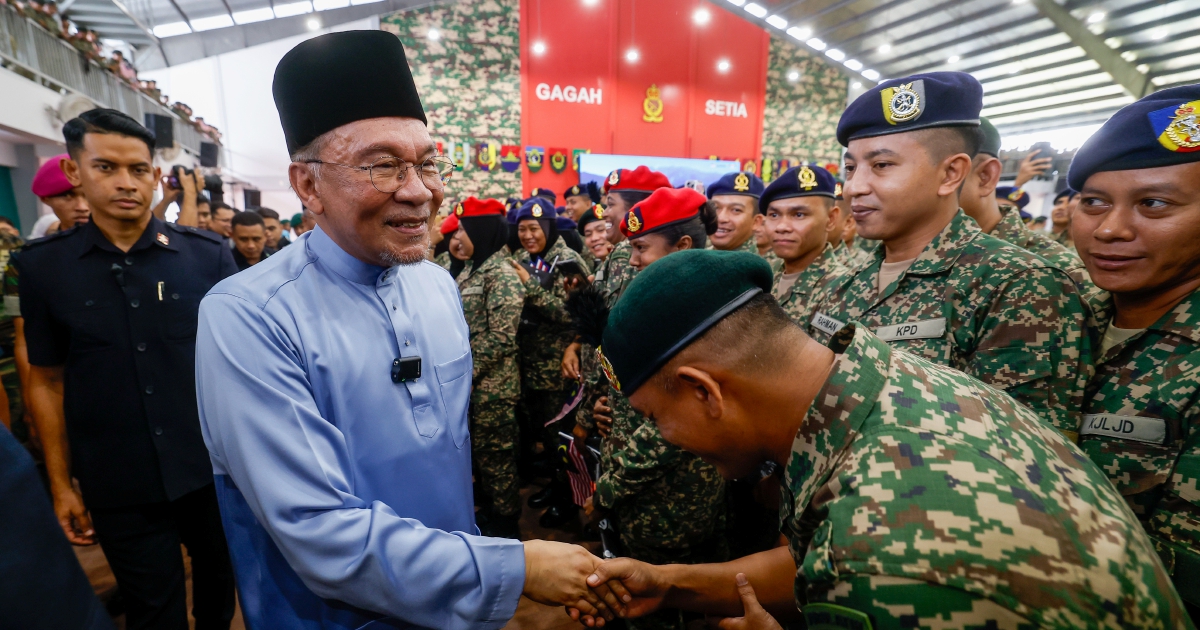
Prime Minister Datuk Seri Anwar Ibrahim has drawn a careful distinction between Malaysia's geopolitical opposition to Israel and any form of bias against Jewish people, seeking to clarify a nuance that often becomes blurred in regional discourse. Speaking in Port Dickson, Anwar underscored that Malaysia's longstanding criticism targets the policies and actions of the Israeli state rather than the Jewish faith or its adherents, a clarification that reflects broader efforts to position the country's foreign policy as principled rather than religiously motivated.
The distinction Anwar articulated carries particular significance in the Malaysian context, where Islam is the religion of the federal constitution and the majority of the population, yet the country remains constitutionally committed to religious pluralism and the protection of minority faiths. By separating Malaysia's opposition to Israeli government actions from any stance toward Jewish communities, the Prime Minister attempted to address international criticism that sometimes conflates the two, portraying criticism of Israeli policy as inherently antisemitic or indicative of religious intolerance.
Malaysia's historical position on Israel has been consistent since the nation's independence, rooted in solidarity with Palestinian causes and shaped by the country's post-colonial identity and its role in the Non-Aligned Movement. The Malaysian government has maintained diplomatic and trade relations selectively based on geopolitical calculations, reflecting a broader Southeast Asian pattern where states navigate between competing pressures and principles. This framework distinguishes Malaysia from some nations that recognize Israel formally, while differentiating the country's approach from contexts where anti-Israeli sentiment becomes intertwined with religious prejudice.
Anwar's remarks come amid a global environment where accusations of antisemitism have become weaponized in international relations, with critics of Israeli government policies sometimes facing allegations of religious bias. The Prime Minister's clarification responds to these dynamics by articulating a position that maintains Malaysia's advocacy for Palestinian rights and criticism of Israeli military operations while affirming the country's commitment to protecting religious minorities and interfaith harmony domestically. This balancing act reflects the complexities facing Muslim-majority democracies that seek to uphold both Islamic identity and pluralistic values.
The Prime Minister's emphasis on this distinction also speaks to Malaysia's multicultural character, where significant Christian, Buddhist, Hindu, and other religious communities coexist with the Muslim majority. Any suggestion that the nation harbors prejudice against adherents of any religion contradicts the constitutional framework and national identity that Anwar has consistently championed since assuming office. The clarification thus serves both foreign policy and domestic cohesion objectives, signaling that Malaysia's international positions need not undermine its commitment to religious tolerance and minority protections at home.
Israel's military operations in the Gaza Strip and broader Middle Eastern tensions have kept the Palestinian question at the forefront of Malaysian political discourse and public sentiment. Malaysian civil society, religious organizations, and political parties have mobilized repeatedly around this cause, reflecting both genuine humanitarian concerns and the way the issue intersects with Malaysian identity and regional positioning. Government statements like Anwar's reflect these pressures while attempting to maintain some diplomatic flexibility and international standing.
The clarification also carries implications for Malaysia's bilateral relationships and regional standing. As a significant economy and moderate Muslim-majority nation within ASEAN, Malaysia's foreign policy positioning influences how the region is perceived internationally and how regional states navigate broader geopolitical alignments. Clear articulation of positions that distinguish political opposition from religious prejudice can help the country maintain its international credibility and relationships across different spheres, from Western partners to Middle Eastern states to fellow Southeast Asian neighbors with diverse approaches to the Israeli-Palestinian question.
Domestically, Anwar's remarks reinforce messaging about Malaysia's pluralistic values at a time when interfaith relations and religious tolerance remain politically sensitive topics. By explicitly stating that Malaysia respects Jewish people while opposing Israeli state actions, the Prime Minister sends signals to Christian, Jewish, and other minority communities that their standing within the nation remains secure regardless of Malaysia's foreign policy positions. This reassurance has practical implications for minority community members who might otherwise fear that government criticism of Israel could translate into pressure or discrimination domestically.
The global context further amplifies the importance of such clarifications. International organizations, Western governments, and Jewish diaspora communities sometimes view criticism of Israel through a lens heavily colored by historical antisemitism and contemporary concerns about rising Jew-hatred globally. Malaysia, as a developing nation with significant influence within Muslim-majority forums and the Non-Aligned Movement, faces particular scrutiny regarding its positions on Israel and religious tolerance. Anwar's remarks thus function as a corrective narrative, positioning Malaysia as a country capable of maintaining principled foreign policy positions while respecting religious diversity and rejecting forms of hatred.
Moving forward, the challenge for Malaysian policymakers will involve maintaining this distinction consistently while navigating an international environment where nuance on the Israeli-Palestinian question remains contested terrain. The way Anwar has framed Malaysia's position—as opposition to specific governmental actions rather than to an entire people or faith—represents an attempt to occupy middle ground that may prove increasingly difficult to sustain as regional and global tensions escalate. Nonetheless, the articulation of this distinction serves important functions both for Malaysia's international credibility and for the maintenance of religious harmony within a nation that prides itself on its multicultural character and constitutional commitments to minority protection.

