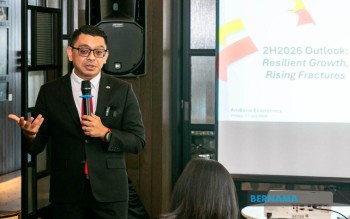
Malaysia's port operators are entering a period of expanded opportunity as global trade patterns shift and environmental pressures reshape maritime logistics, according to analysis from AmBank (M) Bhd. Chief economist Firdaos Rosli outlined how the country's strategic location and infrastructure investments are positioning its ports to capture increased activity from companies seeking alternatives to congested or politically unstable shipping corridors. The combination of geopolitical disruption in West Asia and growing demand for environmentally compliant fuel options has created conditions favourable for Malaysian terminals to expand their market share and operational scope across the region.
Traditionally, the Strait of Melaka has served as one of the world's busiest maritime chokepoints, but recent geopolitical tensions have intensified its importance as shippers actively seek secure, efficient alternatives to higher-risk routes. Malaysia's ports have directly benefited from this recalibration, with companies rerouting containers through Malaysian facilities to avoid potential disruptions elsewhere. This shift represents not merely a temporary spike in activity but rather a structural realignment of global supply chains as multinational corporations and logistics providers diversify their transportation networks. Port operators in Malaysia have responded by enhancing their competitive positioning, though Firdaos emphasized that maintaining this advantage will demand sustained capital investment and strategic infrastructure development.
The numerical evidence of growing port traffic supports this optimistic outlook. Port Klang, Malaysia's largest container terminal, processed 15.14 million twenty-foot equivalent units (TEUs) during 2025, while the Port of Tanjung Pelepas (PTP) in Johor handled 14.03 million TEUs over the same period. More significantly, both facilities have demonstrated year-on-year growth momentum in early 2026. During the first five months of this year, Port Klang expanded container volumes by five per cent compared to the corresponding period in 2025, while PTP achieved an even stronger eight per cent increase. These growth rates suggest that the supply chain diversification driving traffic through Malaysian ports is not a fleeting phenomenon but rather reflects enduring changes in how global companies structure their logistics networks.
Beyond conventional container transhipment, Malaysia is positioning itself at the forefront of the maritime industry's environmental transformation. The nation is actively developing its credentials as a regional hub for green bunkering—the provisioning of lower-emission marine fuels to passing vessels. This initiative aligns with increasingly stringent international maritime environmental regulations and reflects growing demand from shipping companies seeking to reduce their carbon footprints. Liquefied natural gas (LNG) and methanol represent the leading alternative fuels gaining traction in the industry, and Malaysian ports have begun implementing the operational and regulatory infrastructure necessary to supply these fuels at commercial scale.
The government's commitment to green maritime development is codified in the Green Bunkering Regulatory Roadmap, which establishes an ambitious target: low-carbon fuels should account for 40 per cent of maritime fuel consumption throughout Malaysia's maritime sector by 2050. While this target extends beyond the immediate decade, it signals clear policy direction and investment priorities that will shape port development and operational capacity over the coming years. Port Tanjung Pelepas has already moved beyond planning stages and commenced active LNG and methanol bunkering operations, positioning the facility as a first-mover advantage in the region's transition toward sustainable shipping fuel infrastructure.
However, the outlook for Malaysia's ports operates within a context of persistently elevated shipping costs that, while ostensibly unrelated to port operations, significantly influence the economics of transhipment activity. The Baltic Exchange Index (BDI), which measures dry bulk shipping rates, provides telling evidence of underlying supply-side pressures in maritime transportation. This index surged more than 120 per cent year-on-year in February and again in May, and although it moderated slightly, remained elevated at 64.6 per cent above year-earlier levels in June. These substantial increases indicate that maritime freight rates have not followed their historical pattern of rapid decline following temporary disruptions.
Instead, elevated shipping costs have persisted at historically high levels, signalling deeper structural issues within the maritime supply chain itself. Firdaos noted that while the geopolitical crisis in West Asia no longer directly disrupts crude oil markets to the extent it did initially, it continues to constrain shipping capacity and affect maritime transportation routes. The conflict has depleted available vessels, increased insurance costs, and prompted shipping companies to avoid certain passages, all of which contribute to sustained pressure on freight rates. This distinction is important for Malaysian policymakers and port operators: the benefits accruing to Malaysian ports from supply chain rerouting may be partially offset by the higher transportation costs that clients must bear throughout the logistics chain.
These elevated logistics expenses, while challenging for shipping companies, actually reinforce Malaysia's competitive positioning. When transportation costs rise significantly, the efficiency and cost-effectiveness of individual port operations become proportionally more important to overall logistics profitability. Well-managed, efficiently operated ports can capture premium fees from users seeking to minimise time in port and reduce demurrage charges. Malaysian terminals, particularly Port Klang and PTP, have invested substantially in automation, labour productivity, and equipment to maintain competitive advantage precisely under these cost-pressure scenarios. As logistics costs remain elevated, shippers will continue to prioritize ports offering superior operational efficiency and reliability.
The intersection of supply chain diversification, environmental regulation, and elevated maritime costs creates a complex but ultimately favourable environment for Malaysian port development. Port operators must balance the opportunity to expand throughput and revenue with the necessity of investing in green infrastructure and capacity expansion. Firdaos's analysis suggests that the growth trajectory is sustainable provided that port operators and the government maintain focus on strategic infrastructure investment. This includes not only physical capacity expansion at existing facilities but also development of sophisticated logistics hubs that integrate port operations with warehousing, value-added manufacturing, and digital supply chain management services.
For Malaysia's broader economy, the expanding port sector represents both direct benefits through employment and tax revenue and indirect advantages through enhanced regional competitiveness. As more international logistics companies establish regional headquarters or operational centres in Malaysia to better serve rerouted supply chains, the country's value proposition as a supply chain hub extends beyond simple port operations into higher-value services and skilled employment. The simultaneous development of green bunkering capacity positions Malaysia to capture economic value from the maritime industry's environmental transition, potentially attracting investment from global fuel suppliers and creating new categories of maritime employment.
Looking forward, the sustainability of Malaysia's port growth depends on several interconnected factors. First, geopolitical conditions must remain sufficiently unstable in alternative shipping corridors to maintain the incentive for supply chain diversification through Malaysian routes—a precarious foundation, given how rapidly geopolitical situations can shift. Second, Malaysian ports must continue investing in competitive infrastructure and operational excellence to justify the often-higher costs associated with using regional transhipment hubs rather than direct shipping routes. Third, the government must follow through on green bunkering commitments with adequate regulatory clarity and investment support, ensuring that Malaysian facilities capture market share in the emerging low-carbon fuel sector before competing regional ports develop competing capacity.
These conditions are largely within Malaysian stakeholders' control, particularly regarding infrastructure investment and regulatory clarity. The analysis from AmBank suggests confidence that Malaysia's port sector will sustain growth momentum through the coming years, capitalising on both structural supply chain changes and the maritime industry's environmental transition. Port operators should view the current period as both an opportunity window and a challenge to build competitive advantages that extend beyond the temporary benefits of geopolitical disruption. The ports that emerge strongest from this period will be those combining expanded physical capacity, operational excellence, and genuine environmental leadership in fuel provision.

