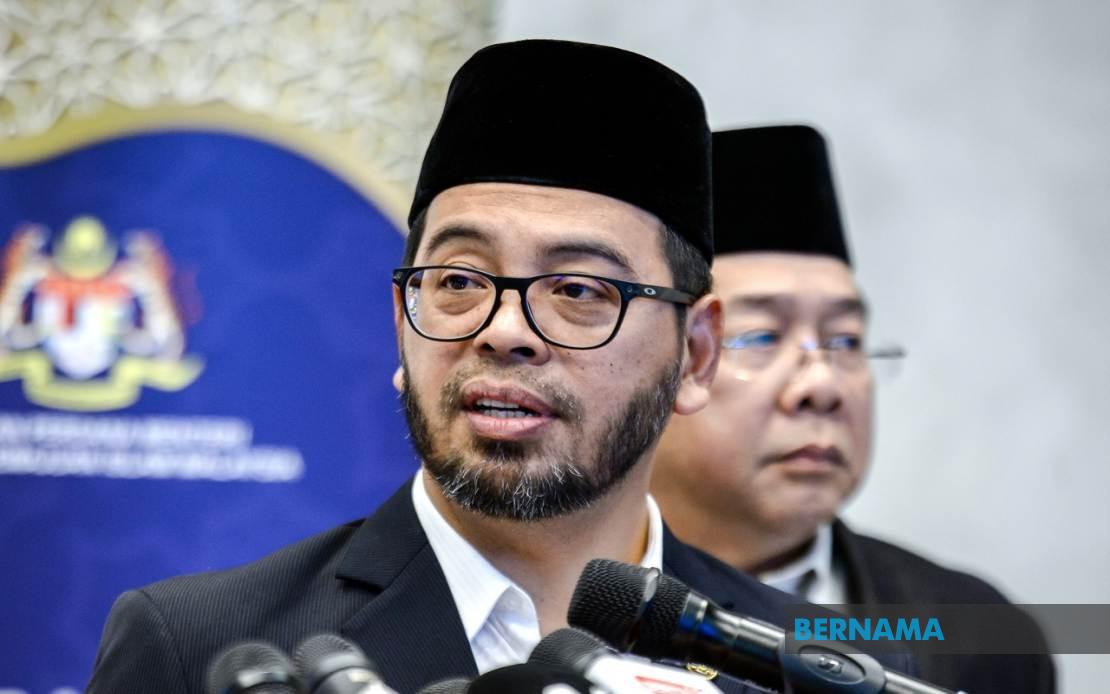
Malaysia's Religious Affairs Minister has lodged a formal protest against the detention of Sheikh Muhammad Hussein, the Grand Mufti of Jerusalem and custodian of Al-Aqsa Mosque, following his participation in Friday prayers. In a statement issued through the Prime Minister's Department, Senator Dr Zulkifli Hasan characterised the incident as a serious infringement of religious liberty and a violation of the sanctity afforded to one of Islam's most revered places of worship.
Although Sheikh Muhammad Hussein was released after the detention, Dr Zulkifli emphasised that the arrest of a senior Islamic figure while performing his religious obligations represented a troubling precedent. The minister argued that such actions undermine the fundamental right to worship without interference and compromise the spiritual significance of the Al-Aqsa Mosque, which holds profound importance for Muslims worldwide. His intervention reflects the particular sensitivity with which Malaysia, as a Muslim-majority nation and longtime advocate for Palestinian causes, treats violations concerning Islamic holy sites and religious leaders.
The Malaysian government has now appealed directly to the international community to intervene and establish protective measures. Dr Zulkifli specifically urged the United Nations and the Organisation of Islamic Cooperation to exercise their mandates and ensure that fundamental religious freedoms are preserved. This dual appeal—to the secular international legal order and to the Islamic bloc—underscores Malaysia's diplomatic strategy of leveraging multiple forums to advance its position on Middle Eastern affairs and the rights of Muslim populations.
Beyond the immediate detention incident, Dr Zulkifli reiterated Malaysia's unwavering commitment to the Palestinian cause, pledging continued support for initiatives aimed at achieving a settlement that recognises Palestinian rights and eliminates systematic oppression. This statement aligns with Malaysia's established foreign policy framework, which has consistently positioned the nation as a vocal defender of Palestinian sovereignty and an opponent of what Malaysian officials term "Zionist aggression."
In a separate but thematically connected announcement, Dr Zulkifli called upon Malaysians to observe the 31st commemoration of the Srebrenica massacre, one of modern history's most devastating genocides. The massacre, perpetrated by Bosnian Serb forces in July 1995, resulted in the systematic execution of more than 8,000 Bosniak Muslim males over several days. Despite international designation of Srebrenica as a UN-protected safe area, the enclave fell to advancing Serbian forces, leading to one of the gravest humanitarian catastrophes in post-Cold War Europe.
More than three decades later, the legacy of Srebrenica remains incomplete. Remains of more than 1,000 victims remain unidentified and unaccounted for, while ongoing identification efforts continue as families seek closure and proper burial according to Islamic customs. This unresolved dimension of the tragedy underscores how such conflicts cast long shadows across generations and communities, a point Dr Zulkifli sought to emphasise to younger Malaysians.
Malaysia has positioned itself as a significant international actor regarding the Bosnian conflict and its aftermath. Former Prime Minister Tun Dr Mahathir Mohamad and current Prime Minister Datuk Seri Anwar Ibrahim have both championed the Bosnian Muslim cause at the highest diplomatic levels. Additionally, the Muslim Youth Movement of Malaysia (ABIM) initiated humanitarian programmes supporting affected populations during the conflict's active phases, establishing Malaysia's moral and practical engagement with Bosnia's Muslim community.
The nation's military contribution proved substantial and sustained. Malaysian Armed Forces deployed 10,514 officers and personnel across a five-year period between 1993 and 1998, operating under the Malaysian Battalion (MALBAT) designation and later as part of the Implementation Force (IFOR) following the Dayton Accords. Malaysia also opened educational pathways, with the International Islamic University Malaysia (IIUM) providing tertiary opportunities for Bosnian refugees, facilitating integration and skill development for displaced populations.
Dr Zulkifli characterised the Srebrenica massacre as a profound moral lesson for contemporary society, particularly for Malaysia's youth. He advocated that the tragedy be understood not merely as a historical event but as a cautionary narrative against sectarianism, intolerance, and state-sponsored violence. The commemoration, according to his statement, should reinforce commitment to universal human dignity and rejection of division and oppression regardless of religious or ethnic identity.
The minister closed his remarks with a spiritual invocation, calling for the highest divine reward for Srebrenica's victims and requesting God's protection and strength for surviving families. His use of the phrase "Allahimanet Bosna" (May Allah protect Bosnia) in his official statement represents an explicit connection between Malaysia's Islamic identity and its foreign policy engagement, suggesting that advocacy on behalf of persecuted Muslim populations represents a core component of the nation's diplomatic values and priorities.

