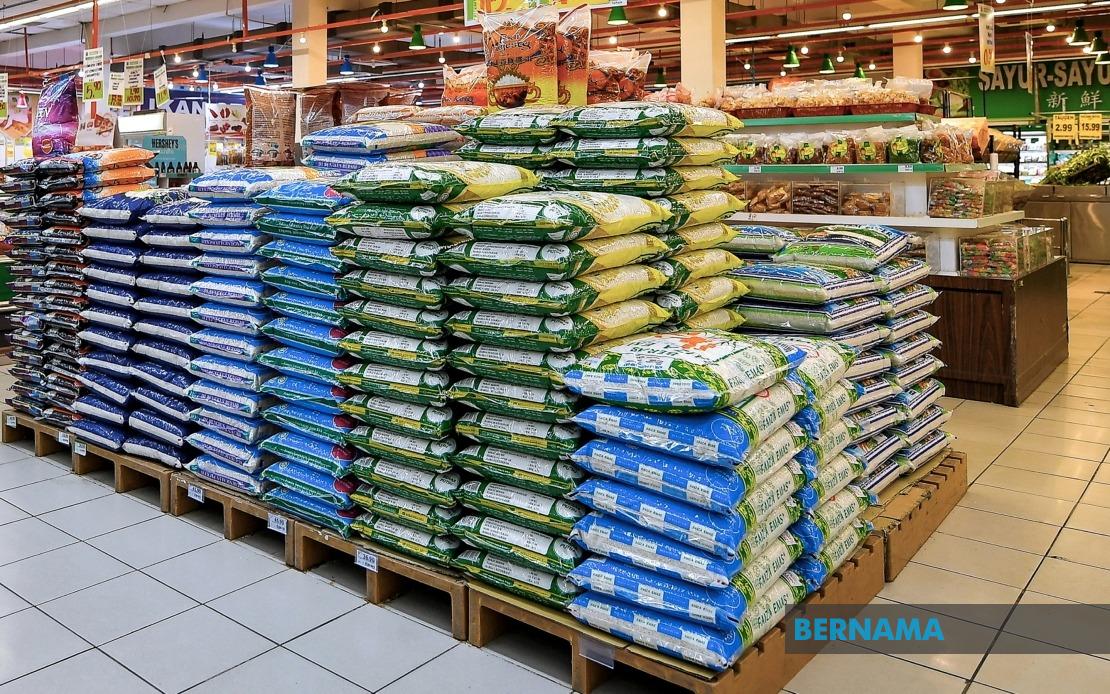
Malaysia's essential food supply chain remains on a secure footing, with current reserves adequate to sustain the nation's rice consumption for the next half-year, according to statements made by Economy Minister Akmal Nasrullah Mohd Nasir during a parliamentary briefing held on July 13. The assurance comes at a time when global market volatility and supply chain disruptions continue to challenge food security across multiple regions, making domestic preparedness a critical concern for policymakers.
The minister's declaration regarding the adequacy of the country's rice buffer stock represents a deliberate effort to reassure both consumers and the business community that Malaysia remains insulated from the immediate pressures affecting international grain markets. The six-month reserve capacity, calculated against projected domestic consumption patterns, provides a temporal cushion that allows the government to manage procurement cycles and respond to unforeseen supply disruptions without imposing sudden constraints on availability or affordability.
A cornerstone of the government's food security strategy involves maintaining price stability for Local White Rice (BPT), the staple variety consumed across Malaysian households. Akmal Nasrullah explicitly committed that there would be no increases to the official price for this essential commodity, a pledge that carries significant political and economic implications for household budgets nationwide. This price-control measure demonstrates recognition that rice affordability directly impacts cost-of-living pressures for middle and lower-income families, who allocate substantial portions of their monthly expenditure to basic food items.
The minister framed the government's approach within a broader context of navigating global uncertainties while prioritising domestic stability. He emphasised that ensuring uninterrupted access to staple foods and protecting citizens from unjustifiable price escalations represent core governmental responsibilities during periods of international economic turbulence. This positioning reflects an awareness that food security extends beyond mere availability to encompass the psychological confidence that comes with predictable, affordable access to necessities.
These policy outcomes emerged from deliberations conducted during a National Economic Action Council (MTEN) meeting chaired by Prime Minister Datuk Seri Anwar Ibrahim at the Parliament building. The involvement of Malaysia's highest economic coordination body underscores the priority assigned to food security within the broader national economic agenda. Such high-level engagement signals that food supply management is treated as a strategic issue requiring continuous oversight and interdepartmental coordination rather than as a routine administrative matter.
Complementing the emphasis on supply sufficiency, the government announced a substantial support initiative targeting the agricultural sector itself. Through the Paddy Farmers Plowing Incentive programme, the government has channelled RM45.98 million to 118,908 paddy farmers throughout Peninsular Malaysia. This direct financial support acknowledges the structural pressures confronting agricultural producers, who face mounting challenges from climate volatility and escalating input costs that compress profit margins and threaten the viability of farming operations.
The distribution of farming incentives reflects a strategic understanding that securing the supply side of rice production requires active intervention to sustain farmer participation and investment. Climate change-induced weather variability, including erratic rainfall patterns and temperature extremes, compounds traditional agricultural risks while simultaneously increasing production expenses. By providing financial relief, the government aims to prevent farm abandonment and maintain domestic production capacity, thereby reducing long-term dependency on imported rice and preserving agricultural livelihoods in rural communities.
For Malaysian consumers and policymakers, the nexus between supply assurance and farmer support represents an integrated approach to food security that recognises both immediate household needs and longer-term sectoral sustainability. The commitment to stable Local White Rice pricing creates market certainty for households and food retailers, while the paddy farmer incentive programme addresses the upstream conditions necessary to sustain domestic production in subsequent growing seasons.
The confluence of adequate buffer stocks, price stability guarantees, and farmer support measures positions Malaysia relatively favourably compared to several regional neighbours grappling with more acute supply chain vulnerabilities. However, the explicit acknowledgment of global uncertainties suggests that policymakers remain attentive to potential medium-term risks. The six-month buffer stock, while providing substantial breathing room, also implies a recognition that sustained vigilance and proactive procurement management will remain necessary as international supply dynamics continue evolving.
For Southeast Asian observers, Malaysia's approach demonstrates how systematic buffer stockpiling, coordinated price management, and targeted agricultural support can function together to mitigate food security risks. The scale of the farming incentive programme—reaching over 118,000 producers—illustrates the substantial fiscal commitment required to maintain domestic agricultural capacity alongside consumer price protections. As regional governments collectively contend with food inflation and supply pressures, Malaysia's policy response offers instructive examples of mechanisms through which governments can attempt to balance competing objectives of affordability, availability, and sector sustainability.

