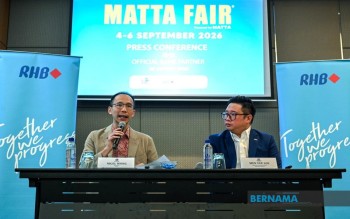
The tourism sector is preparing its case for greater fiscal support ahead of the tabling of Budget 2027 on October 9. The Malaysian Association of Tour and Travel Agents (MATTA) has compiled an ambitious agenda targeting tax relief, infrastructure upgrades, and expanded promotional resources to maximise the economic potential of Visit Malaysia 2026-2027—a flagship campaign aimed at positioning Malaysia as a premium destination in the competitive Asian travel market.
MATTA president Nigel Wong emphasised that enhanced tax deductions represent a critical lever for stimulating promotional investment by tour operators. The association's reasoning is straightforward: by reducing the tax burden on operators who invest heavily in overseas marketing campaigns, the government can incentivise increased visibility and sales efforts in high-value source markets. This approach recognises that many international visitors remain unaware of Malaysia's tourism offerings, and that private-sector promotional efforts, when coupled with favourable tax treatment, can drive incremental visitor arrivals more cost-effectively than government spending alone.
The timing of MATTA's appeal is strategically significant. Visit Malaysia 2026-2027 represents a concentrated effort to elevate Malaysia's profile internationally during a two-year window. Wong's argument suggests that tour operators—who operate on typically thin margins and face intense competition from regional rivals—require government support to justify expanding their promotional footprint. Without tax incentives, many smaller operators may lack the capital to launch costly campaigns in source markets such as China, India, Australia, and Europe, potentially undermining the overall success of the national tourism campaign.
Beyond tax policy, MATTA is pressing for substantial government investment in physical tourism infrastructure. Wong pointed to the restoration of the Sultan Abdul Samad Building as a exemplar of how targeted renovation can create an iconic attraction that elevates Malaysia's urban landscape and international reputation. This reference highlights a growing recognition within the tourism industry that Malaysia's competitive advantage increasingly depends on the quality and distinctiveness of its attractions. While the country possesses significant natural assets, many heritage structures require modernisation to meet international visitor expectations.
The association's call for broader infrastructure rehabilitation reflects deeper concerns about Malaysia's positioning relative to competing destinations. Thailand, Vietnam, and Indonesia have invested substantially in preserving and showcasing cultural heritage sites, often combining restoration with improved accessibility and interpretation. MATTA's emphasis on upgrading "natural heritage buildings" and historical structures suggests that Malaysia risks losing market share if these assets deteriorate or fail to meet contemporary standards for cleanliness, safety, and visitor facilities.
Wong's advocacy for a comprehensive urban renewal strategy—encompassing municipal councils' responsibilities for safety, walkability, and general urban aesthetics—signals a shift in how industry stakeholders conceptualise tourism competitiveness. Rather than treating tourism as a discrete sector confined to resorts and designated attractions, MATTA is arguing that visitor experiences permeate entire cities. A traveller's impression of Kuala Lumpur, Penang, or Johor Bahru depends not only on marquee attractions but on everyday encounters with clean streets, reliable public transport, accessible pathways, and a palpable sense of security. This holistic framing implies that effective tourism policy requires coordination across multiple government agencies and local authorities—a challenge that has historically complicated policy implementation in Malaysia.
The call for increased promotional allocation complements the tax incentive proposal. While tax deductions encourage private-sector marketing, government-funded promotional campaigns—executed through tourism boards and international marketing agencies—remain essential for building brand awareness and competing for share-of-wallet against established rivals. Malaysia's current promotional budget, by industry assessment, appears insufficient to sustain visibility in major source markets during the two-year Visit Malaysia campaign window.
The economic stakes are substantial. Tourism represents a significant contributor to Malaysia's GDP and employment, particularly in hospitality, retail, and transportation services. Beyond direct revenue, tourism drives infrastructure development, skills acquisition, and cultural exchange. A successful Visit Malaysia 2026-2027 campaign could generate substantial foreign exchange earnings and consolidate Malaysia's position as a leading Southeast Asian destination. Conversely, underinvestment risks allowing regional competitors to capture market share that may prove difficult to recapture subsequently.
MATTA's proposals must navigate the budget constraints and competing priorities facing the Malaysian government. Tax incentives reduce revenue for other initiatives, while infrastructure spending competes with allocations for education, healthcare, and social welfare. Finance Minister will need to weigh the tourism sector's arguments against these competing demands when formulating Budget 2027 proposals before Parliament.
The industry's timing in advancing these requests reflects awareness that budget negotiations require advance advocacy. By articulating specific, quantifiable demands—enhanced tax deductions, infrastructure investment targets, and promotional budget increases—MATTA positions itself to influence ministerial deliberations. The parliamentary tabling of the Supply Bill on October 9 will reveal whether these appeals have resonated with decision-makers and whether the government views tourism investment as a sufficiently high priority within the broader fiscal framework.

