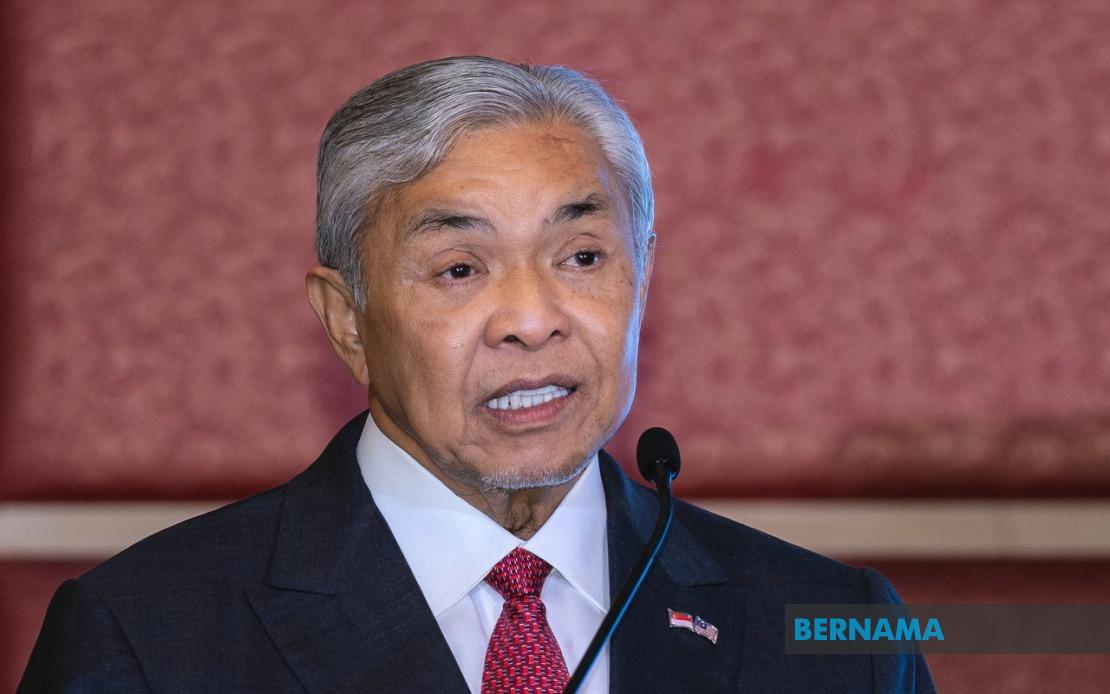
Malaysia's vocational education sector is moving toward guaranteeing employment for all TVET graduates by embedding industry engagement into the curriculum design process from the outset, according to Deputy Prime Minister Datuk Seri Dr Ahmad Zahid Hamidi. Speaking at a briefing for Malaysia's contingent competing at WorldSkills Shanghai 2026, Ahmad Zahid outlined how the government coordinates closely with employers and sector representatives to shape course content before institutions even begin teaching. This proactive alignment between educational institutions and the labour market represents a significant shift in how Malaysia approaches technical skills training, addressing long-standing concerns about job availability and qualification mismatches that have historically plagued vocational pathways across Southeast Asia.
The strategy operates on a straightforward principle: by determining industry requirements in advance and building curricula around demonstrated workplace needs, TVET providers eliminate the gap between what students learn and what employers actually demand. Ahmad Zahid, who chairs the National TVET Council in addition to his role as Rural and Regional Development Minister, claims this methodology has already delivered tangible results, with the sector now reporting a 100 per cent employability rate among graduates. Rather than students completing their qualifications and then searching for work, the system now facilitates job offers extending to students during their final study period. This transformation directly addresses three persistent vulnerabilities in vocational employment: the mismatch between skills and job requirements, disputes over compensation standards, and the uncertainty of securing positions after graduation.
The government's approach reflects broader regional concerns about skills gaps and youth unemployment across Southeast Asia. Countries throughout the region have grappled with expanding TVET systems that fail to produce graduates employers actually need, leading to either underemployment or overseas migration in search of better opportunities. Malaysia's commitment to industry-led curriculum design positions the country differently within this context. By institutionalizing regular consultation between educational bodies and employers, the system theoretically creates a feedback mechanism that allows rapid adjustments when industry demands shift. This responsiveness becomes increasingly valuable in sectors experiencing technological disruption, where skills can become obsolete quickly.
The government is simultaneously prioritizing what it terms High TVET courses, a category designed to ensure graduates possess advanced competencies that exceed baseline industry standards. Rather than training students merely to meet minimum job requirements, this tier aims to cultivate workers capable of leadership roles, innovation, and adaptation within their fields. The distinction matters considerably in a regional context where Malaysia seeks to position itself as a higher-value manufacturing and services destination, competing against lower-wage economies by emphasizing workforce quality and technical sophistication. Workers with elevated skill sets command better compensation and contribute more substantially to productivity and innovation metrics.
The domestic focus on TVET excellence extends internationally through Malaysia's participation in WorldSkills competitions. Ahmad Zahid underscored the importance of the upcoming WorldSkills Shanghai 2026 event, scheduled for September 22 to 27, as a platform for demonstrating Malaysian technical capability on the global stage. A contingent of nine competitors representing three major TVET institutions—MARA TVET, Universiti Kuala Lumpur, and GIATMARA—will compete across nine skill categories. The breadth of competition areas reveals the government's investment across diverse fields: Fashion Technology, Cyber Security, and Electronics represent the modern, high-value sectors essential for economic competitiveness, alongside traditional trades. These international competitions serve multiple functions, establishing benchmarks against global standards, identifying capability gaps, and generating domestic pride and validation for vocational pathways.
The three-month preparation period remaining until Shanghai represents a critical phase for the contingent's development. Ahmad Zahid emphasized the necessity of sustained skill enhancement, disciplinary rigour, and psychological readiness as the team approaches international competition. Mental resilience and emotional fortitude feature prominently in his messaging, acknowledging that competing globally demands not merely technical proficiency but also composure under pressure and the confidence to represent national capabilities effectively. This emphasis on psychological dimensions reflects recognition that technical excellence alone proves insufficient in high-stakes competitive environments; contestants must also manage stress, maintain motivation despite setbacks, and project confidence.
Malaysia's TVET strategy carries implications extending beyond employment statistics. By creating pathways where young Malaysians can secure stable, middle-class livelihoods through vocational qualification rather than requiring university degrees, the system potentially addresses broader inequality challenges. Technical and vocational work has historically carried lower social prestige in Malaysia compared to university-trained professions, discouraging talented students from pursuing these routes even when employment prospects exceed those of graduates in certain degree fields. Demonstrating that TVET graduates enjoy immediate, secure employment and can compete internationally may gradually shift these perceptions, enabling more efficient allocation of educational resources and broader economic participation.
The coordination between TVET institutions and industry also generates valuable intelligence about emerging skills demands. Companies communicating their requirements directly to educational providers flag emerging technologies, regulatory changes, and workforce trends far more rapidly than traditional labour statistics might reveal. This intelligence feeds back into curriculum development, enabling Malaysia's vocational system to remain current and relevant rather than lagging behind industry evolution. The responsiveness proves especially valuable in sectors like cyber security, where threat landscapes shift continuously and educational content can quickly become outdated without active industry input.
Deputy Rural and Regional Development Minister Datuk Rubiah Wang's presence at the announcement underscores the government's institutional commitment to TVET advancement, distributing responsibility across multiple ministerial portfolios. This cross-departmental approach acknowledges that vocational education affects rural and regional development, economic policy, and skills formation simultaneously. Engaging multiple government entities helps ensure TVET initiatives receive sustained attention and resources across electoral cycles and policy priorities.
The government's 100 per cent employability claim warrants scrutiny regarding its measurement methodology and scope. Defining employability precisely—whether guaranteeing full-time permanent positions, any wage employment, or job offers that graduates actually accept—significantly affects the credibility of such statistics. Regional observers will likely seek clarification about whether all TVET graduates achieve employment or whether certain cohorts or institutions outperform others. Nevertheless, the government's explicit focus on eliminating the employment uncertainty that traditionally characterized vocational pathways represents a meaningful commitment to removing barriers between training completion and economic participation. If Malaysia can deliver on these commitments, the model could influence TVET approaches throughout Southeast Asia.

