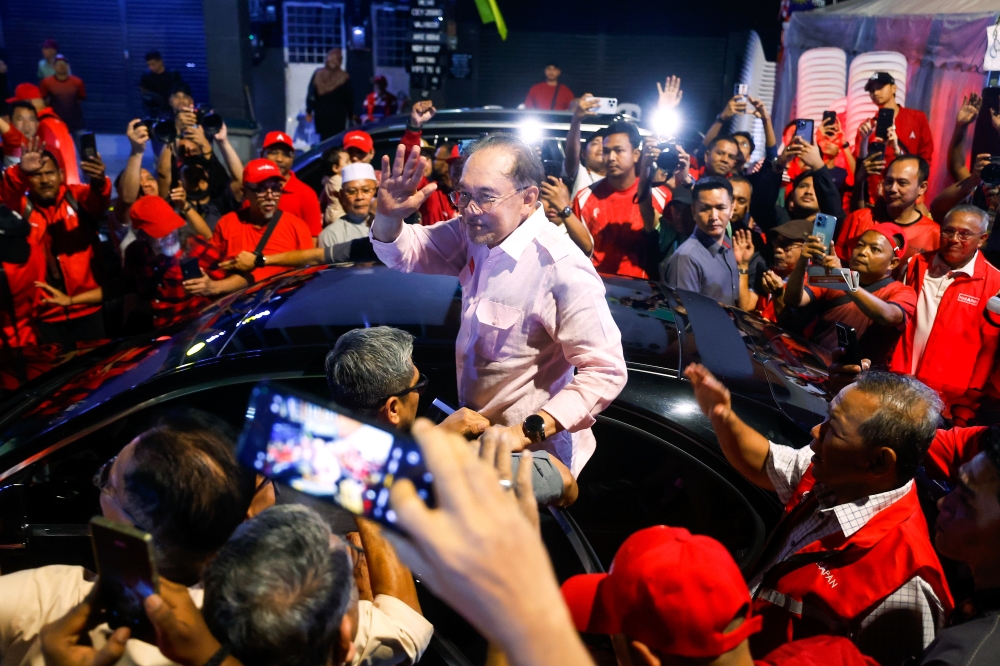
Prime Minister Datuk Seri Anwar Ibrahim has reassured Malaysians that the federal unity government remains on solid footing as the administration navigates a complex political landscape and persistent economic challenges. Speaking in Seremban, the Prime Minister sought to project confidence in the longevity and effectiveness of the multi-party coalition that has governed the country since late 2022, a period marked by internal tensions and occasional defections that have tested the administration's cohesion.
The stability assertion comes at a delicate juncture for Malaysian politics. The unity government, formed from an unprecedented alliance spanning the Pakatan Harapan opposition coalition, Barisan Nasional, and smaller regional parties, has faced recurring questions about its durability. Analysts have noted that maintaining unity across parties with divergent ideological positions and competing electoral interests requires continuous negotiation and compromise, leaving observers uncertain about how long the arrangement can withstand mounting strains.
Anwar's confidence in the government's resilience reflects efforts by his administration to project competence and continuity to investors and the public. The coalition partners have largely avoided high-profile showdowns despite disagreements, and the government has maintained parliamentary majorities needed to pass legislation. However, the Prime Minister's need to repeatedly affirm stability suggests underlying concerns within the administration about perceptions of fragility.
On economic matters, Anwar highlighted what the government views as positive indicators supporting its macroeconomic management. The administration has pointed to GDP growth, employment figures, and foreign direct investment flows as evidence that Malaysia's economy remains competitive despite regional headwinds. These claims are significant for a government that promised to revitalise the economy after years of governance challenges and corruption scandals that preceded the 2022 change of administration.
The economic messaging carries particular weight given the cost-of-living pressures affecting ordinary Malaysians. Despite official statements about growth and stability, many households continue to struggle with inflation, rising food prices, and energy costs. The government's economic narrative therefore serves a dual purpose: reassuring business confidence while attempting to convince voters that their hardships will eventually ease through continued policy implementation.
Anwar's statements also reflect the government's efforts to maintain international investor confidence. Malaysia competes with other Southeast Asian nations for capital flows, and any perception of political instability or economic mismanagement could deter foreign investment. By publicly endorsing the coalition's strength and economic progress, the Prime Minister aims to signal that Malaysia remains an attractive investment destination despite regional uncertainties.
The unity government model itself remains distinctive in Malaysian politics. Previous governments relied on single-coalition dominance, and the current arrangement of negotiating across formerly adversarial parties represents a substantial shift in how consensus is built on major policies. This structure, while promoting broader representation, inherently creates pressure points where coalition partners must reconcile differing priorities on issues ranging from religious policy to economic distribution.
Political observers note that the government's ability to maintain unity depends partly on preventing either opposition leader Datuk Seri Anwar Ibrahim's rivals or coalition partners from feeling marginalised. The delicate balance requires that significant policy decisions and ministry positions be distributed in ways that satisfy the diverse coalition components while still allowing the Prime Minister to exercise executive direction.
The economic situation underpinning political stability remains mixed. While Malaysia has avoided recession, growth rates have moderated from earlier projections. Manufacturing output, crucial for employment and exports, has faced global demand slowdowns. The ringgit's performance against major currencies affects competitiveness and import costs, indirectly influencing inflation. These economic fundamentals will ultimately determine whether political stability can be sustained, as public support typically correlates with economic wellbeing.
Going forward, the unity government faces significant tests. Major fiscal decisions on subsidies, taxation, and infrastructure spending will require coalition consensus. Electoral calculations also loom, as coalition partners assess whether remaining in government serves their long-term electoral interests or whether breaking ranks might offer strategic advantages. State-level politics, where Barisan Nasional and Pakatan Harapan retain separate political identities, adds another layer of complexity to maintaining federal unity.
For Malaysian businesses and ordinary citizens, the government's stability directly affects policy predictability and economic confidence. Prolonged coalition disputes could slow decision-making on critical infrastructure projects, regulatory frameworks, and fiscal measures. Conversely, excessive focus on maintaining coalition harmony could lead to compromise policies that satisfy no one fully while addressing underlying economic challenges inadequately.
Anwar's assertion of government strength ultimately reflects political messaging meant to project confidence to multiple audiences: investors, coalition partners, and voters. Whether that confidence translates into sustained stability and genuine economic improvement for Malaysians will depend on the government's ability to deliver tangible results while managing the inherent tensions within Malaysia's unprecedented political arrangement.

