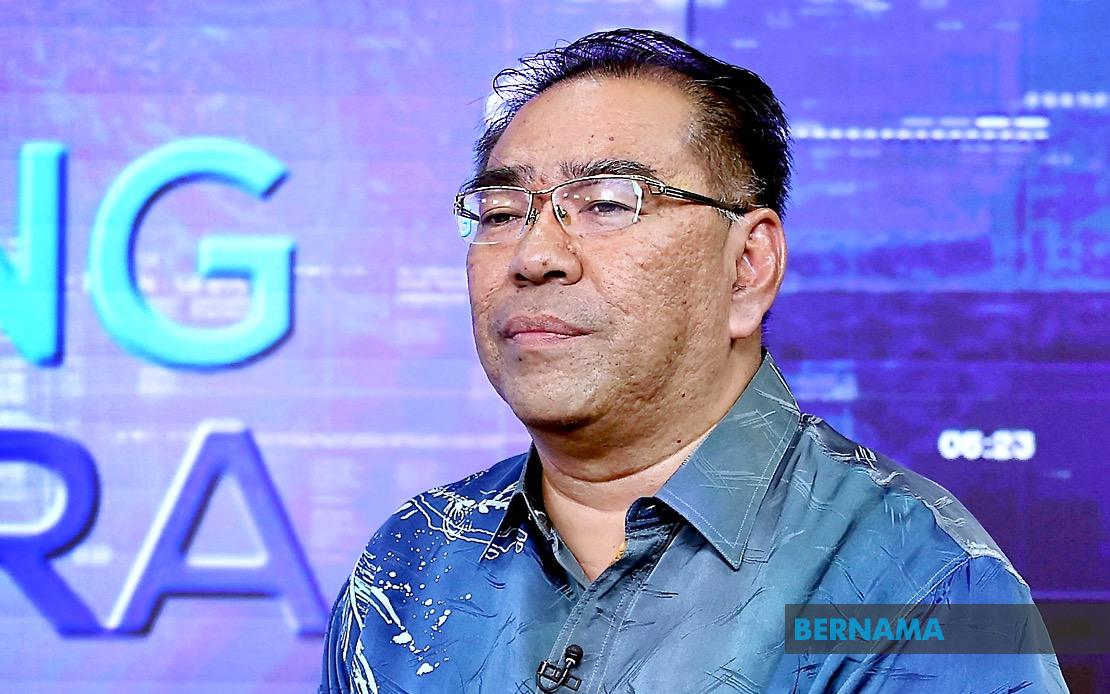
Malaysia's social cohesion appears to be strengthening, according to the latest findings from the 2025 National Unity Index (IPNas), which registered a score of 0.701 classified as moderately high. The result represents a significant milestone in the country's ongoing efforts to foster national unity and represents an improvement over previous benchmarks established in recent years. Zulkifli Hashim, director-general of the National Unity and Integration Department (JPNIN), revealed these findings while concluding the Perlis-level Youth Unity Journey programme at Universiti Teknologi MARA (UiTM) Perlis on June 28.
The trajectory of Malaysia's unity scores demonstrates a consistent upward movement across successive measurement cycles. The current reading of 0.701 climbs notably from 0.629 recorded in 2022, and shows substantial progress compared to the baseline of 0.567 measured in 2018. This seven-year progression suggests that deliberate institutional efforts to strengthen national bonds are yielding measurable results, though the moderately high classification indicates considerable room for further advancement. The improvement trajectory also exceeds performance targets embedded within the 12th Malaysia Plan, suggesting government initiatives addressing national cohesion are delivering tangible outcomes.
The underlying dimensions of rising unity reflect heightened confidence in Malaysian systems and institutions alongside a reinvigorated national spirit. These components work in tandem to create the foundation for sustained social stability and peaceful coexistence across the nation's diverse communities. Zulkifli emphasised that this positive momentum cannot be approached with complacency, underscoring that national unity demands active stewardship across generations to remain robust and genuine. The message carries particular weight given global trends toward polarisation and fragmentation in many multicultural democracies.
The challenge of maintaining and deepening unity becomes especially acute in the digital age, where information ecosystems have fundamentally transformed how societies communicate and process shared narratives. Social media platforms present a dual-edged reality for Malaysia's unity agenda. When deployed constructively, these networks can amplify messages of togetherness, facilitate cross-community dialogue, and mobilise collective action around shared values. Conversely, the same technological infrastructure enables rapid dissemination of misinformation, inflammatory rhetoric, and divisive content designed to exploit existing fault lines within society.
Zulkifli highlighted the particular vulnerability of Malaysian society to digital-age threats to harmony, identifying false information, hate speech, slander, and provocative content as tangible risks that could corrode the social fabric. The concern reflects real patterns observed across Southeast Asia, where coordinated disinformation campaigns and algorithmic amplification of divisive content have occasionally stoked communal tensions. Malaysia's experience with polarisation following major political events demonstrates how rapidly digital platforms can magnify and weaponise social divisions when left unchecked or intentionally manipulated.
University students emerge as a crucial demographic in JPNIN's strategic thinking around digital citizenship and national unity. As digital natives who will shape Malaysia's information landscape for decades, tertiary students occupy a gatekeeping position between content creation and consumption. Their capacity to critically evaluate sources, recognise manipulation techniques, and resist sensationalism directly influences broader patterns of digital discourse across their peer networks and beyond. The targeted engagement through initiatives like the Perlis Youth Unity Journey programme reflects recognition that university-age Malaysians represent both a vulnerability and an opportunity.
The call for Malaysian youth to cultivate critical thinking and mature responsibility regarding information carries normative weight distinct from mere content moderation. JPNIN is essentially appealing to students to become active agents in defending social harmony by consciously choosing to amplify unity-building narratives and community-strengthening messages. This positions digital citizenship not as passive compliance with guidelines but as an affirmative commitment to wielding online platforms as instruments for fostering respect, reinforcing interdependence among diverse groups, and consolidating societal togetherness.
The broader implications of rising unity scores for Malaysia's development trajectory deserve consideration. National cohesion functions as a public good that enables more effective policy implementation, reduces transaction costs of governance, and creates environments where diverse communities can collaborate toward shared prosperity. Countries experiencing erosion of social trust typically face elevated political polarisation, reduced willingness to fund collective goods, and greater difficulty implementing necessary structural reforms. Conversely, societies maintaining high unity can mobilise around ambitious development agendas with greater buy-in across demographic lines.
For Southeast Asia more broadly, Malaysia's experience offers instructive lessons about managing diversity in digital environments. The region encompasses numerous plural societies navigating similar challenges of preserving cohesion amid rapid technological change and competing identity narratives. Malaysia's measured approach—emphasising positive messaging and youth engagement rather than purely restrictive content control—presents an alternative model to more heavy-handed interventions adopted elsewhere. The sustained improvement in unity metrics suggests that constructive strategies can succeed where purely prohibitive approaches often backfire.
Looking forward, the challenge for policymakers involves sustaining the upward trajectory while addressing emerging threats to social harmony. Demographic shifts, generational differences in media consumption, climate-related migration pressures, and evolving geopolitical dynamics all introduce new variables that could influence unity metrics. The 0.701 score represents a positive baseline, but maintaining this momentum requires continuous adaptation of strategies, resources, and institutional capacity to engage citizens across all platforms where identity formation and community narratives develop.

