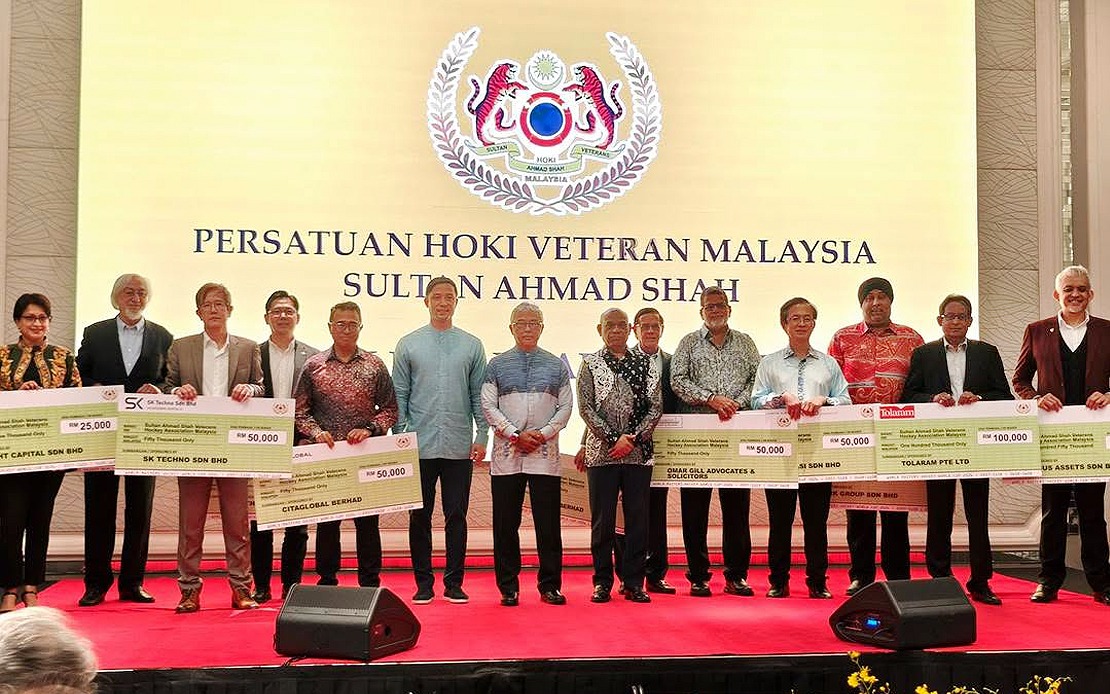
Malaysia's veteran hockey community received significant financial backing this week when the Sultan Ahmad Shah Malaysian Veteran Hockey Association announced a RM1.36 million funding package aimed at supporting the country's contingent at the forthcoming 2026 Masters Hockey World Cup. The championship will be contested across multiple venues in the Netherlands and Belgium between July 22 and August 16, encompassing competitors across five distinct age categories ranging from 40 to 65 years old.
The funding announcement, made during a Royal High Tea Ceremony, underscores the national commitment to preserving and promoting veteran hockey at the international level. Tengku Arif Temenggong Tengku Fahad Mu'adzam Shah, president of the Sultan Ahmad Shah association, revealed that the funds were accumulated through contributions from various sources and would be strategically allocated to maximise the team's competitive potential. The initiative reflects broader efforts within Malaysian sports to support athletes at different life stages, ensuring that experienced players continue representing the country on the global stage.
Accommodation and travel expenses represent the primary financial burden facing veteran athletes competing internationally, particularly when participating across multiple tournaments spanning extended periods. The RM1.36 million package addresses these foundational logistical challenges, ensuring that Malaysian players can access suitable lodging and transportation without bearing prohibitive personal costs. Beyond these basics, the association has prioritised providing direct financial assistance to former national-level players who face economic constraints that might otherwise prevent their participation.
The broader vision articulated by association leadership extends beyond merely funding infrastructure. Officials explicitly stated their intention to identify and sponsor former national team players who might be experiencing financial difficulties, thereby creating pathways for Malaysia's most accomplished veteran athletes to rejoin competitive international play. This targeted approach acknowledges that career transitions and subsequent financial pressures can sometimes disconnect elite players from organised competition, despite their continued ability to perform at high levels.
The championship structure reflects the international veteran hockey movement's sophisticated organisational framework. Five separate competitions will be conducted simultaneously across different venues, with the 40-year-old category competing at HC Schiedam in Schiedam, Netherlands. The 45-year-old and 50-year-old categories will share HC Rotterdam as their venue, with matches scheduled from July 22 through August 1. Meanwhile, competitors in the 60-year-old bracket will travel to HC Olympia in Brasschaat, Antwerp, Belgium, whilst the 65-year-old division will be based at BHV Push in Breda, Netherlands from August 6 to 16.
The Masters Hockey World Cup maintains status as the sport's premier competitive platform for veteran athletes globally, held biennially and attracting elite squads from numerous nations. The 2026 edition represents the eighth staging since the tournament's establishment in 2012, emerging from a strategic merger between the International Masters Hockey Association and the World Grand Masters Association. This consolidation unified previously fragmented veteran hockey governance structures, enabling the creation of a genuinely world-class competitive environment that has continued growing in prestige and participation.
For Malaysia, participation in such high-profile international competitions carries significance beyond sporting achievement. Southeast Asian representation in European-based veteran sports championships enhances the region's profile within global athletic communities and demonstrates the quality of players emerging from Malaysian hockey development systems. The investment in veteran athletes also sends important messaging about national sporting values, suggesting commitment to athletes throughout their careers rather than focusing exclusively on youth development programmes.
The funding package was formally endorsed by the Sultan of Pahang, Al-Sultan Abdullah Ri'ayatuddin Al-Mustafa Billah Shah, who serves as Patron of the Sultan Ahmad Shah association. Royal patronage carries both symbolic and practical importance in Malaysian sporting contexts, typically facilitating access to additional resources and elevating public awareness of particular initiatives. The ceremonial approach to announcing the funding—through a formalised royal engagement—reflects the cultural significance attributed to veteran sports participation within Malaysia's broader sporting hierarchy.
For individual veterans contemplating participation, the financial support removes significant barriers to international competition. Malaysian players aged 40 and above now possess concrete institutional backing, substantially improving accessibility compared to scenarios where athletes must independently fund overseas tournament participation. This democratisation of access to international platforms potentially enables broader Malaysian participation across all five age categories, rather than restricting competition to well-resourced individuals.
The 2026 Masters World Cup scheduling across July and August positions the tournament during peak European summer, typically coinciding with optimal weather conditions in the Netherlands and Belgium. This timing has become standard practice for major veteran sporting events, balancing athlete preparation schedules with European competition calendars. Malaysian teams will need to complete their final preparation phases during Malaysia's monsoon season, requiring careful training programme coordination to ensure peak conditioning despite climatic and facilities challenges.
Looking beyond immediate 2026 objectives, the association's infrastructure investment signals commitment to sustained veteran hockey development. Establishing reliable funding mechanisms and partnerships creates foundations for future championships, suggesting Malaysia intends to maintain competitive presence across subsequent Masters World Cup cycles. This long-term perspective distinguishes institutional commitment from temporary episodic support, potentially attracting additional sponsorship and partnerships from organisations seeking association with sustained sporting excellence.
The Malaysian veteran hockey community's trajectory reflects broader Asian sporting trends emphasising athlete longevity and post-career competitive engagement. As Asian economies continue developing, increasing numbers of retired professional and amateur athletes possess both financial capacity and physical capability to pursue organised veteran competition. Malaysia's proactive support for this demographic through substantial public investment positions the country advantageously within regional veteran sports ecosystems and demonstrates sophisticated understanding of contemporary athletic participation patterns.

