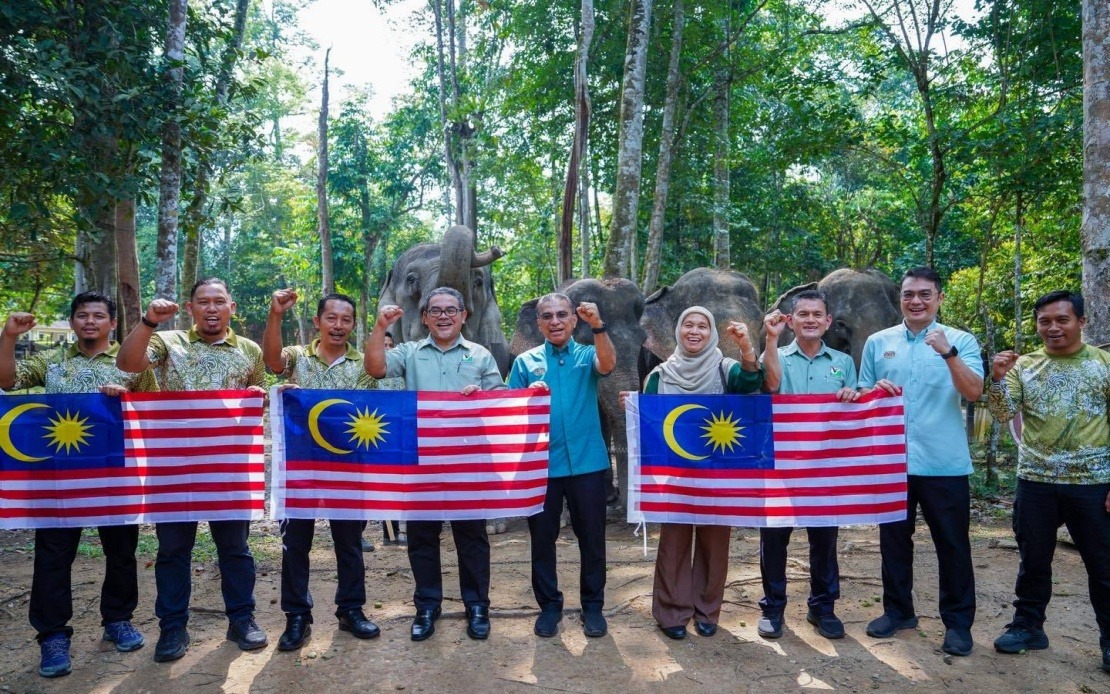
The Ministry of Natural Resources and Environmental Sustainability is charting a new strategic direction to combat the escalating problem of human-wildlife conflicts that have become increasingly disruptive across Malaysia. Deputy Minister Syed Ibrahim Syed Noh disclosed that the ministry, working through its Department of Wildlife and National Parks (Perhilitan), is actively researching and formulating innovative approaches to reduce these incidents. Speaking after attending an event in Tangkak, the deputy minister acknowledged that managing the tension between expanding human activity and wildlife conservation has emerged as one of the agency's most pressing operational challenges.
The fundamental tension underlying these conflicts stems from competing demands on Malaysian land. As development accelerates—whether for residential settlements, agricultural expansion, or infrastructure projects—the natural habitats that have sustained wildlife populations for generations shrink progressively. This spatial compression forces animals, particularly elephants, into closer proximity with human communities, triggering increasingly frequent incidents. The deputy minister noted that Perhilitan maintains vigilant monitoring of each conflict that arises, clarifying that the ministry's apparent inaction should not be misconstrued as indifference. Rather, the approach reflects a deliberate conservation philosophy: the goal is to preserve wild animals in their natural state without unnecessary disturbance.
The philosophy underlying the ministry's response emphasizes coexistence over control. According to Syed Ibrahim, elephants possess distinctive behavioural patterns that make them unsuitable subjects for confinement or forcible constraint. This biological reality shapes how Perhilitan intervenes in human-wildlife encounters. Rather than attempting to restrict animal movement through physical barriers or relocation camps, the department employs continuous surveillance to track displaced animals while allowing them freedom to navigate their environment. This approach respects the intrinsic nature of the animals while maintaining protective oversight—a delicate balance that requires sustained commitment and technical expertise.
The high-profile case of Sulong Chalil, an adult male elephant, exemplifies both the severity of the problem and the limits of conventional management techniques. After being relocated to a forested area in Gerik, Perak last month, the injured elephant undertook a remarkable journey spanning hundreds of kilometres to return to its original habitat in Gua Musang, Kelantan. The case gained significant public attention through viral video footage, raising questions about the efficacy of relocation as a conflict resolution strategy. The deputy minister's acknowledgment of this incident suggests that the ministry recognizes the limitations of past approaches and the necessity for evidence-based innovation.
The core challenge confronting policymakers lies in the fundamental incompatibility between habitat preservation and rapid development. As Syed Ibrahim explained, animals must now adapt to landscaping transformations driven by human economic activity—new settlements sprawl across former wildlife corridors, agricultural zones encroach on feeding grounds, and infrastructure development fragments ecosystems. This environmental restructuring leaves elephants and other fauna with progressively constrained options, driving them to seek food and shelter in agricultural areas and inhabited zones where conflict becomes inevitable. The scale of land-use change outpaces the ministry's capacity to manage wildlife populations through traditional conservation methods.
The ministry has initiated a collaborative problem-solving process involving multiple stakeholder groups to develop more effective solutions. This inter-agency approach recognizes that wildlife management cannot operate in isolation from broader development policy. To generate meaningful progress, the ministry must work with local authorities responsible for settlement planning, agricultural extension services, and infrastructure agencies. Additionally, community engagement becomes essential, as rural residents who encounter elephants and other wildlife bear the immediate costs of these conflicts. The ministry's commitment to studying and formulating solutions suggests a recognition that existing protocols require fundamental revision rather than incremental adjustment.
For Malaysian readers, particularly those in areas where human-wildlife conflicts occur, the implications extend beyond abstract conservation concerns. Repeated elephant incursions into villages and farmland create genuine safety risks and destroy livelihoods as crops are trampled and property damaged. Inhabitants of affected regions require practical protection measures and compensation mechanisms, not merely reassurances about monitoring. The ministry's shift toward developing new methods must therefore address community needs alongside wildlife welfare. This dual imperative—protecting both human interests and animal populations—defines the stakes in this policy domain.
Regionally, Malaysia's approach to this challenge carries significance for Southeast Asian conservation policy more broadly. Several neighbouring countries face comparable pressures as economic development accelerates across the region. The methods that Perhilitan develops and tests could inform best practices for other nations managing similar tensions between wildlife preservation and development imperatives. Conversely, regional experience offers valuable insights; Southeast Asian countries have accumulated considerable practical knowledge about managing human-elephant conflicts and other wildlife-human encounters that Malaysian researchers could usefully examine.
The path forward requires sustained political commitment and adequate resource allocation. Developing genuinely innovative solutions demands investment in research capacity, habitat management technology, and community-based programs. The deputy minister's public statement represents an important acknowledgment of the problem's severity, signaling governmental recognition of public concern. However, translating commitment into concrete outcomes will depend on translating research findings into operational protocols, securing necessary funding, and building consensus among diverse stakeholders with sometimes competing interests. The coming months will reveal whether the ministry can move from formulation stage to implementation of meaningful reforms that reduce conflicts while preserving both human safety and wildlife populations.

