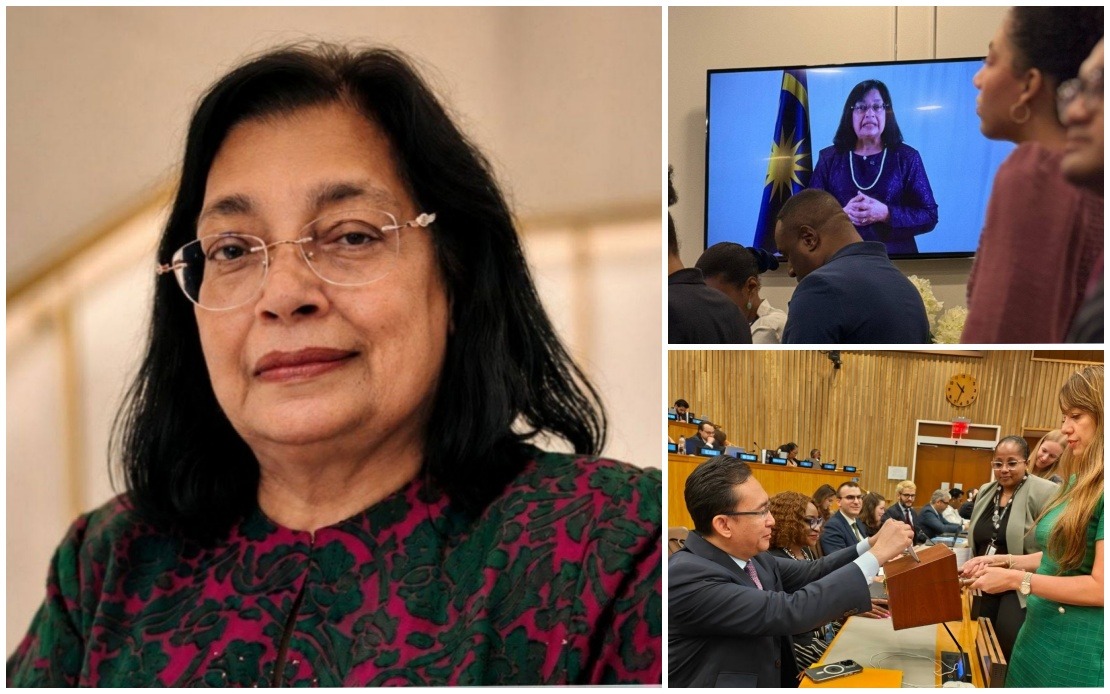
Malaysia has achieved a significant diplomatic victory with the election of Datuk Yasmeen Muhamad Shariff to the United Nations Committee on the Rights of the Child, serving the 2027–2031 term. The election, held at UN Headquarters in New York on Tuesday during the 21st Meeting of States Parties to the Convention on the Rights of the Child, saw Yasmeen emerge as the top-polling candidate with 136 votes from the 189 States Parties that participated in the ballot. Her commanding lead underscores the broad international recognition of her expertise and commitment to protecting vulnerable children globally.
Yasmeen's election represents a return to the influential committee after a decade-long absence. She previously served as a member during the 2013–2017 term, making this her second stint on the body. The fact that she secured the highest number of votes in the election signals strengthened international confidence in her work and capabilities since her first appointment. Her consistent record and demonstrated expertise in child rights have evidently resonated with nations across different regions and development contexts, reflecting the universal nature of concerns surrounding child protection and welfare.
The UN Committee on the Rights of the Child operates as an independent expert body tasked with monitoring how countries implement the Convention on the Rights of the Child, one of the most widely ratified human rights treaties worldwide. As a committee member, Yasmeen will serve in her personal capacity rather than as a government representative, allowing her to exercise independent judgment in evaluating state compliance with international child protection standards. This independence is fundamental to the committee's credibility and effectiveness in holding nations accountable to their obligations under the convention.
The committee's work encompasses several critical functions that directly impact children's wellbeing across the globe. Members engage in constructive dialogue with States Parties to identify gaps in implementation, review periodic reports submitted by countries detailing their progress in protecting children, and issue general comments that provide authoritative guidance on interpreting the convention's provisions. Through these mechanisms, the committee shapes international understanding of child rights and influences domestic policy reforms in numerous countries.
Malaysia's Foreign Ministry, formally known as Wisma Putra, framed Yasmeen's election as validation of the nation's broader commitment to advancing children's rights through comprehensive domestic initiatives. The ministry emphasized that the election reflects international recognition of Malaysia's policy frameworks, legal reforms, and targeted programmes designed to protect children and enable them to develop their full potential. This positioning connects Yasmeen's individual achievement to Malaysia's national agenda in the child protection sphere, elevating the diplomatic significance of her appointment.
The election also highlights the collaborative efforts between multiple Malaysian government agencies in securing the successful nomination. Wisma Putra specifically acknowledged the Ministry of Women, Family and Community Development for its close cooperation and sustained support throughout the nomination and election process. This inter-agency coordination reflects the whole-of-government approach increasingly adopted by countries seeking to strengthen their influence on international bodies addressing social and human rights issues. The partnership between foreign affairs and domestic social policy portfolios demonstrates how nations leverage their international standing by aligning government-wide efforts around priority objectives.
In the broader Southeast Asian context, Malaysia's continued presence on prestigious international committees enhances the region's collective voice in global governance mechanisms. Child rights remain a pressing concern across Southeast Asia, where challenges ranging from child labour and trafficking to inadequate access to education and healthcare persist in various forms. Having a respected expert from the region serving on the UN committee provides an avenue for Southeast Asian perspectives to inform international norm-setting and best-practice development in child protection strategies.
Yasmeen's appointment comes at a critical moment when the global child protection landscape faces unprecedented challenges. The committee's work has become increasingly urgent as conflicts, climate change, economic inequality, and digital risks create new threats to children's safety and development. The committee must grapple with evolving interpretations of child rights in contexts ranging from artificial intelligence regulation to pandemic-related disruptions in education. Yasmeen's experience positions her to contribute meaningfully to these contemporary debates while drawing on insights from Malaysia's own policy development in child welfare.
Malaysia's success in the election underscores the diplomatic capital the country has built through consistent engagement with UN mechanisms and demonstrated commitment to international human rights frameworks. The strong electoral performance, with Yasmeen receiving the highest vote count, suggests Malaysia has cultivated broad support among diverse states through principled advocacy and reliable partnership. This soft power advantage extends beyond the child rights domain, potentially strengthening Malaysia's positioning on other international bodies and initiatives requiring multilateral consensus.
Looking forward, Yasmeen's term will span a period of anticipated growth in international focus on child protection issues, particularly as nations implement recommendations from the committee's previous monitoring cycles. Her role will involve synthesizing evidence from multiple sources, engaging with civil society organizations working on child rights, and translating complex international obligations into practical guidance for states grappling with implementation challenges. The committee's influence depends substantially on the credibility and technical competence of its individual members, making the calibre of Yasmeen's expertise directly relevant to the committee's capacity to advance its mandate effectively.