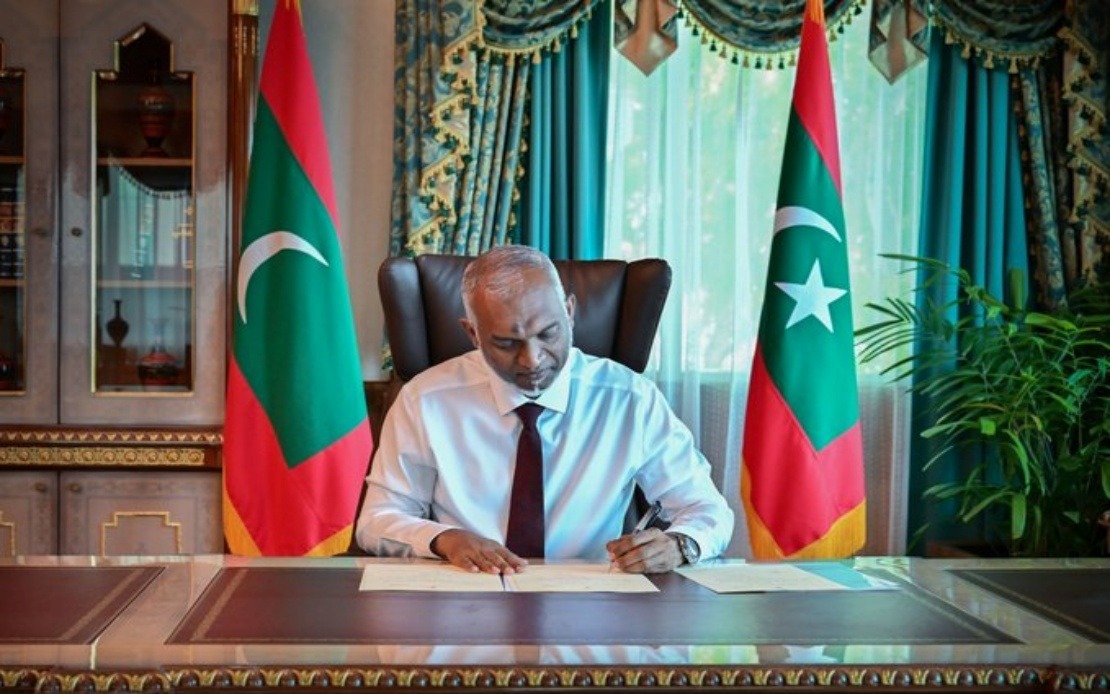
Maldives President Mohamed Muizzu has extended warm National Day greetings to His Majesty Sultan Ibrahim, King of Malaysia, and Prime Minister Datuk Seri Anwar Ibrahim, underscoring the deep-rooted friendship that characterises ties between Male and Kuala Lumpur. The gesture, conveyed through official correspondence from the presidency, arrives as Malaysia marked another year of independence with celebrations across the nation, and signals the Maldivian leader's commitment to sustaining the diplomatic warmth that defines their relationship.
In his letter addressed to Sultan Ibrahim, President Muizzu reflected on the substantial foundation upon which Malaysia-Maldives relations have been built over the past half-century. He highlighted how the two countries have cultivated warm and enduring diplomatic connections rooted in mutual respect, shared values, and a collaborative spirit that has weathered regional shifts and global challenges. This framing is significant for Southeast Asian observers, as it positions the relationship within a broader context of South Asian and Southeast Asian cooperation, demonstrating how island nations and maritime economies in the region continue to prioritise bilateral engagement despite competing regional interests.
The presidential correspondence to Prime Minister Anwar Ibrahim emphasised a complementary angle, focusing on the interpersonal and institutional dimensions of the relationship. Muizzu observed that brotherly bonds between Malaysia and the Maldives have deepened through consistent high-level diplomatic visits and robust people-to-people connections. These regular exchanges at senior governmental levels have created multiple channels for dialogue and coordination, allowing both nations to address shared challenges ranging from maritime security to climate resilience and economic cooperation. For Malaysian policymakers, this observation underscores the value of sustained diplomatic engagement in maintaining regional stability.
According to the presidency statement, President Muizzu voiced confidence that the friendship between Malaysia and the Maldives would continue flourishing into the future. He identified economic engagement and expanded commercial opportunities as key avenues through which both peoples could benefit from closer ties. This optimistic outlook reflects the pragmatic dimension of modern diplomatic relations, where rhetorical gestures are typically paired with concrete economic objectives. For Malaysia, a nation deeply invested in regional trade networks and maritime commerce, the Maldives represents both a strategic partner in the Indian Ocean and a potential market for enhanced bilateral investment and cooperation.
Beyond the direct Malaysia-Maldives exchange, the National Day occasion drew congratulatory messages from other neighbouring and friendly nations. Pakistan's Ministry of Foreign Affairs conveyed warm wishes to Malaysia through social media platforms, expressing hopes for lasting peace and sustained prosperity. Such greetings, while ceremonial in nature, serve important diplomatic functions by maintaining goodwill and reinforcing bilateral relationships across the broader Asian region. Pakistan's engagement in Malaysia's National Day celebrations reflects the historic connections between these two Muslim-majority nations and their shared interests in regional peace and economic development.
India's response through its Minister of External Affairs, Subrahmanyam Jaishankar, carried particular significance given New Delhi's strategic pivot towards Southeast Asia in recent years. Minister Jaishankar extended warm wishes to Foreign Minister Datuk Seri Mohamad Hasan and the Malaysian government and people, while explicitly referencing India's Comprehensive Strategic Partnership with Malaysia. This framing indicates that India views its relationship with Malaysia as a cornerstone of its broader regional strategy, encompassing security, economic, and cultural dimensions. For Malaysian observers, this recognition of the elevated partnership status reflects Malaysia's centrality to India's Indo-Pacific engagement plans.
The Minister's statement, posted on social media platform X, signalled New Delhi's intention to actively advance this partnership framework. India's explicit mention of looking forward to strengthening collaborative ties during Malaysia's National Day celebrations demonstrates how major regional powers use such occasions to reaffirm strategic commitments and signal continuity in foreign policy. For Malaysia, which navigates complex relationships with multiple regional powers, India's emphasis on the Comprehensive Strategic Partnership underscores the importance New Delhi attaches to cooperation across defence, technology, trade, and cultural sectors.
These multilateral expressions of goodwill on Malaysia's National Day occasion illustrate the country's position as a valued partner within both Southeast Asian and broader Asian frameworks. The messages from Maldives, Pakistan, and India reflect diverse geographic perspectives on Malaysia's significance—from South Asia to the Indian Ocean region—and underscore how Malaysian foreign policy has successfully cultivated relationships across multiple strategic terrains. The consistency with which neighbouring and friendly nations participate in Malaysia's National Day celebrations demonstrates the diplomatic capital the country has accumulated over decades of consistent engagement.
For Malaysia's government, these affirmations of friendship and partnership carry practical implications. The Maldivian president's emphasis on five decades of bilateral relations provides a foundation upon which to build enhanced cooperation in emerging areas such as climate change adaptation, renewable energy, maritime conservation, and digital economy collaboration. The Indian Minister's reference to the Comprehensive Strategic Partnership opens pathways for deeper integration in defence cooperation, technology transfer, and educational exchanges. Pakistan's wishes, meanwhile, reflect the shared Islamic heritage and historical connections that continue to bind these nations despite geographical separation.
The diplomatic choreography surrounding Malaysia's National Day celebrations also reveals how regional nations use such occasions to reset narratives and reaffirm commitments during periods of transition or uncertainty. By sending carefully crafted messages that emphasise friendship, cooperation, and future partnership, countries like Maldives, Pakistan, and India are signalling stability and predictability in their relationships with Malaysia—valuable commodities in an era characterised by rapid geopolitical shifts and unpredictable policy changes. For Malaysian leaders, these affirmations provide public confirmation of the country's sustained diplomatic relevance and the broad-based support it enjoys across Asia.

