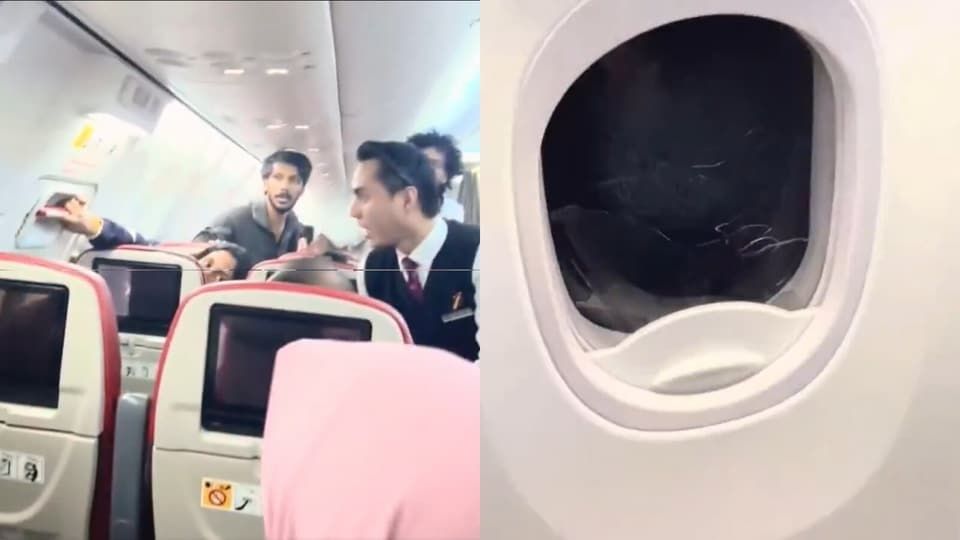
A Palakkad resident has been taken into custody by Kerala Police following a frightening mid-air incident aboard a Batik Air aircraft on Wednesday night. Jamsheer Athanikkal, 36, allegedly damaged the emergency exit window panel and attempted to force open the door while the Boeing 737 was cruising over Indian airspace, triggering panic among the sleeping passengers and raising serious concerns about aviation safety protocols.
The disturbance occurred on Batik Air flight OD231 between approximately 9.30pm and 11.05pm as the aircraft made its way from Kuala Lumpur to Kochi. According to the First Information Report filed with Kerala Police, Jamsheer used his foot to strike and damage the inner window panel of the emergency exit located in the aircraft's rear section. The FIR further alleges that he sought to prise open the exit door itself while simultaneously making threatening remarks toward fellow passengers and members of the cabin crew.
The incident unfolded during the overnight flight when most travellers were asleep. A passenger, Matty Mathew, later posted an account on social media describing how the sudden rush of air through the cabin jolted people awake. Mathew recounted that a man seated in the emergency row row had forcibly broken the window and interfered with the exit mechanism. What could have developed into a catastrophic situation was prevented by the aircraft's robust design—the pressurised cabin and the inherent mechanical properties of the emergency door kept it sealed despite the damage and tampering.
Quick action by both cabin staff and alert passengers proved crucial in preventing further escalation. The crew and nearby travellers successfully restrained Jamsheer before his actions could create additional danger or structural compromise to the aircraft. Mathew's social media account emphasised the terrifying nature of the experience, noting the loud noise and sudden disturbance, though he also highlighted that the swift collective response ensured everyone's safety.
When the Batik Air aircraft landed early Thursday morning in Kochi, Jamsheer was immediately handed over to Kerala Police. The incident report was initiated following a complaint lodged by Batik Air's Security In-Charge at Kochi airport. Investigators have booked the suspect under multiple sections of Indian law: Section 351(3) of the Bharatiya Nyaya Sanhita for criminal intimidation, Section 11A of the Aircraft Act for violating safety or security directives, and Section 118(e) of the Kerala Police Act for actions endangering public safety. A detailed investigation is underway to establish the circumstances and motivations behind his conduct.
This incident highlights persistent vulnerabilities within commercial aviation's safety ecosystem, particularly regarding passenger behaviour during flight. The emergency exit row represents one of the most security-sensitive areas on any aircraft, and passengers seated there receive specific safety briefings and instructions. The successful breach of the window panel raises questions about the robustness of emergency exit mechanisms and monitoring systems, even though the aircraft's fundamental design features prevented catastrophic failure.
The timing of this occurrence is particularly significant given that it follows closely on another alarming aviation incident. Just two days earlier, Air India flight AI2379, operating from Phuket, Thailand, to New Delhi, experienced a sudden and severe loss of altitude during cruise phase. The aircraft was carrying 137 passengers and eight crew members at the time. The flight managed to recover and land safely in Delhi, though the incident prompted immediate medical assistance for those aboard.
Following the Air India incident, a total of 13 passengers and four crew members required hospital treatment for injuries and trauma sustained during the altitude loss. The airline's crisis response team coordinated with medical facilities in Delhi to ensure comprehensive care, while also maintaining regular contact with affected individuals and their families. Air India has since engaged with the relevant civil aviation regulators and is cooperating fully with the investigative authorities. The aircraft involved, a seven-year-old Airbus according to flight-tracking data, has been flagged for detailed technical examination by the manufacturer and relevant authorities.
These two incidents within such a narrow timeframe have reignited concerns about passenger conduct, aircraft maintenance standards, and the overall safety culture within South Asian aviation. For Malaysian travellers and the regional airline industry, the Batik Air incident serves as a sobering reminder of how quickly a routine flight can transform into a potential emergency. The airline's crew response demonstrated the critical importance of comprehensive training and rapid decision-making protocols when facing in-flight disruptions.
The regulatory implications extend beyond individual airline accountability. Aviation authorities across Malaysia, India, Thailand, and other Southeast Asian nations are likely to review current safety protocols, emergency exit design standards, and passenger behaviour management procedures. The Batik Air incident particularly underscores the vulnerability of emergency rows and the necessity for enhanced monitoring and more rigorous passenger suitability assessments for those seats.
For the airline industry in Southeast Asia, these incidents highlight the constant tension between maintaining open, comfortable passenger environments and implementing security measures that prevent dangerous behaviour. Enhanced training for cabin crew in de-escalation techniques, improved design features that prevent tampering with critical aircraft systems, and potentially more stringent passenger screening mechanisms at check-in may emerge as recommendations from both airlines and regulatory bodies.
The swift intervention by passengers and crew in the Batik Air incident demonstrated that collective vigilance remains an important layer of aviation safety. However, relying solely on passenger intervention creates additional risks and leaves the system vulnerable to more coordinated or faster-developing threats. As investigations into both incidents progress, the aviation sector will need to balance accessibility and comfort with the fundamental imperative of ensuring that aircraft remain secure, controlled environments throughout their operations.

